亂
See also: 乱
| ||||||||
| ||||||||
Translingual
| Japanese | 乱 |
|---|---|
| Simplified | 乱 |
| Traditional | 亂 |
Han character
亂 (radical 5 乙+12, 13 strokes, cangjie input 月月山 (BBU), four-corner 22210, composition ⿰𤔔乚)
Derived characters
- 𠏢, 薍, 𥂽
Descendants
- 乱 (Japanese shinjitai and simplified Chinese)
References
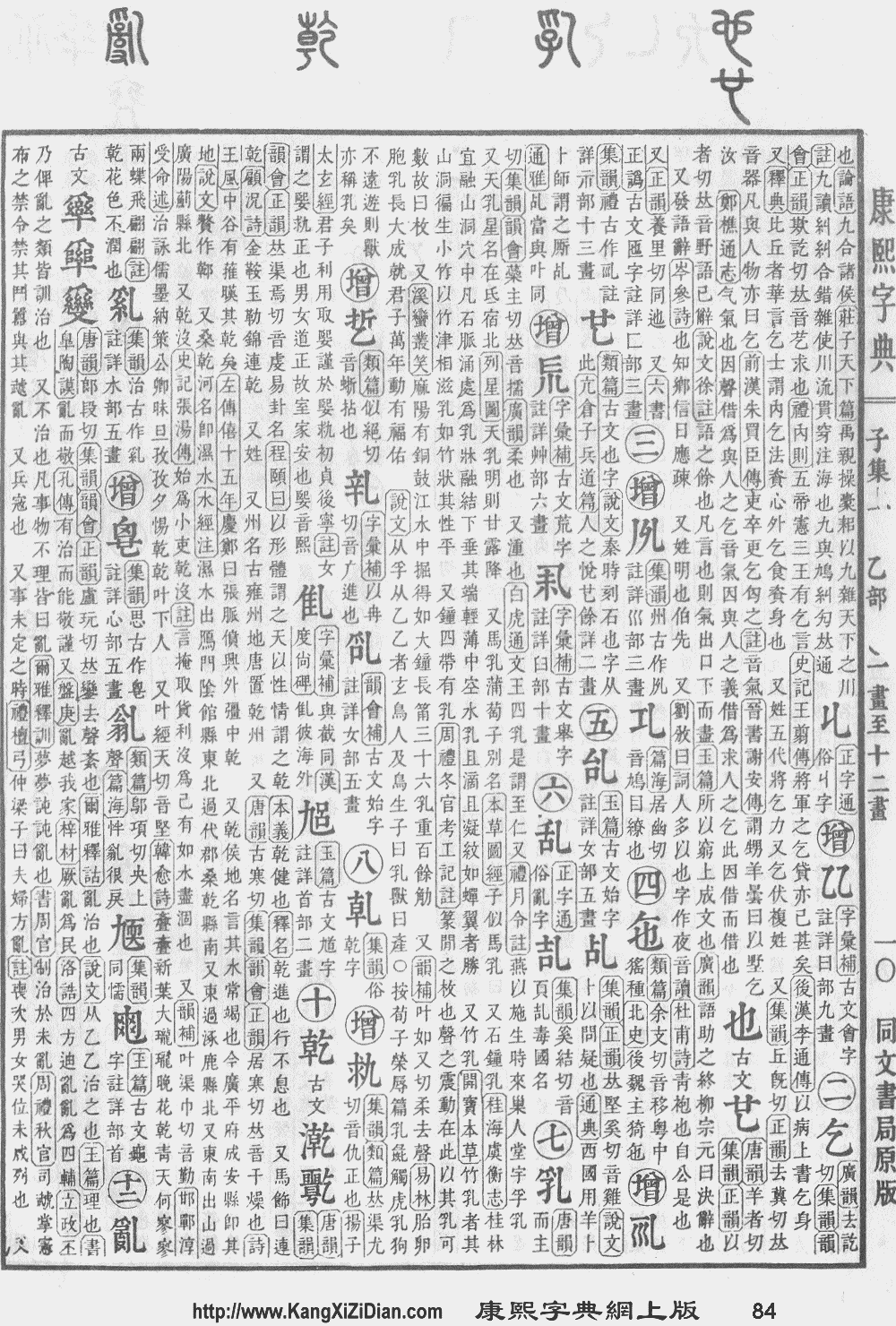
- KangXi: page 84, character 33
- Dai Kanwa Jiten: character 214
- Dae Jaweon: page 173, character 8
- Hanyu Da Zidian: volume 1, page 57, character 10
- Unihan data for U+4E82
Chinese
| trad. | 亂 | |
|---|---|---|
| simp. | 乱 | |
Glyph origin
| Historical forms of the character 亂 | ||
|---|---|---|
| ||
|
References: Mostly from Richard Sears' Chinese Etymology site (authorisation),
|


| Characters in the same phonetic series (亂) (Zhengzhang, 2003) | |
|---|---|
| Old Chinese | |
| 覼 | *roːl |
| 亂 | *roːns |
| 薍 | *ŋroːns |
Phono-semantic compound (形聲, OC *roːns) : phonetic 𤔔 (OC *) + semantic 乚.
Pronunciation
Definitions
亂
- disorderly; chaotic
- disorder; chaos; disarray
- turbulent
- unrest; uprising; revolt; rebellion
- confused
- promiscuous
- wildly; in an uncontrolled way; without order or reason; at random; haphazardly; having no direction or coherence
- 亂舞 / 乱舞 ― luànwǔ ― to dance in an unorganized, uncoordinated way
Compounds
Derived terms from 亂
|
|
|
Japanese
| 乱 | |
| 亂 |
Kanji
亂
(uncommon “Hyōgai” kanji, kyūjitai kanji, shinjitai form 乱)
- turbulent
Readings
- Goon: らん (ran)
- Kan’on: らん (ran)
- Kan’yōon: ろん (ron)
- Kun: みだれる (midareru, 亂れる); みだす (midasu, 亂す); みだりに (midarini, 亂りに)
Korean
Hanja
亂 • (ran) (hangeul 란, revised ran, McCune–Reischauer ran)
- This term needs a translation to English. Please help out and add a translation, then remove the text
{{rfdef}}.
Vietnamese
Han character
亂 (loạn, loàn)
- This term needs a translation to English. Please help out and add a translation, then remove the text
{{rfdef}}.
References
This article is issued from
Wiktionary.
The text is licensed under Creative Commons - Attribution - Sharealike.
Additional terms may apply for the media files.