乗
| ||||||||
Translingual
| Japanese | 乗 |
|---|---|
| Simplified | 乘 |
| Traditional | 乘 |
Glyph origin
Variant of 乘. The modern Japanese usage is of reform (shinjitai) nature.
Han character
乗 (radical 4, 丿+8, 9 strokes, cangjie input 竹木廿 (HDT), composition ⿻⿱千木卄)
Derived characters
See also
References
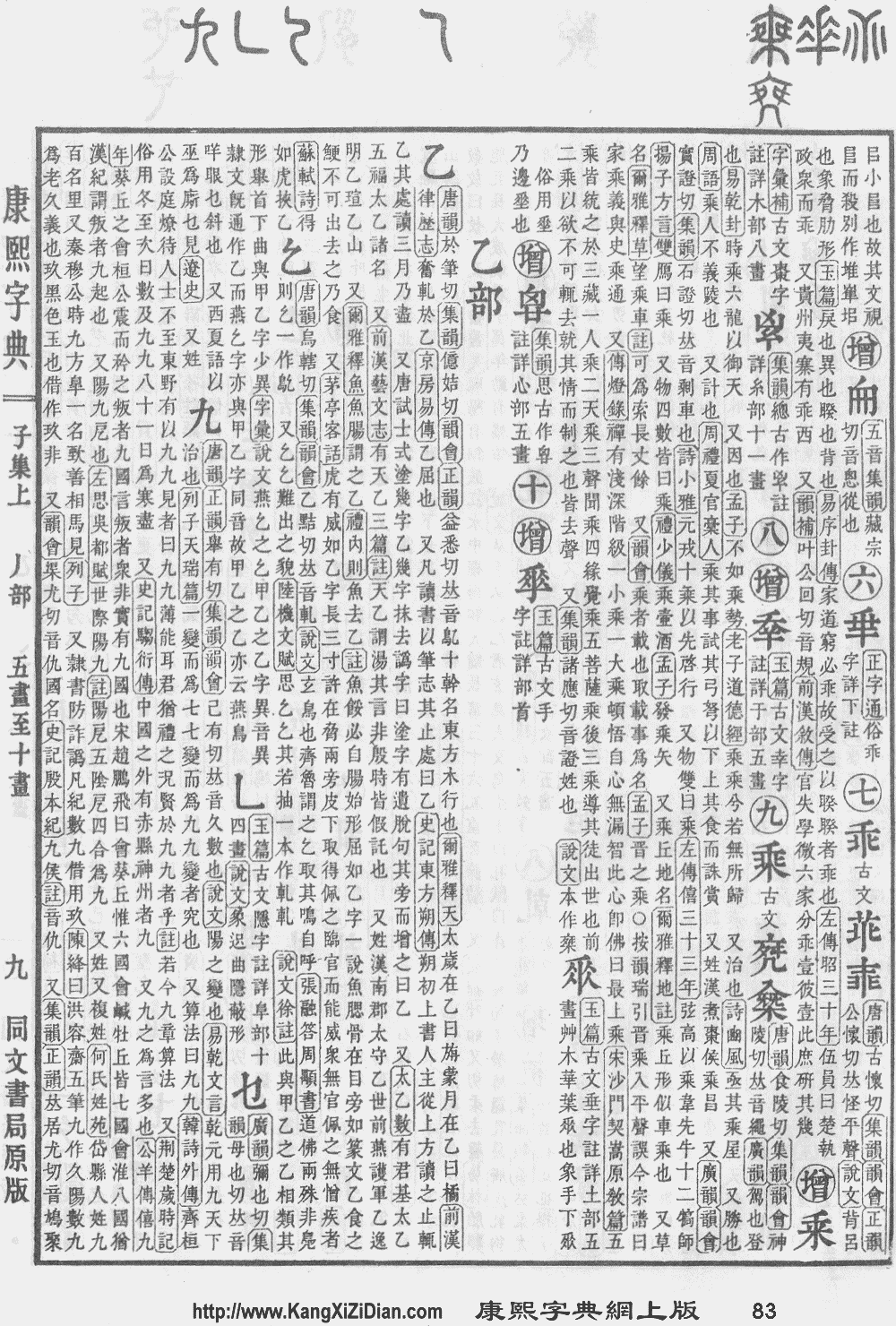
- KangXi: not present, would follow page 83, character 8
- Dai Kanwa Jiten: character 153
- Dae Jaweon: page 166, character 30
- Hanyu Da Zidian: volume 1, page 39, character 8
- Unihan data for U+4E57
Chinese
| For pronunciation and definitions of 乗 – see 乘 (“to ascend; to go up; to mount; to ride; etc.”). (This character, 乗, is a variant form of 乘.) |
Japanese
| 乗 | |
| 乘 |
Kanji
乗
(grade 3 “Kyōiku” kanji, shinjitai kanji, kyūjitai form 乘)
Readings
Compounds
Derived terms
Suffix
乗 (hiragana じょう, rōmaji -jō)
- (mathematics) power
- 3の3乗は27である。
- San no san jō wa ni jū nana de aru.
- Three to the third power is 27.
- 3の3乗は27である。
Korean
Hanja
乗 • (seung) (hangeul 승, revised seung, McCune–Reischauer sŭng)
- This term needs a translation to English. Please help out and add a translation, then remove the text
{{rfdef}}.
This article is issued from
Wiktionary.
The text is licensed under Creative Commons - Attribution - Sharealike.
Additional terms may apply for the media files.