pica
English
Pronunciation
Etymology 1
From Latin pīca (“magpie, jay”) (from the idea that magpies will eat almost anything).
Noun
pica (usually uncountable, plural picas)
- (pathology) A disorder characterized by craving and appetite for non-edible substances, such as ice, clay, chalk, dirt, or sand.
- 1986, George S Baroff, Mental retardation: nature, cause, and management:
- The three most common nonfood picas were eating of strings and rags; feces, vomit, and urine; and paper, cigarettes, and soil.
-
Synonyms
Translations
Etymology 2
From Medieval Latin pica (“pica: a service book”), possibly from Latin pīca (“magpie”) after the piebald appearance of the typeset page (cf. pie, "disordered type"). The relation to the printer's measure is unclear, as no edition of the text in pica type is known. The French pica derives from English rather than vice versa.[1]
Noun
pica (countable and uncountable, plural picas)
- (typography, printing, uncountable) A size of type between small pica and English, standardized as 12-point.
- (typography, uncountable, usually with qualifier) A font of this size.
- (typography, countable) A unit of length equivalent to 12 points, officially 35⁄83 cm (0.166 in) after 1886 but now (computing) 1⁄6 in.
- (uncommon, ecclesiastical) A pie or directory: the book directing Roman Catholic observance of saints' days and other feasts under various calendars.
Derived terms
- pica point
- small pica
Translations
See also
Etymology 3
Noun
pica (plural picas)
- Archaic form of pika. (small lagomorph)
- 1895, Richard Lydekker, The Royal Natural History (volume 3, page 190)
- Most travellers in the Himalaya are familiar with the pretty little Rodents, known as picas, tailless hares, or mouse-hares, which may be seen in the higher regions […]
- 1895, Richard Lydekker, The Royal Natural History (volume 3, page 190)
References
Anagrams
Catalan
Pronunciation
Etymology 1
Noun
pica f (plural piques)
Etymology 2
Noun
pica f (plural piques)
Etymology 3
Noun
pica f (uncountable)
- pica (disorder characterized by craving and appetite for non-edible substances)
Etymology 4
Noun
pica f (plural piques)
Etymology 5
Noun
pica f (plural piques)
- pika (small, furry mammal)
Further reading
- “pica” in Diccionari de la llengua catalana, segona edició, Institut d’Estudis Catalans.
Galician
Noun
pica m (plural picas)
- pipit
- (card games) spade (a playing card of the suit spades, picas)
Verb
pica
Latin
Alternative forms
Etymology
From Proto-Indo-European *(s)peyk- (“woodpecker; magpie”).
Pronunciation
- (Classical) IPA(key): /ˈpiː.ka/
Noun
pīca f (genitive pīcae); first declension
Inflection
First declension.
| Case | Singular | Plural |
|---|---|---|
| nominative | pīca | pīcae |
| genitive | pīcae | pīcārum |
| dative | pīcae | pīcīs |
| accusative | pīcam | pīcās |
| ablative | pīcā | pīcīs |
| vocative | pīca | pīcae |
Descendants
References
- pica in Charlton T. Lewis and Charles Short (1879) A Latin Dictionary, Oxford: Clarendon Press
- pica in Charlton T. Lewis (1891) An Elementary Latin Dictionary, New York: Harper & Brothers
- pica in Charles du Fresne du Cange’s Glossarium Mediæ et Infimæ Latinitatis (augmented edition, 1883–1887)
Latvian
Noun
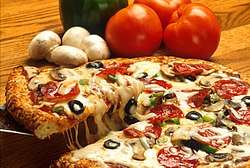
pica f (4th declension)
Declension
Old Polish
Etymology
From Proto-Slavic *piťa.
Noun
pica f
Portuguese
Etymology 1
Noun
pica f (plural picas)
Etymology 2
Verb
pica
Etymology 3
Noun
pica f (plural picas)
Romanian
Etymology
Verb
a pica (third-person singular present pică, past participle picat) 1st conj.
- (of a liquid) to drip
- (literally and figuratively) to fall
- to fail
- to come unexpectedly
Conjugation
| infinitive | a pica | ||||||
|---|---|---|---|---|---|---|---|
| gerund | picând | ||||||
| past participle | picat | ||||||
| number | singular | plural | |||||
| person | 1st person | 2nd person | 3rd person | 1st person | 2nd person | 3rd person | |
| indicative | eu | tu | el/ea | noi | voi | ei/ele | |
| present | pic | pici | pică | picăm | picați | pică | |
| imperfect | picam | picai | pica | picam | picați | picau | |
| simple perfect | picai | picași | pică | picarăm | picarăți | picară | |
| pluperfect | picasem | picaseși | picase | picaserăm | picaserăți | picaseră | |
| subjunctive | eu | tu | el/ea | noi | voi | ei/ele | |
| present | să pic | să pici | să pice | să picăm | să picați | să pice | |
| imperative | — | tu | — | — | voi | — | |
| affirmative | pică | picați | |||||
| negative | nu pica | nu picați | |||||
Synonyms
Derived terms
Serbo-Croatian
Etymology 1
Hypocoristic form derived from pízda (“cunt”).
Pronunciation
- IPA(key): /pǐːtsa/
- Hyphenation: pi‧ca
Noun
píca f (Cyrillic spelling пи́ца)
Declension
Etymology 2
Pronunciation
- IPA(key): /pîtsa/
- Hyphenation: pi‧ca
Noun
pȉca f (Cyrillic spelling пи̏ца)
Declension
Slovene
Etymology
Pronunciation
- IPA(key): /ˈpìːtsa/, /ˈpíːtsa/
- Tonal orthography: píca, pȋca
Noun
píca f (genitive píce, nominative plural píce)
Declension
Spanish
Noun
pica f (plural picas)
Derived terms
- sacar picas
See also
| Suits in Spanish · palos (layout · text) | |||
|---|---|---|---|
 |
 |
 |
 |
| corazones ♥ | diamantes ♦ | picas ♠ | tréboles ♣ |
Verb
pica