pata
Albanian
Etymology
From Proto-Albanian *pat(i)-, from Proto-Indo-European *poti-o- (“to be in possession of”). Cognate to Latin potior (“to have a share in, take possession of”). A suppletive verb, which occurs in the participle and the aorist, as well as in the tenses and moods derived from these stems.
Verb
pata (first-person singular past tense pasur)
Derived terms
Czech
Etymology
From Proto-Slavic *pęta. Cognate with Bulgarian пета (peta), Polish pięta, Slovene peta, Russian пята (pjata), Slovak päta. Ultimately from Proto-Indo-European *pent- (“path; to walk”) or *(s)pen- (“to pull, stretch, spin”).[1] Non-Slavic cognates include Pashto پونده (pūndaʿh, “heel”) and Old Prussian pentis.
Pronunciation
- IPA(key): /ˈpata/
Noun
pata f
Declension
Derived terms
References
- ↑ pata in Jiří Rejzek, Český etymologický slovník, electronic version, Leda, 2007
Further reading
- pata in Příruční slovník jazyka českého, 1935–1957
- pata in Slovník spisovného jazyka českého, 1960–1971, 1989
Finnish
Pronunciation
- IPA(key): /ˈpɑtɑ/
Etymology 1
From Proto-Finnic *pata, from Proto-Uralic *pata; cognate with Estonian pada, Hungarian fazék.
Noun
pata
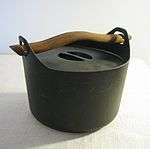
- cauldron (large bowl-shaped pot)
- pot; typically one made of thick material such as cast iron or pottery for slow cooking; compare kattila
- pataruoka: stew, hot pot (dish prepared in such vessel)
Declension
| Inflection of pata (Kotus type 9/kala, t-d gradation) | |||
|---|---|---|---|
| nominative | pata | padat | |
| genitive | padan | patojen | |
| partitive | pataa | patoja | |
| illative | pataan | patoihin | |
| singular | plural | ||
| nominative | pata | padat | |
| accusative | nom. | pata | padat |
| gen. | padan | ||
| genitive | padan | patojen patainrare | |
| partitive | pataa | patoja | |
| inessive | padassa | padoissa | |
| elative | padasta | padoista | |
| illative | pataan | patoihin | |
| adessive | padalla | padoilla | |
| ablative | padalta | padoilta | |
| allative | padalle | padoille | |
| essive | patana | patoina | |
| translative | padaksi | padoiksi | |
| instructive | — | padoin | |
| abessive | padatta | padoitta | |
| comitative | — | patoineen | |
Derived terms
- padallinen
- pata kattilaa soimaa
- olla hyvää pataa jonkun kanssa (to be on good terms with someone)
- pienilläkin padoilla on korvat (little pitchers have big ears)
- pata kattilaa soimaa (pot calling the kettle black)
Compounds
|
|
See also
Etymology 2
Borrowed from Swedish spader (“spades”).
Noun
pata
- (card games) spades (suit in playing cards)
- patakymppi
- ten of spades
- (card games) spade (a card of spades)
Declension
| Inflection of pata (Kotus type 9/kala, t-d gradation) | |||
|---|---|---|---|
| nominative | pata | padat | |
| genitive | padan | patojen | |
| partitive | pataa | patoja | |
| illative | pataan | patoihin | |
| singular | plural | ||
| nominative | pata | padat | |
| accusative | nom. | pata | padat |
| gen. | padan | ||
| genitive | padan | patojen patainrare | |
| partitive | pataa | patoja | |
| inessive | padassa | padoissa | |
| elative | padasta | padoista | |
| illative | pataan | patoihin | |
| adessive | padalla | padoilla | |
| ablative | padalta | padoilta | |
| allative | padalle | padoille | |
| essive | patana | patoina | |
| translative | padaksi | padoiksi | |
| instructive | — | padoin | |
| abessive | padatta | padoitta | |
| comitative | — | patoineen | |
Compounds
Anagrams
Hiri Motu
Noun
pata
Hungarian
Etymology
Probably from a Slavic language. Compare Serbo-Croatian peta, Slovak päta, Russian пята́ (pjatá, “heel”).
Pronunciation
- IPA(key): [ˈpɒtɒ]
- Hyphenation: pa‧ta
Noun
pata (plural paták)
- hoof (the tip of a toe of an ungulate such as a horse, ox or deer, strengthened by a thick keratin covering)
Declension
| Inflection (stem in long/high vowel, back harmony) | ||
|---|---|---|
| singular | plural | |
| nominative | pata | paták |
| accusative | patát | patákat |
| dative | patának | patáknak |
| instrumental | patával | patákkal |
| causal-final | patáért | patákért |
| translative | patává | patákká |
| terminative | patáig | patákig |
| essive-formal | pataként | patákként |
| essive-modal | — | — |
| inessive | patában | patákban |
| superessive | patán | patákon |
| adessive | patánál | patáknál |
| illative | patába | patákba |
| sublative | patára | patákra |
| allative | patához | patákhoz |
| elative | patából | patákból |
| delative | patáról | patákról |
| ablative | patától | patáktól |
| Possessive forms of pata | ||
|---|---|---|
| possessor | single possession | multiple possessions |
| 1st person sing. | patám | patáim |
| 2nd person sing. | patád | patáid |
| 3rd person sing. | patája | patái |
| 1st person plural | patánk | patáink |
| 2nd person plural | patátok | patáitok |
| 3rd person plural | patájuk | patáik |
Derived terms
(Compound words):
Icelandic
Pronunciation
- Rhymes: -aːta
Verb
pata (weak verb, third-person singular past indicative pataði, supine patað)
- to gesticulate
Conjugation
| infinitive (nafnháttur) |
að pata | ||||
|---|---|---|---|---|---|
| supine (sagnbót) |
patað | ||||
| present participle (lýsingarháttur nútíðar) |
patandi | ||||
| indicative (framsöguháttur) |
subjunctive (viðtengingarháttur) | ||||
| present (nútíð) |
ég pata | við pötum | present (nútíð) |
ég pati | við pötum |
| þú patar | þið patið | þú patir | þið patið | ||
| hann, hún, það patar | þeir, þær, þau pata | hann, hún, það pati | þeir, þær, þau pati | ||
| past (þátíð) |
ég pataði | við pötuðum | past (þátíð) |
ég pataði | við pötuðum |
| þú pataðir | þið pötuðuð | þú pataðir | þið pötuðuð | ||
| hann, hún, það pataði | þeir, þær, þau pötuðu | hann, hún, það pataði | þeir, þær, þau pötuðu | ||
| imperative (boðháttur) |
pata (þú) | patið (þið) | |||
| Forms with appended personal pronoun | |||||
| pataðu | patiði * | ||||
| * Spoken form, usually not written; in writing, the unappended plural form (optionally followed by the full pronoun) is preferred. | |||||
Lower Sorbian
Etymology
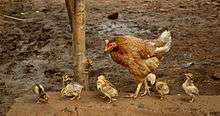
Cognate with Serbo-Croatian pȁtka (“duck”).
Pronunciation
- IPA(key): /ˈpata/
Noun
pata f
Declension
Maori
Noun
pata
Miskito
Noun
pata
Nyishi
Alternative forms
Etymology
pa + Proto-Tani *taŋ.
Noun
pata
References
Papiamentu
Etymology
From Portuguese pata and Spanish pata.
Noun
pata
Portuguese
Pronunciation
Etymology 1
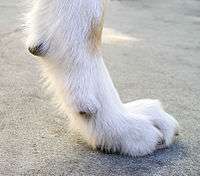
Unknown, cognate with French patte, from Vulgar Latin *patta (“paw, foot”), of Germanic origin. More at patte.
Noun
pata f (plural patas)
Etymology 2
Noun
pata f (plural patas)
- feminine equivalent of pato; a female duck
Quechua
Preposition
pata
Spanish
Etymology 1
Borrowed from Andalusian Arabic [script needed] (páṭṭ), from Arabic بَطّ (baṭṭ, “duck”), from Persian بت (bat, “duck”).
Noun
pata f (plural patas)
Etymology 2
Unknown, cognate with French patte, from Vulgar Latin *patta (“paw, foot”), of Germanic origin. More at patte.
Noun
pata f (plural patas)
- paw, foot, leg (of an animal).
- leg (of furniture)
- (colloquial) human leg, foot (often used in anger)
- (colloquial) footprint (often used in anger)
- Acabo de trapear y ya dejaste tus patas.
- I have just finished mopping and now you left your footprints (all over).
- pocket flap
- tie, draw
Synonyms
Related terms
- empatar
- patear
- patada
- hacer la pata
- meter la pata
Sranan Tongo
Etymology
From Portuguese pata (“paw, foot”).
Noun
pata
- sneaker (shoe)
Descendants
- Dutch: patta
Swahili
Noun
pata (n class, plural pata)
Verb
-pata (infinitive kupata)
- to get
- get the chance or opportunity to, be able to (followed by an infinitive or bare verb stem)
Conjugation
| Conjugation of -pata | ||||||||||||||||||||||||||||||||||||||||||||||||||||||||||||||||||||||||||||||||||||||||||||||
|---|---|---|---|---|---|---|---|---|---|---|---|---|---|---|---|---|---|---|---|---|---|---|---|---|---|---|---|---|---|---|---|---|---|---|---|---|---|---|---|---|---|---|---|---|---|---|---|---|---|---|---|---|---|---|---|---|---|---|---|---|---|---|---|---|---|---|---|---|---|---|---|---|---|---|---|---|---|---|---|---|---|---|---|---|---|---|---|---|---|---|---|---|---|---|
| Non-finite forms | ||||||||||||||||||||||||||||||||||||||||||||||||||||||||||||||||||||||||||||||||||||||||||||||
| Form | Positive | Negative | ||||||||||||||||||||||||||||||||||||||||||||||||||||||||||||||||||||||||||||||||||||||||||||
| Infinitive | kupata | kutopata | ||||||||||||||||||||||||||||||||||||||||||||||||||||||||||||||||||||||||||||||||||||||||||||
| Simple finite forms | ||||||||||||||||||||||||||||||||||||||||||||||||||||||||||||||||||||||||||||||||||||||||||||||
| Positive form | Singular | Plural | ||||||||||||||||||||||||||||||||||||||||||||||||||||||||||||||||||||||||||||||||||||||||||||
| Imperative | pata | pateni | ||||||||||||||||||||||||||||||||||||||||||||||||||||||||||||||||||||||||||||||||||||||||||||
| Habitual | hupata | |||||||||||||||||||||||||||||||||||||||||||||||||||||||||||||||||||||||||||||||||||||||||||||
| Complex finite forms | ||||||||||||||||||||||||||||||||||||||||||||||||||||||||||||||||||||||||||||||||||||||||||||||
| Polarity | Persons | Persons / Classes | Classes | |||||||||||||||||||||||||||||||||||||||||||||||||||||||||||||||||||||||||||||||||||||||||||
| 1st | 2nd | 3rd / M-wa | M-mi | Ma | Ki-vi | N | U | Ku | Pa | Mu | ||||||||||||||||||||||||||||||||||||||||||||||||||||||||||||||||||||||||||||||||||||
| Sg. | Pl. | Sg. | Pl. | Sg. / 1 | Pl. / 2 | 3 | 4 | 5 | 6 | 7 | 8 | 9 | 10 | 11 / 14 | 15 / 17 | 16 | 18 | |||||||||||||||||||||||||||||||||||||||||||||||||||||||||||||||||||||||||||||
| ||||||||||||||||||||||||||||||||||||||||||||||||||||||||||||||||||||||||||||||||||||||||||||||
| ||||||||||||||||||||||||||||||||||||||||||||||||||||||||||||||||||||||||||||||||||||||||||||||
| ||||||||||||||||||||||||||||||||||||||||||||||||||||||||||||||||||||||||||||||||||||||||||||||
| ||||||||||||||||||||||||||||||||||||||||||||||||||||||||||||||||||||||||||||||||||||||||||||||
| ||||||||||||||||||||||||||||||||||||||||||||||||||||||||||||||||||||||||||||||||||||||||||||||
| ||||||||||||||||||||||||||||||||||||||||||||||||||||||||||||||||||||||||||||||||||||||||||||||
| ||||||||||||||||||||||||||||||||||||||||||||||||||||||||||||||||||||||||||||||||||||||||||||||
| ||||||||||||||||||||||||||||||||||||||||||||||||||||||||||||||||||||||||||||||||||||||||||||||
| ||||||||||||||||||||||||||||||||||||||||||||||||||||||||||||||||||||||||||||||||||||||||||||||
| ||||||||||||||||||||||||||||||||||||||||||||||||||||||||||||||||||||||||||||||||||||||||||||||
| ||||||||||||||||||||||||||||||||||||||||||||||||||||||||||||||||||||||||||||||||||||||||||||||
| ||||||||||||||||||||||||||||||||||||||||||||||||||||||||||||||||||||||||||||||||||||||||||||||
| ||||||||||||||||||||||||||||||||||||||||||||||||||||||||||||||||||||||||||||||||||||||||||||||
| ||||||||||||||||||||||||||||||||||||||||||||||||||||||||||||||||||||||||||||||||||||||||||||||
| ||||||||||||||||||||||||||||||||||||||||||||||||||||||||||||||||||||||||||||||||||||||||||||||
| Not all possible forms are listed in the table. Transitive verbs can take object concords, relative concords can agree with all noun classes, and many other forms not commonly seen in modern Standard Swahili are absent from the table. See Appendix:Swahili verbs for more information. | ||||||||||||||||||||||||||||||||||||||||||||||||||||||||||||||||||||||||||||||||||||||||||||||