par
English
Etymology 1
Abbreviation.
Abbreviation
par
Etymology 2
Borrowed from French par (“through, by”), from Latin per (“through”).
Pronunciation
- (Received Pronunciation) IPA(key): /pɑː/
- (US) IPA(key): /pɑɹ/, [pʰɑɹ], [pʰɑ˞]
Audio (US) (file) - Rhymes: -ɑː(ɹ)
Preposition
par
- By; with.
Usage notes
Noun
par (plural pars)
- Equal value; equality of nominal and actual value; the value expressed on the face or in the words of a certificate of value, as a bond or other commercial paper.
- Equality of condition or circumstances.
- (golf, mostly uncountable) The allotted number of strokes to reach the hole.
- He needs to make this shot for par.
- (golf, countable) A hole in which a player achieves par.
- (Britain) An amount which is taken as an average or mean.
Derived terms
Verb
par (third-person singular simple present pars, present participle parring, simple past and past participle parred)
- (transitive, golf) To reach the hole in the allotted number of strokes.
- He will need to par every hole in order to win this game.
Etymology 3
Noun
par (plural pars)
- Alternative form of parr (“young salmon”)
Anagrams
Ambonese Malay
Preposition
par
Aromanian
Etymology 1
From Latin pāreō. Compare Daco-Romanian părea, par.
Alternative forms
Verb
par (past participle pãrutã)
Derived terms
- pãreari / pãreare
- pãrut
See also
- undzescu
Etymology 2
From Latin pālus. Compare Daco-Romanian par.
Alternative forms
Noun
par
Related terms
Chavacano
Etymology
Noun
par
Danish
Etymology 1
From late Old Norse par, from Middle Low German par, from Latin pār.
Pronunciation
- IPA(key): /par/, [pʰɑ]
- Rhymes: -ar
Noun
par n (singular definite parret, plural indefinite par)
Inflection
Etymology 2
Pronunciation
- IPA(key): /paːr/, [pʰɑː]
Noun
par c
- (golf) par (the allotted number of strokes to reach the hole)
Etymology 3
See parre.
Pronunciation
- IPA(key): /paːr/, [pʰɑːˀ]
Verb
par
- imperative of parre
Faroese
Etymology
From late Old Norse par, from Middle Low German par, from Latin pār.
Pronunciation
- IPA(key): /pʰɛaːɹ/
- Rhymes: -ɛaːɹ
Noun
par n (genitive singular pars, plural pør)
Declension
| Declension of par | ||||
|---|---|---|---|---|
| n5 | singular | plural | ||
| indefinite | definite | indefinite | definite | |
| nominative | par | parið | pør | pørini |
| accusative | par | parið | pør | pørini |
| dative | pari | parinum | pørum | pørunum |
| genitive | pars | parsins | para | paranna |
French
Etymology
From Middle French par, from Old French par, from Latin per, from Proto-Indo-European *peri.
Pronunciation
Preposition
par
- through
- par la fenêtre ― through the window
- aller par le parc ― go through the park
- by (used to introduce a means; used to introduce an agent in a passive construction))
- voyager par train ― travel by train
- par surprise ― by surprise
- le bateau est attaqué par des pirates. ― the boat is [being] attacked by pirates.
- over (used to express direction)
- Viens par ici ! ― Come over here!
- from (used to describe the origin of something, especially a view or movement)
- voir par devant ― see from the back
- le liquide est arrivé par le robinet ― the liquid arrived from the tap
- around, round (inside of)
- par tout le cinéma ― all around the cinema
- on (situated on, used in certain phrases)
- par terre ― on the ground
- on, at, in (used to denote a time when something occurs)
- par un beau jour ― on a nice day
- par un soir ― in one evening
- in
- marcher par deux ― walk in twos
- per, a, an
- trois fois par semaine ― three times a week
- out of (used to describe the reason for something)
- par pure colère ― out of pure anger
- par tristesse ― out of sadness
- for
Derived terms
Noun
par m (plural pars)
- (golf) par
Further reading
- “par” in le Trésor de la langue française informatisé (The Digitized Treasury of the French Language).
Anagrams
Friulian
Etymology
Preposition
par
Gabrielino-Fernandeño
Alternative forms
Noun
par
References
- Kroeber, Shoshonean Dialects of California, in University of California Publications: American archaeology and ethnology, volume 4, page 81
- HG
Icelandic
Pronunciation
- IPA(key): /pʰaːr/
Audio (file) - Rhymes: -aːr
Etymology 1
From Middle Low German par, from Latin pār (“equal”).
Noun
par n (genitive singular pars, nominative plural pör)
Declension
Synonyms
- (pair): tvenna
Etymology 2
Noun
par n (genitive singular pars, no plural)
- (golf) par
Declension
Indo-Portuguese
Etymology
From Portuguese para, from Old Portuguese pera, from Latin per (“through”) + ad (“to”).
Preposition
par
- (Diu) to (indicates indirect object)
- 1883, Hugo Schuchardt, Kreolische Studien, volume 3:
- Já fallou par su pai aquêl mais piquin, […]
- The youngest one told (literally: said to) his father […]
- Já fallou par su pai aquêl mais piquin, […]
- 1883, Hugo Schuchardt, Kreolische Studien, volume 3:
- (Diu) for (indicates subject of an infinitive)
- 1883, Hugo Schuchardt, Kreolische Studien, volume 3:
- Trasê tamêm um vaquinh bem gord e matá par nós comê e par nós regalá:
- Bring also a small and very fat cow and kill (it) for us to eat and for us to regale ourselves:
- Trasê tamêm um vaquinh bem gord e matá par nós comê e par nós regalá:
- 1883, Hugo Schuchardt, Kreolische Studien, volume 3:
Istriot
Etymology
Preposition
par
Kurdish
Etymology
From *p- + *ar-, cognate with Avestan 𐬫𐬁𐬭𐬆- (yārə-, “year”), English year, all from Proto-Indo-European *yeh₁r- (“year”).
Pronunciation
- IPA(key): /ˈpɑːɾ/
Noun
par f
Noun
par f
Adverb
par
Latin
Etymology
Unclear. A traditional reconstruction is Proto-Indo-European *perH- (“exchange”), comparing Ancient Greek πέρνημι (pérnēmi) etc. and Lithuanian pirkti; but this accounts badly for the /a(ː)/. Others refrain from assigning an Indo-European root.
Pronunciation
- (Classical) IPA(key): /paːr/
Adjective
pār (genitive paris); third declension
Inflection
Third declension.
| Number | Singular | Plural | |||
|---|---|---|---|---|---|
| Case / Gender | Masc./Fem. | Neuter | Masc./Fem. | Neuter | |
| nominative | pār | parēs | paria | ||
| genitive | paris | parium | |||
| dative | parī | paribus | |||
| accusative | parem | pār | parēs | paria | |
| ablative | parī | paribus | |||
| vocative | pār | parēs | paria | ||
- comparative: parior, superlative: parissimus
Derived terms
Descendants
See also
Latvian
Preposition
par (with accusative)
Middle French
Etymology
From Old French par.
Conjunction
par
- by (introduces an agent)
- 1532, François Rabelais, Pantagruel:.
- Comment Epistemon qui avoit la teste tranchée, fut guery habillement par Panurge.
- How Epistemon who had his head cut off was adroitly cured by Panurge
- Comment Epistemon qui avoit la teste tranchée, fut guery habillement par Panurge.
-
Descendants
- French: par
Norwegian Bokmål
Noun
par n (definite singular paret, indefinite plural par, definite plural para or parene)
- a pair
- et par sko ― a pair of shoes
- a couple
- a few (determiner)
- for et par dager siden ― a few days ago
Derived terms
Noun
par n
- (golf, uncountable) par
- ett slag under par ― one stroke under par
Norwegian Nynorsk
Pronunciation
- IPA(key): /pɑːr/
Etymology 1
From Old Norse par, from Middle Low German par, from Latin paria (“equals”), neuter plural of pār. Akin to English pair.
Noun
par n (definite singular paret, indefinite plural par, definite plural para)
- a pair
- eit par sko ― a pair of shoes
- a couple
- a few (determiner)
- for eit par dagar sidan ― a few days ago
Derived terms
Etymology 2
Noun
par n
- (golf, uncountable) par
- eitt slag under par ― one stroke under par
References
- “par” in The Nynorsk Dictionary.
Old French
Etymology
Conjunction
par
- by; via (introduces a medium)
- Chrétien de Troyes, Érec et Énide, circa 1170:
- Tost m'oceïst par son orguel.
- Soon, he killed with his pride.
- Tost m'oceïst par son orguel.
- Chrétien de Troyes, Érec et Énide, circa 1170:
- because of; due to (introduces a medium)
- Chrétien de Troyes, Érec et Énide, circa 1170:
- Premiers sont au mostier venu,
La furent par devocion- The first ones came to the minster,
they were there to pray
- The first ones came to the minster,
- Premiers sont au mostier venu,
- Chrétien de Troyes, Érec et Énide, circa 1170:
- by
- Chrétien de Troyes, Érec et Énide, circa 1170:
- L'une a l'autre par la main prise,
- They took each other by the hand
- L'une a l'autre par la main prise,
- Chrétien de Troyes, Érec et Énide, circa 1170:
- by; through; across
- Chrétien de Troyes, Érec et Énide, circa 1170:
- Li cheval par le chanp s'an fuient.
- The horses fled through the field
- Li cheval par le chanp s'an fuient.
- Chrétien de Troyes, Érec et Énide, circa 1170:
- by (introduces an exclamation)
- Chrétien de Troyes, Érec et Énide, circa 1170:
- "Sire, par Deu et par sa croiz!
- "Sire! By God and by his cross!"
- "Sire, par Deu et par sa croiz!
- Chrétien de Troyes, Érec et Énide, circa 1170:
- in (at a location)
Descendants
Portuguese
Etymology
From Old Portuguese par, from Latin pār (“equal, like”), from Proto-Indo-European *per (“exchange”).
Pronunciation
Noun
par m (plural pares)
Derived terms
- grupo de pares
Adjective
par m, f (plural pares, not comparable)
Romanian
Etymology 1
From Latin pālus (“stake”), from Proto-Italic *pākslos, from Proto-Indo-European *peh₂ǵ-slos, from *peh₂ǵ-.
Noun
par m (plural pari)
Related terms
See also
Etymology 2
Form of părea.
Verb
par
- first-person singular present indicative of părea.
- first-person singular present subjunctive of părea.
- third-person plural present indicative of părea.
Serbo-Croatian
Etymology
Pronunciation
- IPA(key): /pâːr/
Noun
pȃr m (Cyrillic spelling па̑р)
Declension
Derived terms
Slovene
Pronunciation
- IPA(key): /ˈpàːr/
- Tonal orthography: pár
Noun
pár m inan (genitive pára, nominative plural pári)
Declension
Synonyms
- (some): nekaj
See also
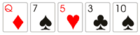
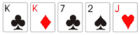
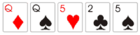
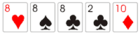
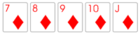
| Poker hands in Slovene · poker karte (layout · text) | |||||
|---|---|---|---|---|---|
 |
 |
 |
 |
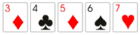 | |
| najvišja karta | par | dva para | tris | lestvica, kenta | |
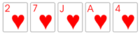 |
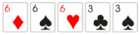 |
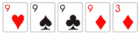 |
 |
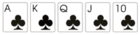 | |
| barva | full house | poker | barvna lestvica | kraljeva lestvica | |
Spanish
Etymology
From Latin pār (“equal, like”), from Proto-Indo-European *per (“exchange”).
Adjective
par (plural pares)
Noun
par m (plural pares)
- pair
- (physics) two equal non-collinear forces; that is a force couple in Newtonian mechanics
Derived terms
- par motor
Swedish
Pronunciation
audio (file)
Noun
par n
Declension
| Declension of par | ||||
|---|---|---|---|---|
| Singular | Plural | |||
| Indefinite | Definite | Indefinite | Definite | |
| Nominative | par | paret | par | paren |
| Genitive | pars | parets | pars | parens |
Related terms
Tok Pisin
Noun
par
Venetian
Alternative forms
Etymology
Noun
par m (plural pari)
West Frisian
Noun
par c (plural parren)