銀
| ||||||||
Translingual
Han character
銀 (radical 167, 金+6, 14 strokes, cangjie input 金日女 (CAV), four-corner 87132, composition ⿰金艮)
References
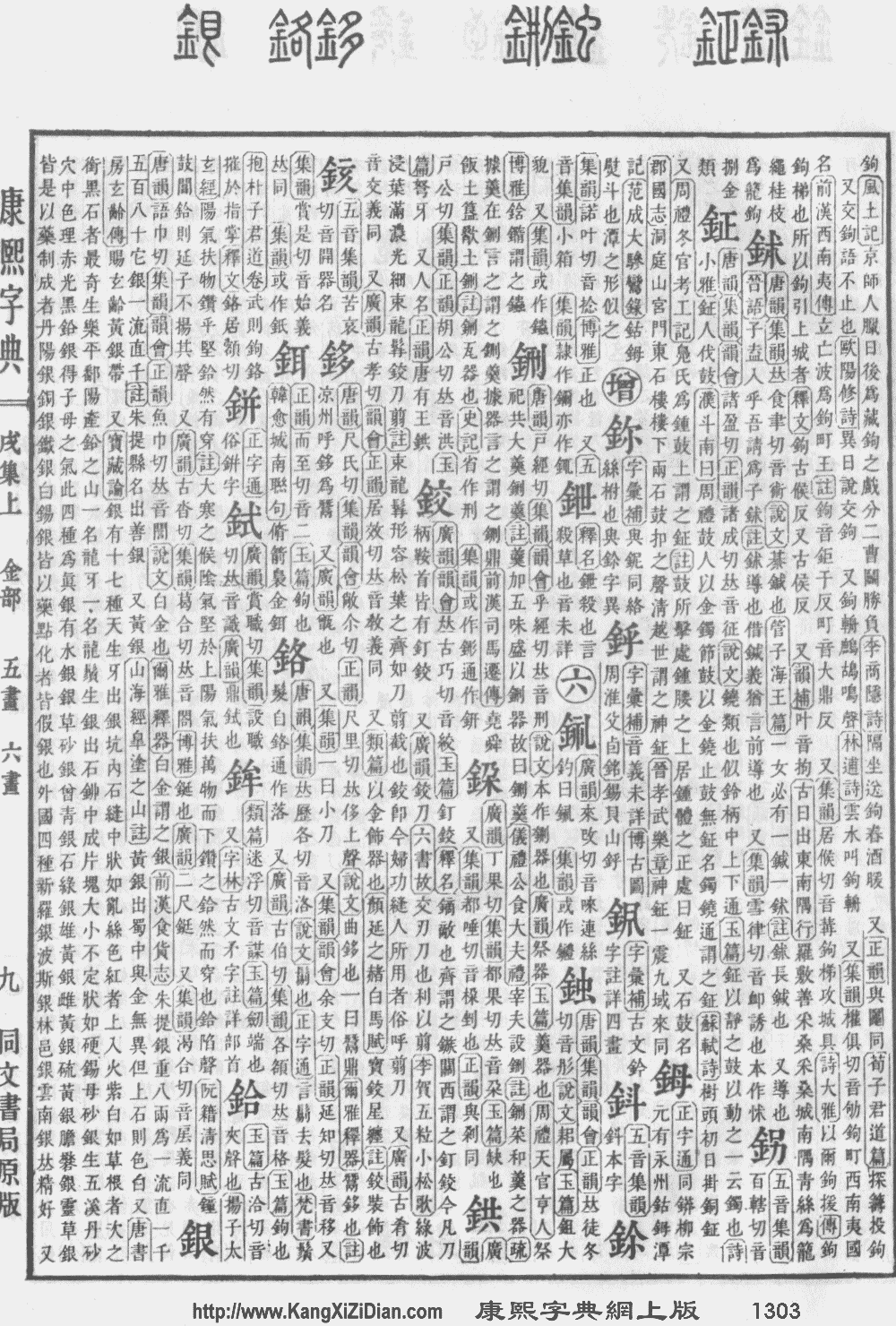
- KangXi: page 1303, character 25
- Dai Kanwa Jiten: character 40355
- Dae Jaweon: page 1805, character 2
- Hanyu Da Zidian: volume 6, page 4202, character 18
- Unihan data for U+9280
Chinese
| trad. | 銀 | |
|---|---|---|
| simp. | 银 | |
Glyph origin
| Historical forms of the character 銀 | |
|---|---|
| Shuowen Jiezi (compiled in Han) | Liushutong (compiled in Ming) |
| Small seal script | Transcribed ancient scripts |
 |
 |
| Characters in the same phonetic series (艮) (Zhengzhang, 2003) | |
|---|---|
| Old Chinese | |
| 艱 | *krɯːn |
| 齦 | *kʰrɯːnʔ, *kʰɯːnʔ, *ŋɯn |
| 眼 | *ŋrɯːnʔ |
| 蛝 | *ɡrɯːn |
| 限 | *ɡrɯːnʔ |
| 硍 | *ɡrɯːnʔ |
| 豤 | *kʰɯːnʔ, *kʰɯːnʔ, *kʰuːn |
| 詪 | *ɡlɯːnʔ, *kɯːnʔ, *kɯːns |
| 根 | *kɯːn |
| 跟 | *kɯːn |
| 珢 | *kɯːn, *kɯːns, *ŋrɯn |
| 艮 | *kɯːns |
| 茛 | *kɯːns |
| 墾 | *kʰɯːnʔ |
| 懇 | *kʰɯːnʔ |
| 垠 | *ŋɯːn, *ŋrɯn, *ŋɯn |
| 泿 | *ŋɯːn, *ŋrɯn |
| 痕 | *ɡɯːn |
| 拫 | *ɡɯːn |
| 鞎 | *ɡɯːn |
| 很 | *ɡɯːnʔ |
| 恨 | *ɡɯːns |
| 銀 | *ŋrɯn |
| 檭 | *ŋrɯn |
Phono-semantic compound (形聲, OC *ŋrɯn) : semantic 金 (“metal”) + phonetic 艮 (OC *kɯːns).
Etymology
From Proto-Sino-Tibetan *ŋul ~ (d-)ŋur. Cognate with Tibetan དངུལ (dngul), Burmese ငွေ (ngwe).
Pronunciation
Definitions
銀
Compounds
|
|
|
Descendants
Others:
- Hmong-Mien: *ɲʷi̯ən (“silver”)
- White Hmong: nyiaj (“silver, money”)
- Tai:
Japanese
Kanji
Readings
Compounds
Etymology 1
| Kanji in this term |
|---|
| 銀 |
| かね Grade: 3 |
| kun’yomi |
From Old Japanese. May be ultimately derived from onomatopoeia カンカン (kankan, “clang clang”), the sound of hitting metal. Compare Cantonese 金 (gam, “metal, gold”), Sanskrit कनक (kanaka, “gold, golden”), possibly suggesting a common onomatopoeic derivation.
Alternative forms
Pronunciation
Noun
Usage notes
In former times, silver was the basis for the Japanese economy. In modern Japanese, kane is more commonly spelled using the character for gold: 金. The money sense is more commonly prefixed with お (o-).
Etymology 2
| Kanji in this term |
|---|
| 銀 |
| しろがね Grade: 3 |
| kun’yomi |
Compound of 白 (shiro, “white”) + 金 (kane, “metal”). Starting from the Muromachi Period, the kane changes to gane due to rendaku (連濁).
Pronunciation
Noun
銀 (hiragana しろがね, rōmaji shirogane)
- silver
- silver dust mixed into glue or some other base: silver paint or lacquer
- silver thread
- silver coin
- the color silver
Compounds
- 銀色 (shirogane iro): a bright shining color, like silver
- 白銀蜘蛛 (shirogane-gumo), 銀蜘蛛 (shirogane-gumo): a type of spider
- 銀細工 (shirogane-zaiku): finework using silver
- 銀師 (shiroganeshi): a silverworker, a silversmith
- 銀草 (shiroganesō): alternate term for Dichocarpum stoloniferum, a type of low-growing flowering plant in family Ranunculaceae
- 銀作 (shirogane-zukuri): something decorated in silver, or made from silver
- 銀屋 (shiroganeya): a silverworker or silversmith's place of business; a silverworker or silversmith; (archaic) a moneychanger
Etymology 3
| Kanji in this term |
|---|
| 銀 |
| ぎん Grade: 3 |
| on’yomi |
| Chemical element | |
|---|---|
| Ag | Previous: パラジウム (parajiumu) (Pd) |
| Next: カドミウム (kadomiumu) (Cd) | |
Pronunciation
Noun
Korean
Hanja
銀 • (eun) (hangeul 은, revised eun, McCune–Reischauer ŭn, Yale un)
Vietnamese
Han character
- This term needs a translation to English. Please help out and add a translation, then remove the text
{{rfdef}}.