舞
| ||||||||
Translingual
Han character
舞 (radical 136 舛+8, in Chinese 14 strokes, in Japanese 15 strokes, cangjie input 人廿弓戈手 (OTNIQ), four-corner 80251, composition ⿱⿳𠂉卌一舛)
References
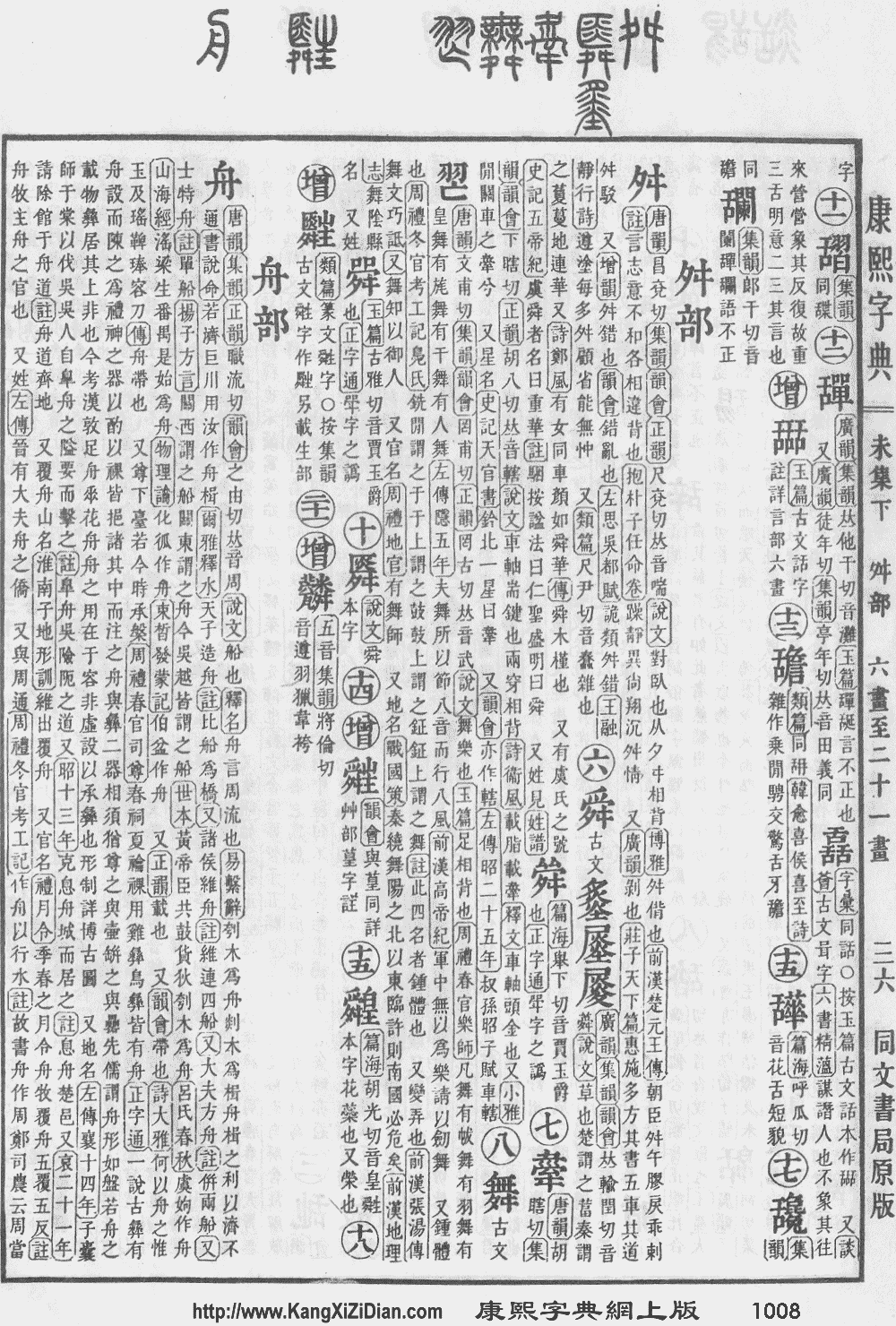
- KangXi: page 1008, character 16
- Dai Kanwa Jiten: character 30342
- Dae Jaweon: page 1465, character 16
- Hanyu Da Zidian: volume 2, page 865, character 10
- Unihan data for U+821E
Chinese
| simp. and trad. |
舞 | |
|---|---|---|
Glyph origin
| Historical forms of the character 舞 | |||
|---|---|---|---|
| Shang | Western Zhou | Shuowen Jiezi (compiled in Han) | Liushutong (compiled in Ming) |
| Oracle bone script | Bronze inscriptions | Small seal script | Transcribed ancient scripts |
 |
 |
 |
 |
| Characters in the same phonetic series (無) (Zhengzhang, 2003) | |
|---|---|
| Old Chinese | |
| 墲 | *m̥ʰaː, *maː, *ma |
| 橅 | *maː |
| 膴 | *hmaː, *ma, *maʔ |
| 幠 | *hmaː |
| 鄦 | *hmaʔ |
| 撫 | *m̥ʰaʔ |
| 無 | *ma |
| 瞴 | *ma, *maʔ |
| 蕪 | *ma |
| 璑 | *ma |
| 鷡 | *ma |
| 譕 | *ma |
| 憮 | *ma, *maʔ |
| 舞 | *maʔ |
| 廡 | *maʔ |
| 嫵 | *maʔ |
| 甒 | *maʔ |
| 潕 | *maʔ |
| 儛 | *maʔ |
無 + 舛 (“steps”). A specific character for the dance sense of 無. See 無 for more.
Pronunciation
Definitions
舞
Compounds
Derived terms from 舞
|
|
|
Japanese
Kanji
舞
Readings
Compounds
Noun
- a type of traditional Japanese dance consisting of simple and quiet movements
See also
Proper noun
- A female given name
Korean
Hanja
舞 • (mu) (hangeul 무, revised mu, McCune–Reischauer mu, Yale mu)
- This term needs a translation to English. Please help out and add a translation, then remove the text
{{rfdef}}.
Vietnamese
Han character
- This term needs a translation to English. Please help out and add a translation, then remove the text
{{rfdef}}.
This article is issued from
Wiktionary.
The text is licensed under Creative Commons - Attribution - Sharealike.
Additional terms may apply for the media files.