膝
| ||||||||
Translingual
Han character
膝 (radical 130 肉+11, 15 strokes, cangjie input 月木人水 (BDOE), four-corner 74232, composition ⿰⺼桼)
Coordinate terms
References
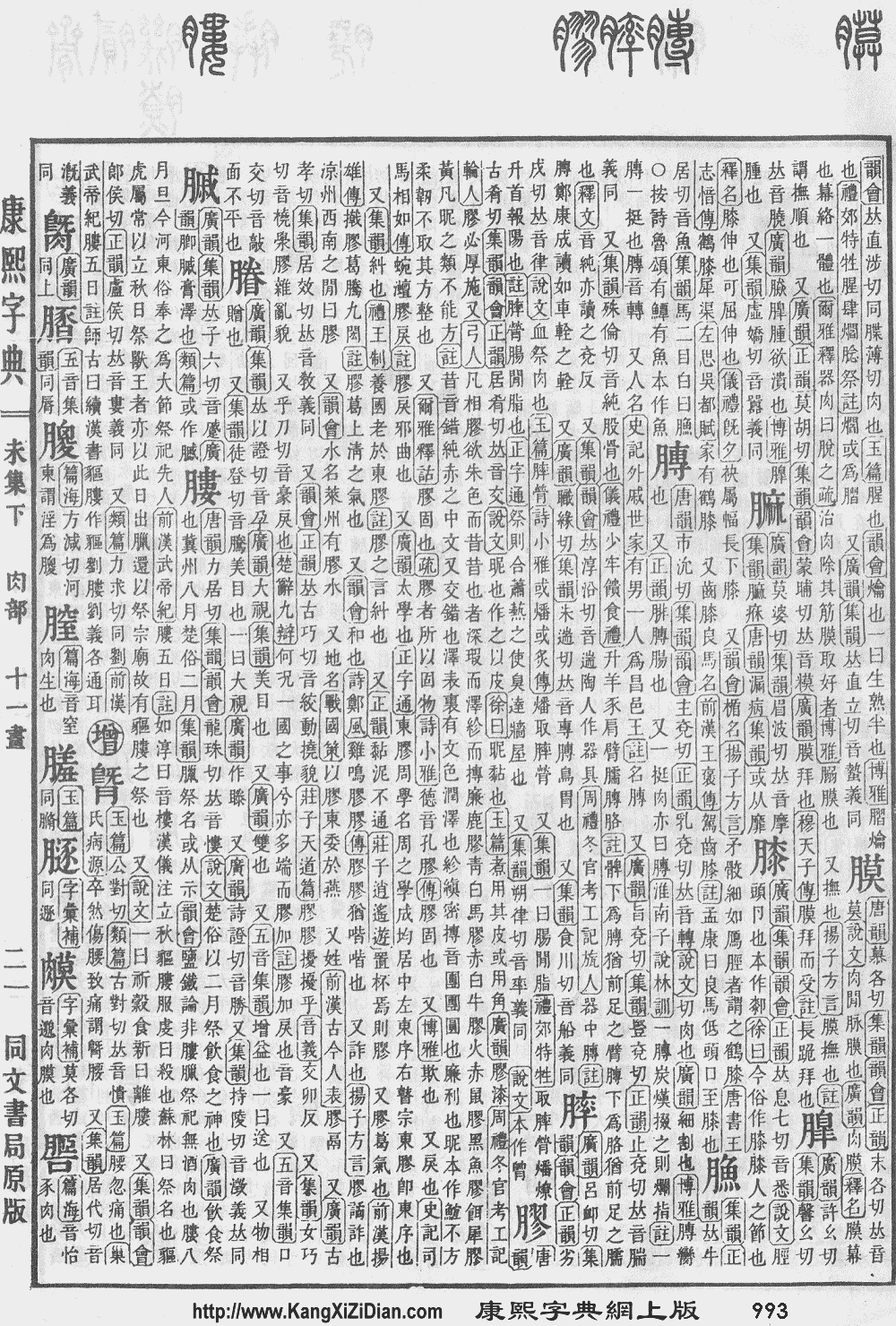
- KangXi: page 993, character 4
- Dai Kanwa Jiten: character 29837
- Dae Jaweon: page 1445, character 2
- Hanyu Da Zidian: volume 3, page 2106, character 11
- Unihan data for U+819D
Chinese
| simp. and trad. |
膝 | |
|---|---|---|
| alt. forms | 䣛 | |
Glyph origin
| Characters in the same phonetic series (桼) (Zhengzhang, 2003) | |
|---|---|
| Old Chinese | |
| 漆 | *sʰiɡ |
| 桼 | *sʰiɡ |
| 膝 | *siɡ |
| 厀 | *siɡ |
Phono-semantic compound (形聲, OC *siɡ) : semantic ⺼ (“meat, body”) + phonetic 桼 (OC *sʰiɡ) – a body part, the knee.
Pronunciation
Definitions
膝
Compounds
|
Japanese
Kanji
膝
Readings
Compounds
| Kanji in this term |
|---|
| 膝 |
| ひざ Grade: S |
| kun’yomi |
Pronunciation
Noun
- knee
- 膝を抱える
- hiza o kakaeru
- to hug one's knees
- 膝を抱える
References
Korean
Hanja
膝 • (seul) (hangeul 슬)
- This term needs a translation to English. Please help out and add a translation, then remove the text
{{rfdef}}.
Vietnamese
Han character
膝 (tất)
- This term needs a translation to English. Please help out and add a translation, then remove the text
{{rfdef}}.
This article is issued from
Wiktionary.
The text is licensed under Creative Commons - Attribution - Sharealike.
Additional terms may apply for the media files.