漆
See also: 柒
| ||||||||
Translingual
Han character
漆 (radical 85 水+11, 14 strokes, cangjie input 水木人水 (EDOE), four-corner 34132, composition ⿰氵桼)
References
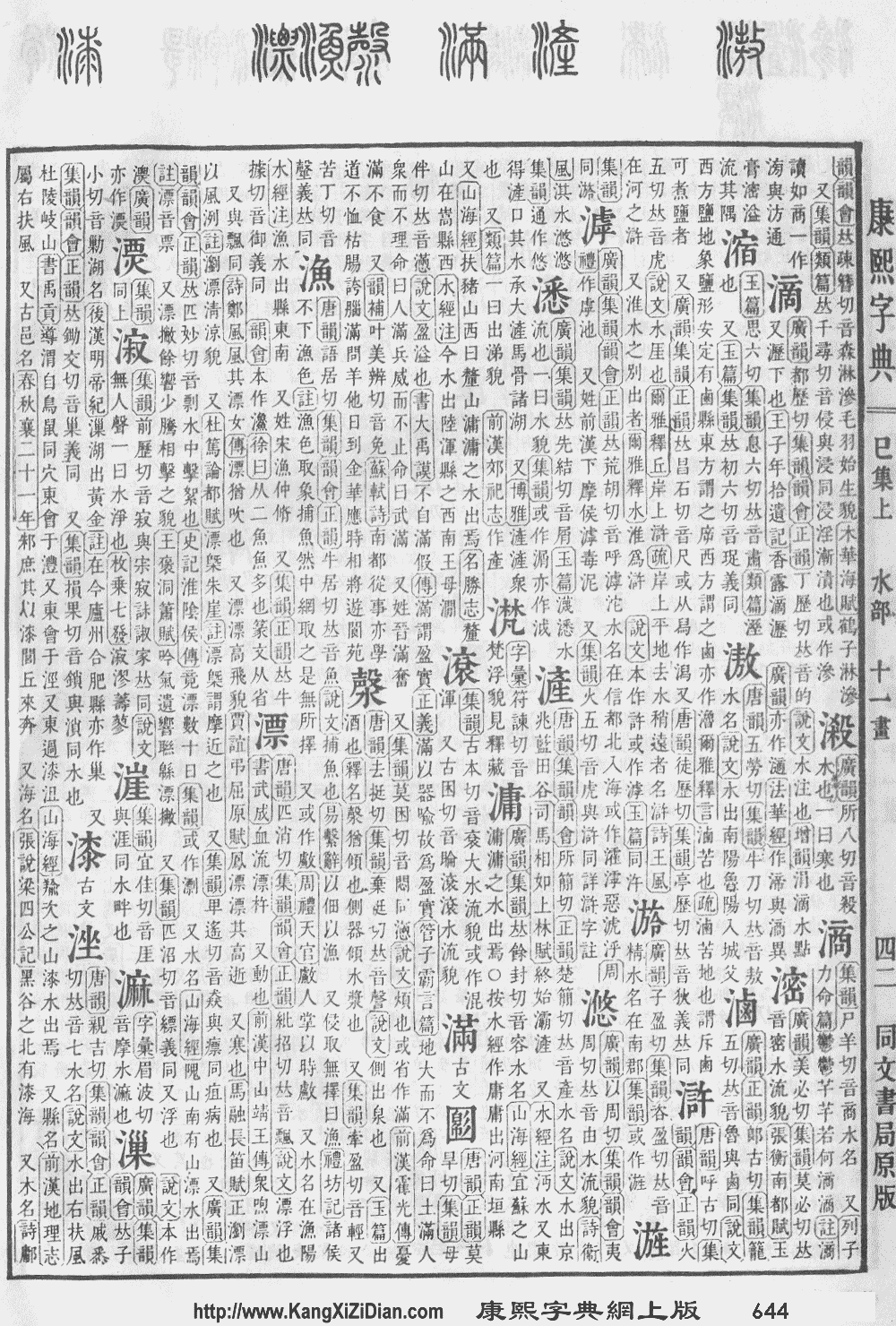
- KangXi: page 644, character 28
- Dai Kanwa Jiten: character 18108
- Dae Jaweon: page 1053, character 5
- Hanyu Da Zidian: volume 3, page 1716, character 9
- Unihan data for U+6F06
Chinese
| simp. and trad. |
漆 | |
|---|---|---|
| alt. forms | 溙 㲺 second round simplified | |
Glyph origin
| Characters in the same phonetic series (桼) (Zhengzhang, 2003) | |
|---|---|
| Old Chinese | |
| 漆 | *sʰiɡ |
| 桼 | *sʰiɡ |
| 膝 | *siɡ |
| 厀 | *siɡ |
Pronunciation
Definitions
漆
Compounds
Descendants
From Min-Nan:
- Iban: chat
Japanese
Kanji
漆
Readings
Etymology
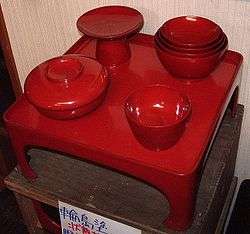
漆 (urushi): a traditional red lacquerware serving set.
| Kanji in this term |
|---|
| 漆 |
| うるし Grade: S |
| kun’yomi |
Appears to be derived from Old Japanese root uru, as in terms such as classical Japanese 潤う (urufu) → modern 潤う (uruou, “to be moist”), うるうる (uruuru, “wetly, moistly”, adverb). Probably from the way that a lacquered surface glistens as if wet.
Pronunciation
Noun
漆 (hiragana うるし, rōmaji urushi)
Descendants
- → English: urushiol
References
Korean
Hanja
漆 • (chil) (hangeul 칠, revised chil, McCune–Reischauer ch'il, Yale chil)
- This term needs a translation to English. Please help out and add a translation, then remove the text
{{rfdef}}.
Vietnamese
Han character
漆 (tất)
- This term needs a translation to English. Please help out and add a translation, then remove the text
{{rfdef}}.
This article is issued from
Wiktionary.
The text is licensed under Creative Commons - Attribution - Sharealike.
Additional terms may apply for the media files.