疊
| ||||||||
Translingual
| Traditional | 疊 |
|---|---|
| Shinjitai | 畳 |
| Simplified | 叠 |
Han character
疊 (radical 102, 田+17, 22 strokes, cangjie input 田田田一 (WWWM), four-corner 60107, composition ⿱畾冝)
Descendants
References
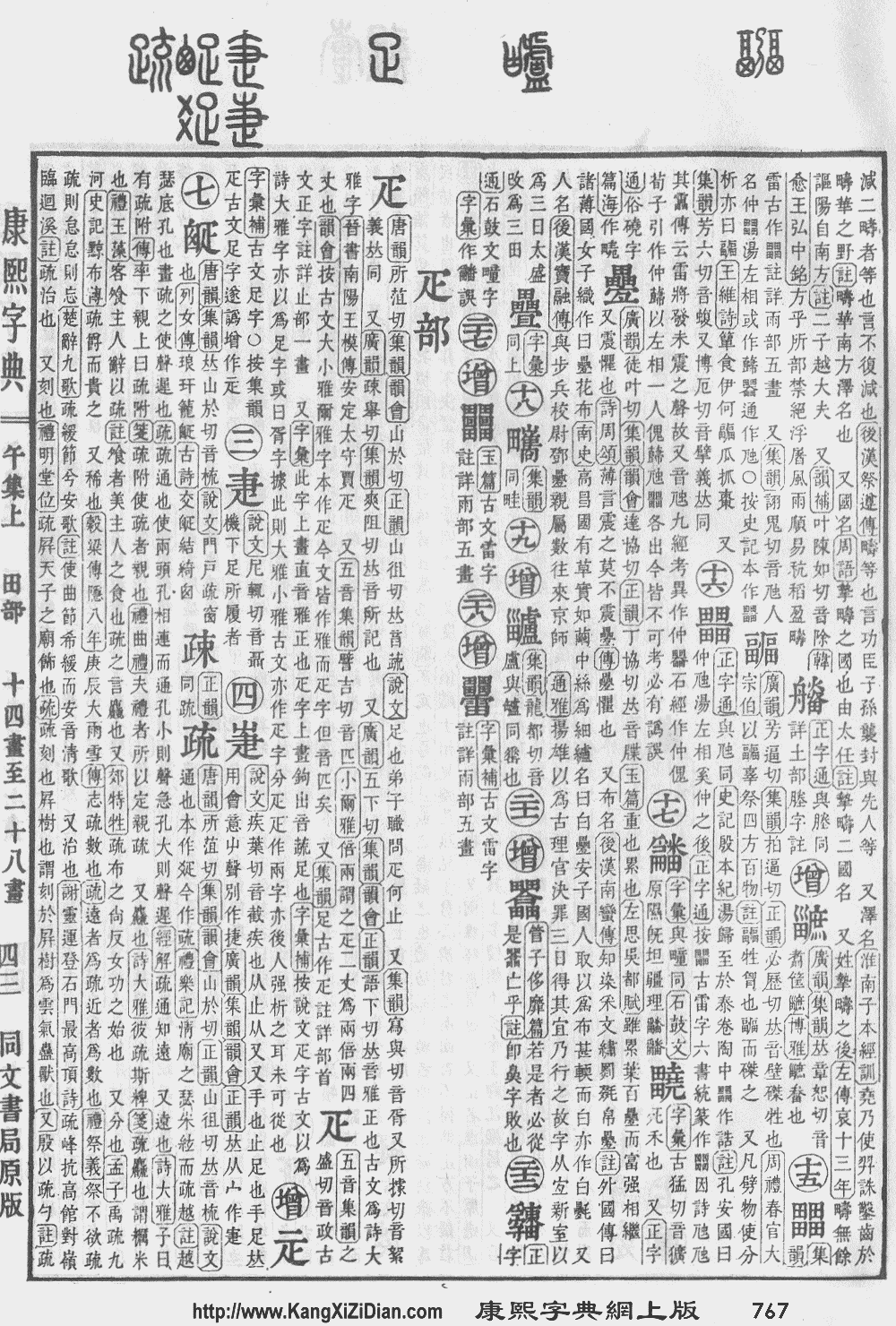
- KangXi: page 767, character 9
- Dai Kanwa Jiten: character 21983
- Dae Jaweon: page 1177, character 14
- Hanyu Da Zidian: volume 4, page 2555, character 14
- Unihan data for U+758A
Chinese
| trad. | 疊 | |
|---|---|---|
| simp. | 叠 | |
| alt. forms | ||
Glyph origin
| Characters in the same phonetic series (疊) (Zhengzhang, 2003) | |
|---|---|
| Old Chinese | |
| 曡 | *l'ɯːb |
| 疊 | *l'ɯːb |
Originally as 曡, with 晶 (jīng) on top. Shuowen commented that the shape change was promoted by emperor of the short-lived Xin Dynasty, who deemed the use of three "suns" (日) in this character too empowering - compared to three "fields" (田).
Etymology
Cognate with 褶 (“lined dress”), Tibetan ལྟབ (ltab, “to fold, gather up, to lay or put together”), ལྡེབ (ldeb, “to bend round or back, to turn round, to double down”), ལྡབ (ldab, “to fold up, repeat, do again”).
Pronunciation
Definitions
疊
Compounds
Japanese
| 畳 | |
| 疊 |
Kanji
(“Jinmeiyō” kanji used for names, kyūjitai kanji, shinjitai form 畳)
Readings
Noun
疊 (kyūjitai kanji, shinjitai kanji 畳, hiragana たたみ, rōmaji tatami)
Korean
Hanja
疊 • (cheop) (hangeul 첩, revised cheop, McCune–Reischauer ch'ŏp, Yale chep)
- This term needs a translation to English. Please help out and add a translation, then remove the text
{{rfdef}}.
Vietnamese
Han character
疊 (điệp, đệp, xếp)
- This term needs a translation to English. Please help out and add a translation, then remove the text
{{rfdef}}.