犯
| ||||||||
Translingual
Han character
犯 (radical 94 犬+2, 5 strokes, cangjie input 大竹尸山 (KHSU), four-corner 47212, composition ⿰犭㔾)
References
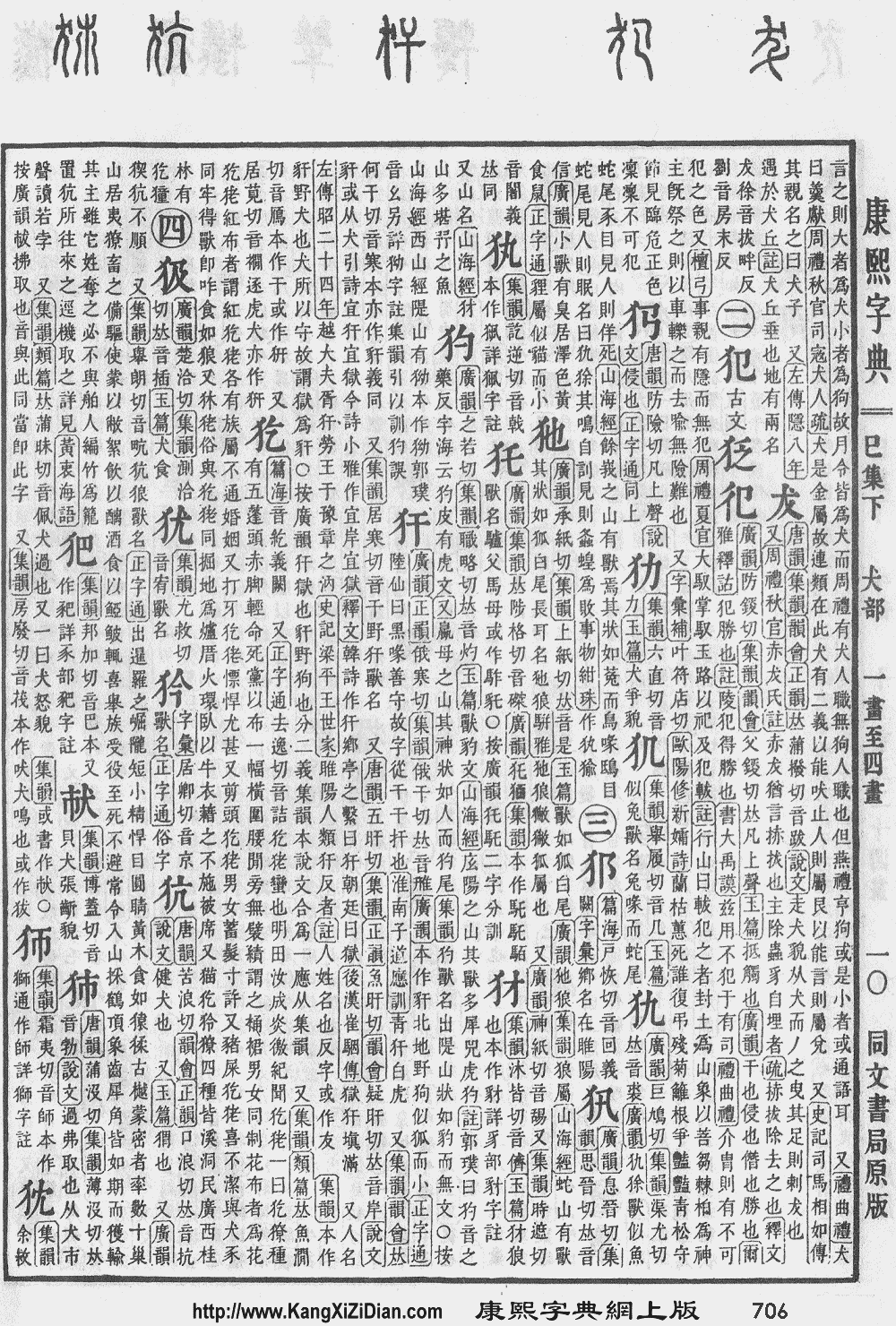
- KangXi: page 706, character 2
- Dai Kanwa Jiten: character 20238
- Dae Jaweon: page 1118, character 17
- Hanyu Da Zidian: volume 2, page 1331, character 8
- Unihan data for U+72AF
Chinese
| simp. and trad. |
犯 | |
|---|---|---|
Glyph origin
| Historical forms of the character 犯 |
|---|
| Shuowen Jiezi (compiled in Han) |
| Small seal script |
 |
| Characters in the same phonetic series (氾) (Zhengzhang, 2003) | |
|---|---|
| Old Chinese | |
| 氾 | *pʰoms, *bom |
| 犯 | *bomʔ |
| 範 | *bomʔ |
| 范 | *bomʔ |
| 笵 | *bomʔ |
Phono-semantic compound (形聲, OC *bomʔ) : semantic 犬 + phonetic 𢎘.
Etymology
"To pass over" > "to offend against, oppose". Compare 氾.
This character originally had bilabial nasal (*-m) final in Old and Middle Chinese, but had undergone dissimilation (from bilabial plosive *b-) to become *-n in most dialects, except for Hakka. Similar dissimilation happened in 帆.
Pronunciation
Definitions
犯
Compounds
Japanese
Kanji
犯
Readings
Compounds
Suffix
- perpetrators of a crime
- a crime
Korean
Hanja
犯 • (beom) (hangeul 범, revised beom, McCune–Reischauer pŏm, Yale pem)
- This term needs a translation to English. Please help out and add a translation, then remove the text
{{rfdef}}.
Vietnamese
Han character
犯 (phạm)
- This term needs a translation to English. Please help out and add a translation, then remove the text
{{rfdef}}.
This article is issued from
Wiktionary.
The text is licensed under Creative Commons - Attribution - Sharealike.
Additional terms may apply for the media files.