津
| ||||||||
Translingual
Han character
津 (radical 85, 水+6, 9 strokes, cangjie input 水中手 (ELQ), four-corner 35107, composition ⿰氵聿)
Derived characters
References
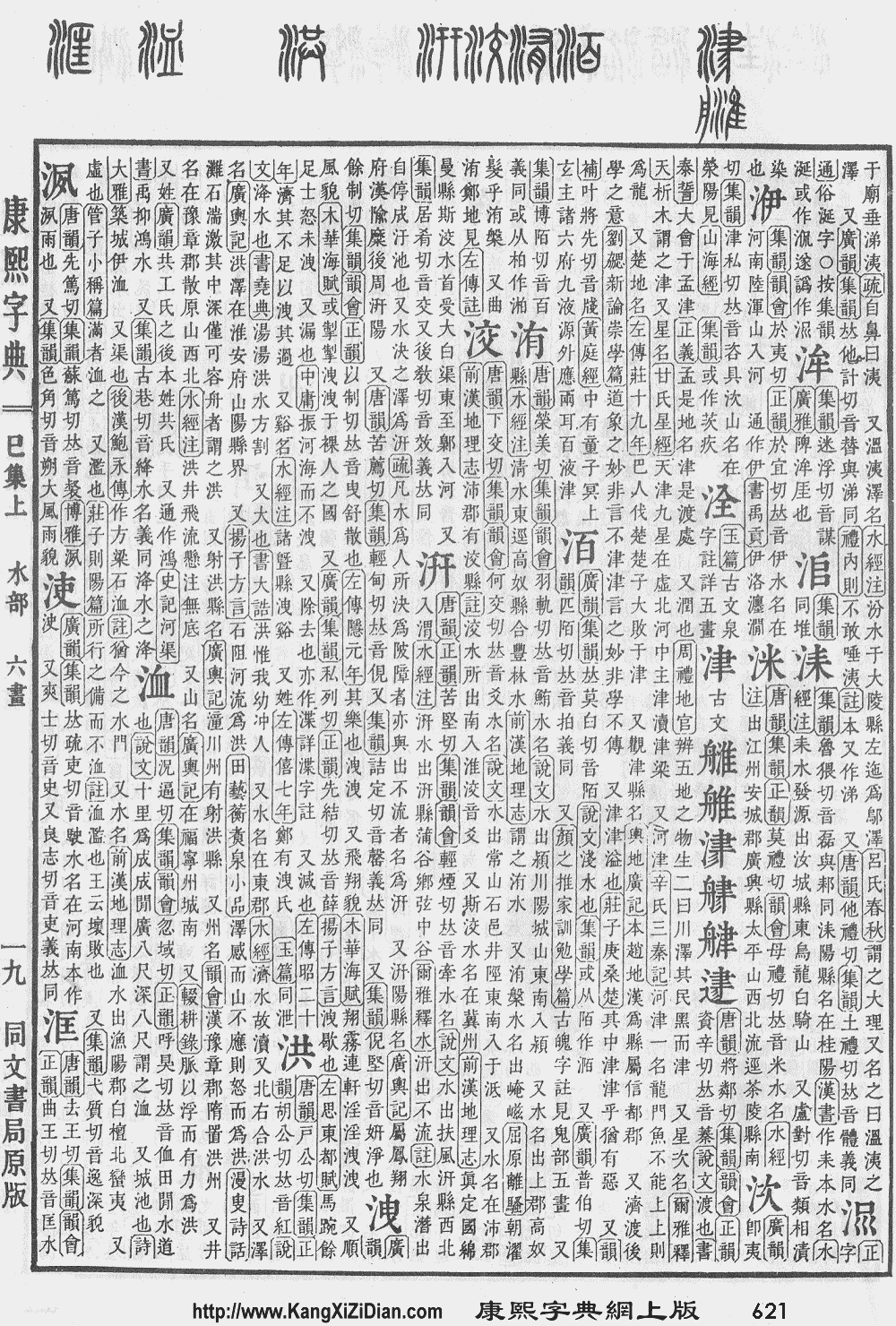
- KangXi: page 621, character 9
- Dai Kanwa Jiten: character 17396
- Dae Jaweon: page 1017, character 7
- Hanyu Da Zidian: volume 3, page 1616, character 11
- Unihan data for U+6D25
Chinese
| simp. and trad. |
津 | |
|---|---|---|
| alt. forms | 𣸁 𦪉 | |
Glyph origin
| Characters in the same phonetic series (津) (Zhengzhang, 2003) | |
|---|---|
| Old Chinese | |
| 葏 | *ʔslen |
| 津 | *ʔslin |
Phono-semantic compound (形聲, OC *ʔslin) : semantic 水 (“water”) + phonetic 𦘔. 𦘔 has been simplified into the unrelated 聿 (OC *b·lud) in the clerical script.
Etymology
From 濟 (OC *ʔsliːls, “to ferry”) + nominal suffix *-n (Schuessler, 2007).
Pronunciation
Definitions
津
- ferry crossing; ford
- 長沮、桀溺耦而耕,孔子過之,使子路問津焉。 [Classical Chinese, trad.]
- From: The Analects of Confucius, circa 475 – 221 BCE, translated based on James Legge's version
- Chángjǔ, Jiénì ǒu ér gēng, Kǒngzǐ guò zhī, shǐ Zǐlù wènjīn yān. [Pinyin]
- Chang Zu and Jie Ni were at work in the field together. Confucius passed by them, and sent Zi Lu to inquire for the ford.
长沮、桀溺耦而耕,孔子过之,使子路问津焉。 [Classical Chinese, simp.]
- bodily fluid
Compounds
Japanese
Kanji
津
- haven, port, harbor, ferry
Readings
Compounds
Proper noun
| Kanji in this term |
|---|
| 津 |
| つ Grade: S |
| kun’yomi |
Korean
Hanja
津 • (jin) (hangeul 진, revised jin, McCune–Reischauer chin, Yale cin)
- This term needs a translation to English. Please help out and add a translation, then remove the text
{{rfdef}}.
Vietnamese
Han character
- This term needs a translation to English. Please help out and add a translation, then remove the text
{{rfdef}}.
This article is issued from
Wiktionary.
The text is licensed under Creative Commons - Attribution - Sharealike.
Additional terms may apply for the media files.