尽
| ||||||||
Translingual
| Japanese | 尽 |
|---|---|
| Simplified | 尽 |
| Traditional | 盡 |
| Traditional | 儘 |
|---|---|
| Shinjitai (extended) |
侭 |
| Simplified | 尽 |
Han character
尽 (radical 44, 尸+3, 6 strokes, cangjie input 尸人卜 (SOY), composition ⿱尺⺀)
References
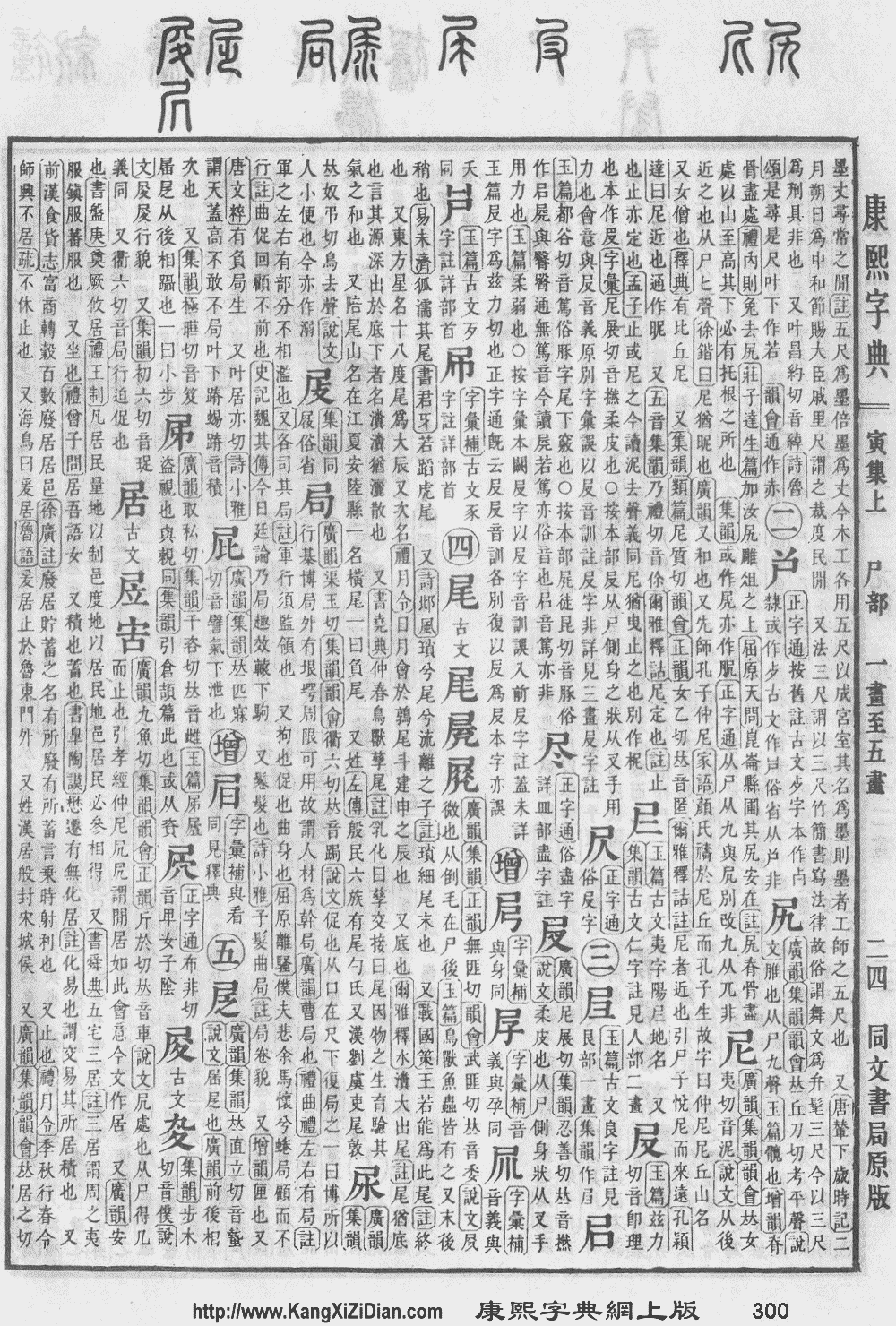
- KangXi: page 300, character 9
- Dai Kanwa Jiten: character 7642
- Dae Jaweon: page 596, character 6
- Hanyu Da Zidian: volume 2, page 966, character 2
- Unihan data for U+5C3D
Chinese
Etymology 1
| For pronunciation and definitions of 尽 – see 盡 (“to end, to finish; to use up completely”). (This character, 尽, is the simplified form of 盡.) |
Notes:
|
Etymology 2
| For pronunciation and definitions of 尽 – see 儘 (“utmost”). (This character, 尽, is the simplified form of 儘.) |
Notes:
|
Japanese
| 尽 | |
| 盡 |
Kanji
尽
(common “Jōyō” kanji, shinjitai kanji, kyūjitai form 盡)
Readings
- Goon: じん (jin, Jōyō)
- Kan’on: しん (shin)
- Kun: きる (kiru, きる); つくす (tsukusu, 尽くす, Jōyō); つかす (tsukasu, 尽かす, Jōyō); つきる (tsukiru, 尽きる, Jōyō); ことごとく (kotogotoku, 尽く)
Korean
Hanja
尽 • (jin) (hangeul 진)
This article is issued from
Wiktionary.
The text is licensed under Creative Commons - Attribution - Sharealike.
Additional terms may apply for the media files.