尞
| ||||||||
Translingual
Han character
尞 (radical 42 小+9, 12 strokes, cangjie input 大金日火 (KCAF), composition ⿱昚小)
- fuel used for sacrifices
Derived characters
References
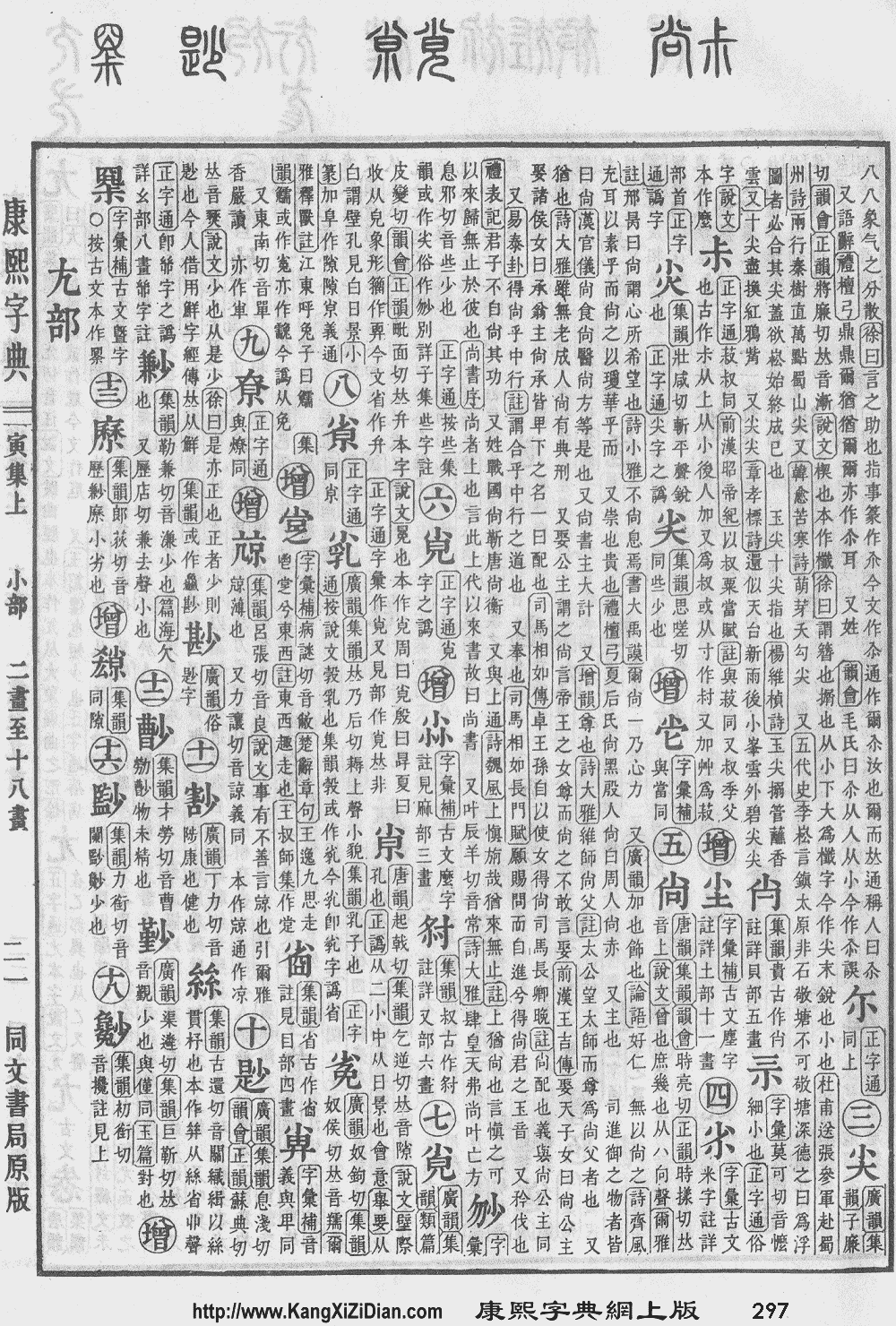
- KangXi: page 297, character 24
- Dai Kanwa Jiten: character 7517
- Dae Jaweon: page 592, character 22
- Hanyu Da Zidian: volume 1, page 565, character 10
- Unihan data for U+5C1E
Chinese
Glyph origin
| Historical forms of the character 尞 | ||
|---|---|---|
| Shang | Western Zhou | Shuowen Jiezi (compiled in Han) |
| Oracle bone script | Bronze inscriptions | Small seal script |
 |
 |
 |
Ideogrammic compound (會意) .
The earliest oracle bone inscriptions show 木 (“tree”) with dots around it representing flames – sacrifice with firewood. In some oracle bone inscriptions, 火 (“fire”) was added to emphasize the fire used in the sacrifice.
In the bronze inscriptions, 呂 (OC *ɡ·raʔ) was often added as a phonetic component, as seen in 寮 (OC *reːw) and 潦 (OC *reːwʔ, *reːws). This component may have been the basis of the 日 component found in late bronze inscriptions and in the seal script.
Shuowen interprets the character as 眘 (“serious”) + 火 (“fire”).
Etymology 1
| For pronunciation and definitions of 尞 – see 燎 (“burn; singe; scorch; etc.”). (This character, 尞, is an ancient form of 燎.) |
Etymology 2
| For pronunciation and definitions of 尞 – see 僚 (“officials; companion; colleague; etc.”). (This character, 尞, is a variant form of 僚.) |
Etymology 3
| simp. and trad. |
尞 | |
|---|---|---|
Pronunciation
Definitions
尞
- A surname.
Japanese
Kanji
尞
- fuel used for sacrifices
Readings
Korean
Hanja
尞 • (ryo>yo) (hangeul 료>요, revised ryo>yo, McCune–Reischauer ryo>yo, Yale lyo>yo)
- torchlight
- set fire to (a house), light a fuse
Vietnamese
Han character
- This term needs a translation to English. Please help out and add a translation, then remove the text
{{rfdef}}.
This article is issued from
Wiktionary.
The text is licensed under Creative Commons - Attribution - Sharealike.
Additional terms may apply for the media files.