孰
| ||||||||
Translingual
Han character
孰 (radical 39, 子+8, 11 strokes, cangjie input 卜木大弓戈 (YDKNI), four-corner 05417, composition ⿰享丸)
Derived characters
See also
References
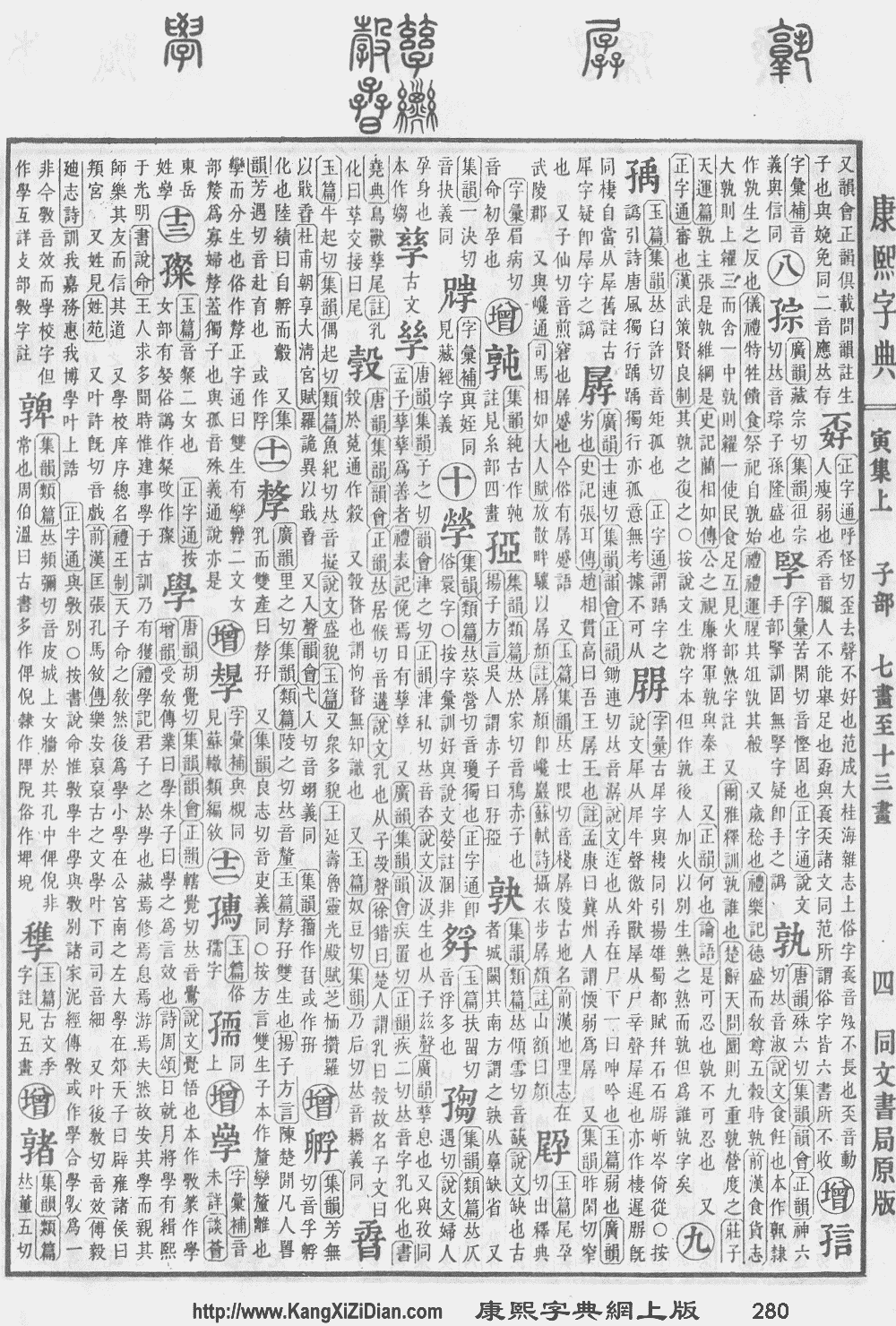
- KangXi: page 280, character 5
- Dai Kanwa Jiten: character 6995
- Dae Jaweon: page 549, character 3
- Hanyu Da Zidian: volume 2, page 1016, character 14
- Unihan data for U+5B70
Chinese
| simp. and trad. |
孰 | |
|---|---|---|
Glyph origin
| Historical forms of the character 孰 | ||
|---|---|---|
| Western Zhou | Shuowen Jiezi (compiled in Han) | Liushutong (compiled in Ming) |
| Bronze inscriptions | Small seal script | Transcribed ancient scripts |
 |
 |
 |
| Characters in the same phonetic series (孰) (Zhengzhang, 2003) | |
|---|---|
| Old Chinese | |
| 熟 | *djɯwɢ |
| 孰 | *djɯwɢ |
| 塾 | *djɯwɢ |
Ideogrammic compound (會意) : 享 + 丮 of some sort; current form of right component simplified to 丸.
Pronunciation
Definitions
孰
Synonyms
References
- (Hakka) Lau, Chun-fat. Hakka Pinyin Dictionary (Chinese). Hong Kong: The Chinese University Press, 1997 (Chinese IME supplement) →ISBN.
Japanese
Kanji
孰
- This term needs a translation to English. Please help out and add a translation, then remove the text
{{rfdef}}.
Readings
Korean
Hanja
孰 • (suk) (hangeul 숙, revised suk, McCune–Reischauer suk)
- This term needs a translation to English. Please help out and add a translation, then remove the text
{{rfdef}}.
Vietnamese
Han character
- Hán Việt: thục
- This term needs a translation to English. Please help out and add a translation, then remove the text
{{rfdef}}.
This article is issued from
Wiktionary.
The text is licensed under Creative Commons - Attribution - Sharealike.
Additional terms may apply for the media files.