享
| ||||||||
Translingual
Han character
享 (radical 8 亠+6, 8 strokes, cangjie input 卜口弓木 (YRND), four-corner 00407, composition ⿳亠口子)
Derived characters
References
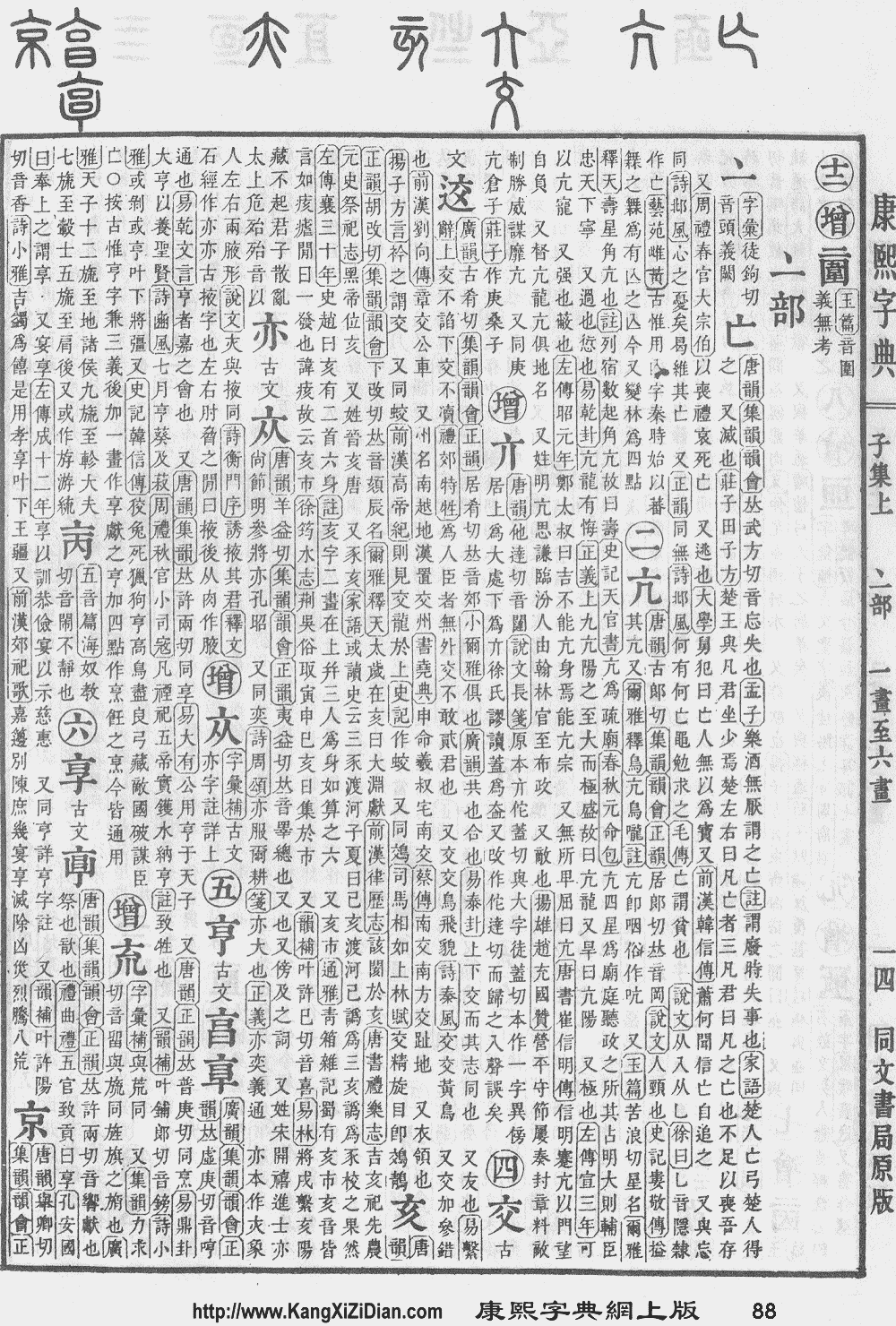
- KangXi: page 88, character 17
- Dai Kanwa Jiten: character 298
- Dae Jaweon: page 187, character 10
- Hanyu Da Zidian: volume 1, page 284, character 8
- Unihan data for U+4EAB
Chinese
| simp. and trad. |
享 | |
|---|---|---|
| alt. forms | 亯 | |
Glyph origin
| Historical forms of the character 享 | |||||||||||||||||||||||||||||||||||||||||||||||||||||||||||||||||||||||||||||||||||||||||||||||||||||||||||||||||||||||||||||||
|---|---|---|---|---|---|---|---|---|---|---|---|---|---|---|---|---|---|---|---|---|---|---|---|---|---|---|---|---|---|---|---|---|---|---|---|---|---|---|---|---|---|---|---|---|---|---|---|---|---|---|---|---|---|---|---|---|---|---|---|---|---|---|---|---|---|---|---|---|---|---|---|---|---|---|---|---|---|---|---|---|---|---|---|---|---|---|---|---|---|---|---|---|---|---|---|---|---|---|---|---|---|---|---|---|---|---|---|---|---|---|---|---|---|---|---|---|---|---|---|---|---|---|---|---|---|---|---|
| Shang | Western Zhou | Shuowen Jiezi (compiled in Han) | Liushutong (compiled in Ming) | ||||||||||||||||||||||||||||||||||||||||||||||||||||||||||||||||||||||||||||||||||||||||||||||||||||||||||||||||||||||||||||
| Oracle bone script | Bronze inscriptions | Small seal script | Transcribed ancient scripts | ||||||||||||||||||||||||||||||||||||||||||||||||||||||||||||||||||||||||||||||||||||||||||||||||||||||||||||||||||||||||||||
 |
 |
 |
 | ||||||||||||||||||||||||||||||||||||||||||||||||||||||||||||||||||||||||||||||||||||||||||||||||||||||||||||||||||||||||||||
|||
|
References: Mostly from Richard Sears' Chinese Etymology site (authorisation),
| |||||||||||||||||||||||||||||||||||||||||||||||||||||||||||||||||||||||||||||||||||||||||||||||||||||||||||||||||||||||||||||||


| Characters in the same phonetic series (亨) (Zhengzhang, 2003) | |
|---|---|
| Old Chinese | |
| 亨 | *qʰaŋʔ, *pqʰraːŋ, *qʰraːŋ |
| 享 | *qʰaŋʔ |
| 烹 | *pqʰraːŋ |
| 脝 | *qʰraːŋ |
| 悙 | *qʰraːŋ |
| 哼 | *qʰraːŋ |
See 亯.
Pronunciation
Definitions
享
- to enjoy
Compounds
Japanese
Kanji
- This term needs a translation to English. Please help out and add a translation, then remove the text
{{rfdef}}.
Readings
- Goon: こう (kō)←かう (kau, historical)
- Kan’on: きょう (kyō, Jōyō)←きやう (kyau, historical)
- Kun: うける (ukeru, 享ける); すすめる (susumeru)
Korean
Hanja
享 • (hyang) (hangeul 향, revised hyang, McCune–Reischauer hyang)
- This term needs a translation to English. Please help out and add a translation, then remove the text
{{rfdef}}.
Vietnamese
Han character
享 (hưởng)
- This term needs a translation to English. Please help out and add a translation, then remove the text
{{rfdef}}.