媕
| ||||||||
Translingual
Han character
媕 (radical 38 女+9, 12 strokes, cangjie input 女人口廿 (VORT), four-corner 48446, composition ⿰女弇)
References
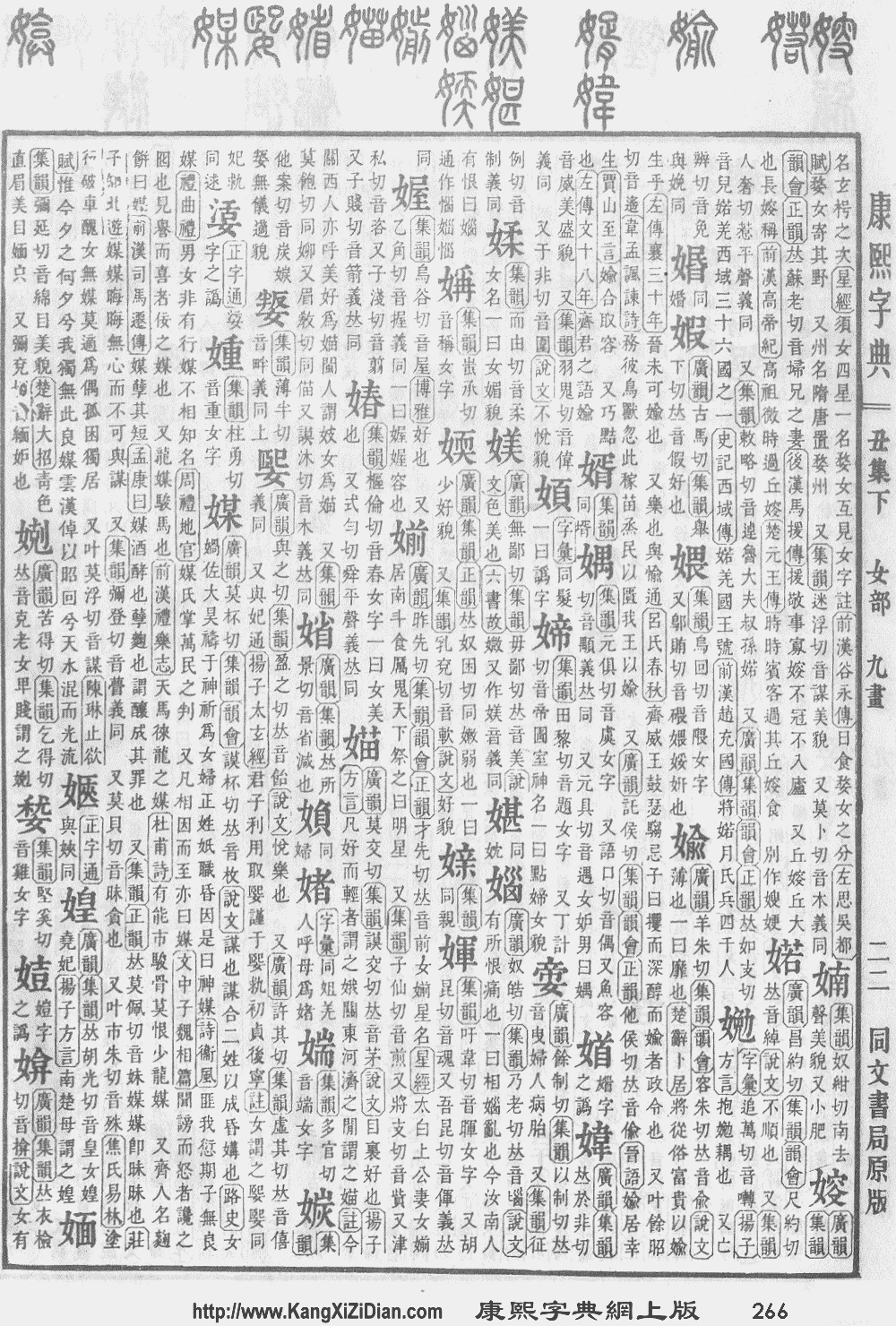
- KangXi: page 266, character 44
- Dai Kanwa Jiten: character 6505
- Dae Jaweon: page 534, character 6
- Hanyu Da Zidian: volume 2, page 1067, character 7
- Unihan data for U+5A95
Chinese
| simp. and trad. |
媕 | |
|---|---|---|
Glyph origin
| Characters in the same phonetic series (弇) (Zhengzhang, 2003) | |
|---|---|
| Old Chinese | |
| 弇 | *kɯːm, *qramʔ |
| 媕 | *quːm, *qromʔ, *qɯːm, *qramʔ, *qɯːb |
| 黭 | *qɯːmʔ |
| 揜 | *qaːmʔ, *qramʔ |
| 渰 | *qramʔ |
| 鞥 | *qɯːŋ, *qɯːb |
Pronunciation
Definitions
媕
- Only used in 媕婀.
Compounds
|
References
- Dictionary of Chinese Character Variants (教育部異體字字典)
- (Cantonese) Multi-function Chinese Character Database (漢語多功能字庫)
Japanese
Kanji
媕
- This term needs a translation to English. Please help out and add a translation, then remove the text
{{rfdef}}.
Readings
Korean
Hanja
媕 • (am) (hangeul 암, revised am, McCune–Reischauer am)
- This term needs a translation to English. Please help out and add a translation, then remove the text
{{rfdef}}. - This term needs a translation to English. Please help out and add a translation, then remove the text
{{rfdef}}.
This article is issued from
Wiktionary.
The text is licensed under Creative Commons - Attribution - Sharealike.
Additional terms may apply for the media files.