呆
| ||||||||
Translingual
Han character
呆 (radical 30 口+4, 7 strokes, cangjie input 口木 (RD), four-corner 60904, composition ⿱口木)
Derived characters
References
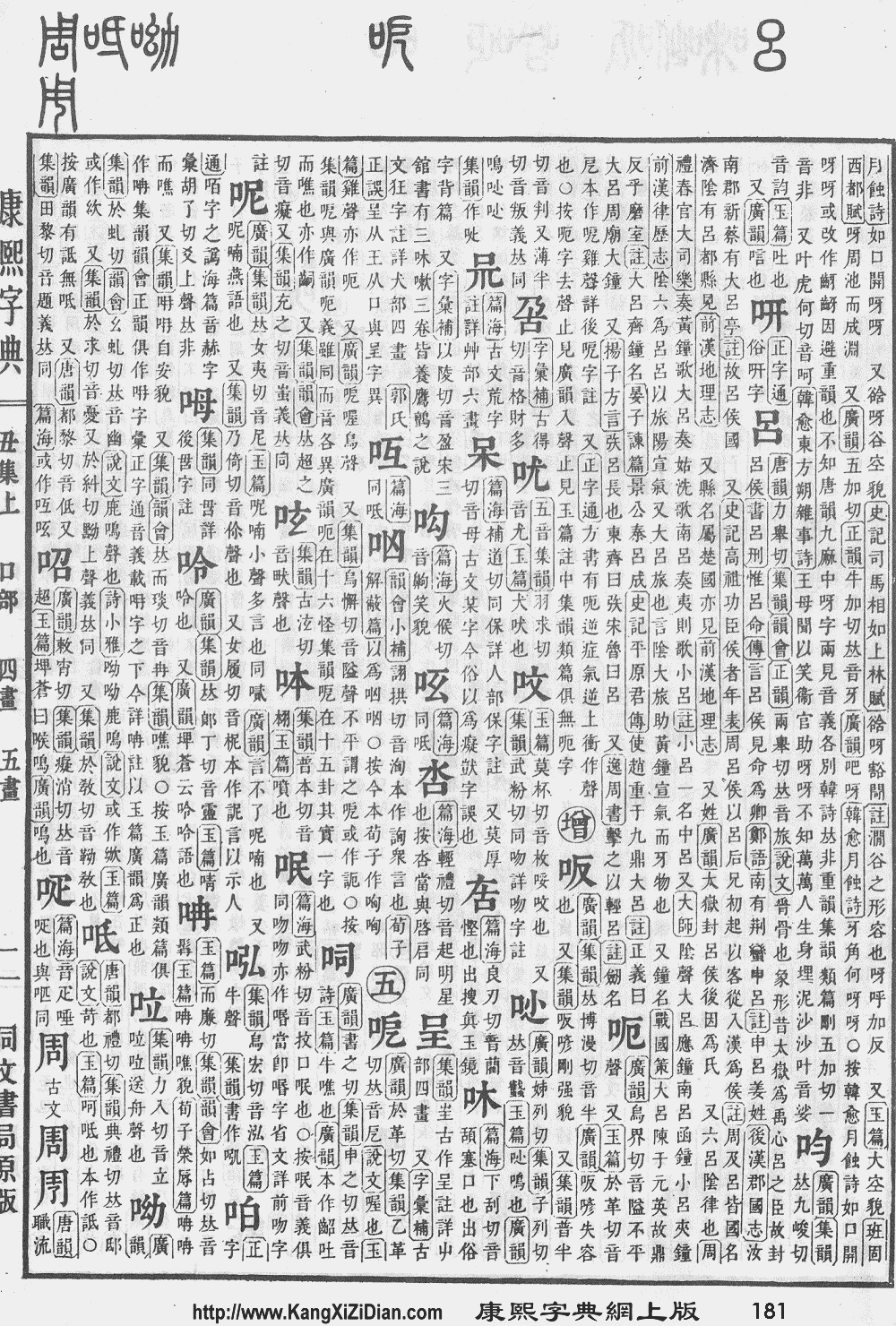
- KangXi: page 181, character 11
- Dai Kanwa Jiten: character 3395
- Dae Jaweon: page 399, character 10
- Hanyu Da Zidian: volume 1, page 585, character 11
- Unihan data for U+5446
Chinese
Glyph origin
Etymology 1
| simp. and trad. |
呆 | |
|---|---|---|
| alt. forms | 獃 騃 𤶗 | |
Pronunciation
Definitions
呆
Compounds
Etymology 2
| For pronunciation and definitions of 呆 – see 保 (“to raise; to rear; to keep; to maintain; etc.”). (This character, 呆, is a variant form of 保.) |
Etymology 3
| For pronunciation and definitions of 呆 – see 梅 (“Chinese plum; ver=180112}}; etc.”). (This character, 呆, is a variant form of 梅.) |
Japanese
Kanji
呆
Readings
- Goon: ほ (ho); がい (gai)
- Kan’on: ほう (hō); がい (gai)
- Kan’yōon: ぼう (bō); たい (tai)
- Kun: あきる (akiru, 呆る); あきれる (akireru, 呆れる); ほける (hokeru, 呆ける); ほうける (hōkeru, 呆ける); ぼける (bokeru, 呆ける)
Korean
Hanja
呆 • (mae, tae, bo) (hangeul 매, 태, 보, McCune–Reischauer mae, t'ae, po)
- This term needs a translation to English. Please help out and add a translation, then remove the text
{{rfdef}}.
Vietnamese
Han character
呆 (ngốc)
- This term needs a translation to English. Please help out and add a translation, then remove the text
{{rfdef}}.
This article is issued from
Wiktionary.
The text is licensed under Creative Commons - Attribution - Sharealike.
Additional terms may apply for the media files.