厥
| ||||||||
Translingual
Han character
厥 (radical 27 厂+10, 12 strokes, cangjie input 一廿山人 (MTUO), four-corner 71282, composition ⿸厂欮)
References
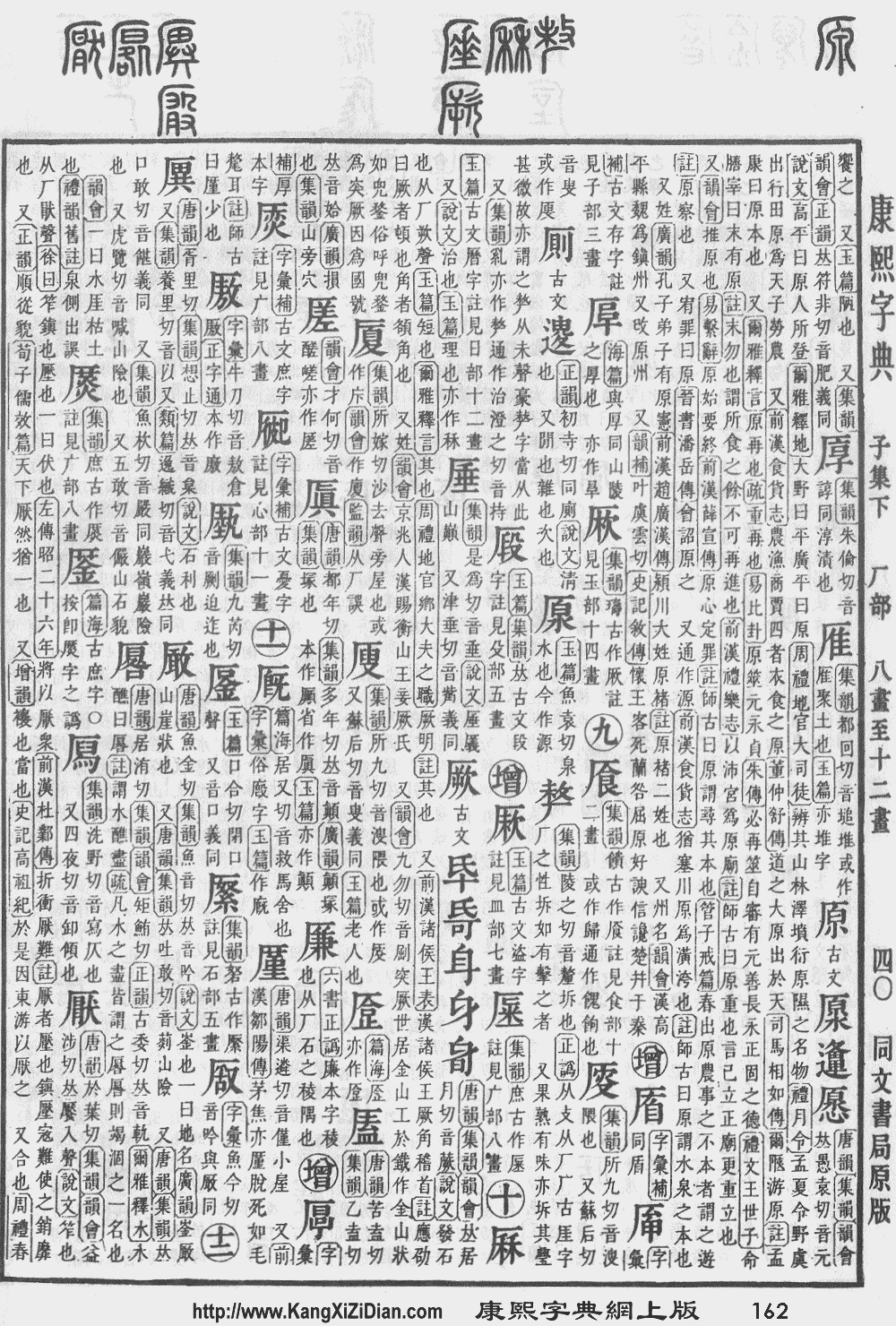
- KangXi: page 162, character 22
- Dai Kanwa Jiten: character 2992
- Dae Jaweon: page 370, character 8
- Hanyu Da Zidian: volume 1, page 76, character 13
- Unihan data for U+53A5
Chinese
| simp. and trad. |
厥 | |
|---|---|---|
Glyph origin
| Characters in the same phonetic series (欮) (Zhengzhang, 2003) | |
|---|---|
| Old Chinese | |
| 鱖 | *krods, *kod |
| 蹶 | *krods, *krod, *kod |
| 厥 | *kod, *kud |
| 欮 | *kod |
| 蕨 | *kod |
| 劂 | *kod |
| 瘚 | *kod |
| 蟨 | *kod |
| 蟩 | *kod |
| 橜 | *kod, *ɡod |
| 撅 | *kod, *ɡod |
| 闕 | *kʰod |
| 橛 | *ɡod |
| 鷢 | *ɡod |
| 蹷 | *ɡod |
| 憠 | *ɡod |
Phono-semantic compound (形聲, OC *kod, *kud) : semantic 厂 + phonetic 欮 (OC *kod).
Etymology 1
Pronunciation
Definitions
厥
- to faint; to lose consciousness
- A surname.
Compounds
Etymology 2
Bodman (1980) relates it to Tibetan ཁྱོད (khyod, “you”).
Pronunciation
Definitions
厥
Compounds
Etymology 3
Pronunciation
Definitions
厥
- Only used in 突厥 (tūjué).
Etymology 4
Pronunciation
Definitions
厥
Japanese
Kanji
厥
- This term needs a translation to English. Please help out and add a translation, then remove the text
{{rfdef}}.
Readings
Korean
Hanja
厥 • (gwol, gul) (hangeul 궐, 굴, revised gwol, gul, McCune–Reischauer kwŏl, kul)
- he, she, it, they
- barbarian tribe or country, eg., 突厥 (돌궐, originally, 돌굴), compare 蕃國 (번국), 藩國 (번국)
Vietnamese
Han character
- This term needs a translation to English. Please help out and add a translation, then remove the text
{{rfdef}}.
References
This article is issued from
Wiktionary.
The text is licensed under Creative Commons - Attribution - Sharealike.
Additional terms may apply for the media files.