㐫
See also: 㓙
| ||||||||
Translingual
Han character
㐫 (radical 8 亠+4, 6 strokes, cangjie input 卜山大 (YUK), four-corner 00772, composition ⿱亠凶)
References
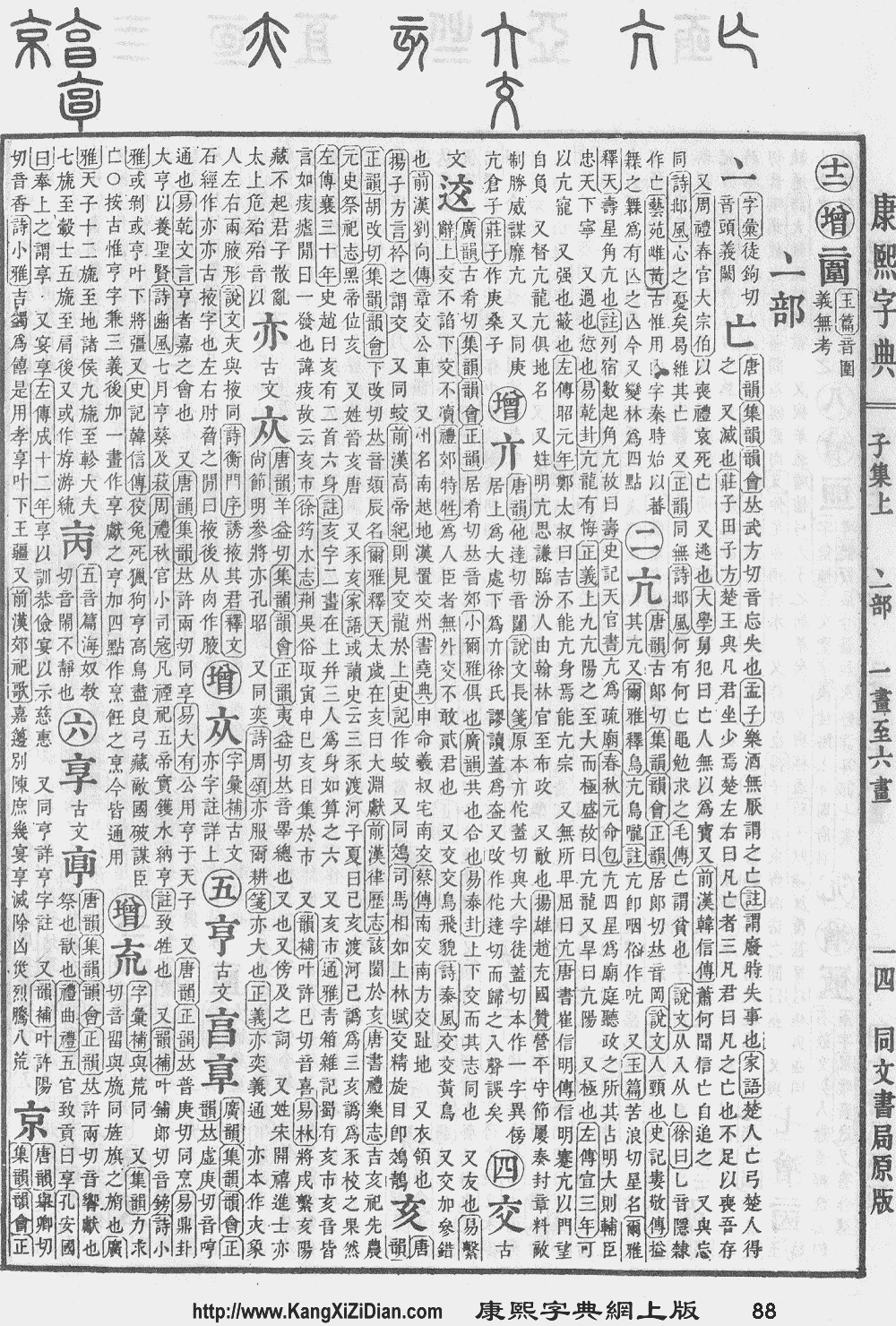
- KangXi: not present, would follow page 88, character 11
- Hanyu Da Zidian: volume 1, page 283, character 2
- Unihan data for U+342B
Chinese
Etymology 1
| For pronunciation and definitions of 㐫 – see 凶 (“inauspicious; bad luck; bad omen”). (This character, 㐫, is a variant form of 凶.) |
Etymology 2
| For pronunciation and definitions of 㐫 – see 腦 (“brain; head; etc.”). (This character, 㐫, is the second-round simplified form of 腦.) |
Notes:
|
Etymology 3
| For pronunciation and definitions of 㐫 – see 瑙. (This character, 㐫, is the second-round simplified form of 瑙.) |
Notes:
|
Etymology 4
| For pronunciation and definitions of 㐫 – see 碯. (This character, 㐫, is the second-round simplified form of 碯.) |
Notes:
|
Etymology 5
| For pronunciation and definitions of 㐫 – see 堖 (“mound; small hill; flat area at the top of a hill”). (This character, 㐫, is the second-round simplified form of 堖.) |
Notes:
|
Japanese
Kanji
㐫
- Alternative form of 凶
Readings
References
Korean
Hanja
㐫 • (hyung)
- Eumhun:
- Sound (hangeul): 흉 (revised: hyung, McCune–Reischauer: hyung, Yale: hyung)
- Name (hangeul): 흉하다 (revised: hyunghada, McCune–Reischauer: hyunghada, Yale: hyunghata)
- Alternative form of 凶
This article is issued from
Wiktionary.
The text is licensed under Creative Commons - Attribution - Sharealike.
Additional terms may apply for the media files.