bean
English
Etymology
From Middle English bene, from Old English bēan (“bean, pea, legume”), from Proto-Germanic *baunō (“bean”), from Proto-Indo-European *bʰabʰ- (“bean”). Cognate with Scots bene, bein (“bean”), West Frisian bean (“bean”), Dutch boon (“bean”), German Bohne (“bean”), Danish bønne (“bean”), Icelandic baun (“bean”), Latin faba (“bean”), Russian боб (bob, “bean”), Serbo-Croatian бо̏б/bȍb.
Pronunciation
- enPR: bēn, IPA(key): /biːn/
Audio (US) (file) - Homophone: been (in some dialects)
- Rhymes: -iːn
Noun
bean (plural beans)
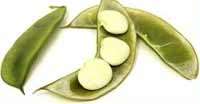
- Any plant of several genera of the taxonomic family Fabaceae that produces large edible seeds or edible seed pods.
- 2004, T. N. Shivenanda, B. R. V. Iyengar, Phosphorus Management in French Bean (Phaseolus Vulgaris L.), Ramdane Dris, S. Mohan Jain (editors), Production Practices and Quality Assessment of Food Crops, Volume 2: Plant Mineral Nutrition and Pesticide Management, page 79,
- Beans are a large group of leguminous vegetables that serve as a main source of proteins in human diet. This group comprises several species and some of them are Adzuki bean (Vigna angularis); Broad bean (Vicia faba); Cluster bean (Cyamposis tetragonoloba); French bean (Phaseolus vulgaris); […] .
- 2004, T. N. Shivenanda, B. R. V. Iyengar, Phosphorus Management in French Bean (Phaseolus Vulgaris L.), Ramdane Dris, S. Mohan Jain (editors), Production Practices and Quality Assessment of Food Crops, Volume 2: Plant Mineral Nutrition and Pesticide Management, page 79,
- The large edible seed of such a plant.
- The edible seed pod of such a plant.
- The bean-like seed of certain other plants, especially coffee; coffee in the general.
- An object resembling a pea or bean in shape, often made from plastic or styrofoam and used in large numbers as packing material or as stuffing for beanbags and similar items.
- (slang) The head or brain.
- 1959, Maxwell Droke, You and the World to Come (page 173)
- Now, there was a perfectly sound forecast for you. Certainly a case of using the old bean. The surmise was perfectly logical.
- 1960, P. G. Wodehouse, Jeeves in the Offing, chapter XI and XV:
- I saw her quiver and kept a wary eye on the ginger ale bottle. But even if she had raised it and brought it down on [my] bean, I couldn't have been more stunned than I was by the words that left her lips.
[...]
Well, as I say, it was from his fertile bean that the idea sprang.
- I saw her quiver and kept a wary eye on the ginger ale bottle. But even if she had raised it and brought it down on [my] bean, I couldn't have been more stunned than I was by the words that left her lips.
- 1959, Maxwell Droke, You and the World to Come (page 173)
- (Britain, slang, archaic) A guinea coin.
- (Britain, slang, usually in the negative) Money.
- I haven't got a bean.
- (slang) The clitoris.
- 2010, Cynthia W. Gentry & Dana Fredst, What Women Really Want in Bed: The Surprising Secrets Women Wish Men Knew about Sex, Quiver (2010), →ISBN, page 64:
- For one, don't stage a full-frontal assault on her bean.
- For more examples of usage of this term, see Citations:bean.
- 2010, Cynthia W. Gentry & Dana Fredst, What Women Really Want in Bed: The Surprising Secrets Women Wish Men Knew about Sex, Quiver (2010), →ISBN, page 64:
- (software) Clipping of JavaBean.
-
- „
AppletInitializerMethods in this interface are used to initialize Beans that are also applets.“
- „
-
- „The
SelectionInListuses threeValueModels to hold the list, the selection and selection index and provides bound bean properties for these models. You can access, observe and replace theseValueModels. This is useful to connect aSelectionInListwith otherValueModels; for example you can use theSelectionInList's selection holder as bean channel for aPresentationModel. Since theSelectionInListis aValueModel, it is often used as bean channel. See the Binding tutorial classes for examples on how to connect aSelectionInListwith aPresentationModel.“
- „The
-
Hyponyms
|
|
|
|
|
|
|
Derived terms
|
|
Related terms
|
|
|
|
Translations
|
|
References

Verb
bean (third-person singular simple present beans, present participle beaning, simple past and past participle beaned)
- (chiefly baseball) To hit deliberately with a projectile, especially in the head.
- The pitcher beaned the batter, rather than letting him hit another home run.
- 1960, P. G. Wodehouse, Jeeves in the Offing, chapter IX and XI:
- Though I shall have to exercise an iron self-restraint to keep me from beaning that pie-faced little hornswoggler Mrs Bertram Wooster, nee Wickham, with the shaker.
[...]
dudgeon might easily lead her to reach for the ginger ale bottle and bean me with it.
- Though I shall have to exercise an iron self-restraint to keep me from beaning that pie-faced little hornswoggler Mrs Bertram Wooster, nee Wickham, with the shaker.
Anagrams
Irish
Pronunciation
- IPA(key): /bʲanˠ/
- (Cois Fharraige) IPA(key): /bʲæːn̪ˠ/
Etymology 1
From Old Irish ben, from Proto-Celtic *benā, from Proto-Indo-European *gʷḗn.
Noun
bean f (genitive singular mná, nominative plural mná)
Declension
Irregular
|
Bare forms
|
Forms with the definite article
|
Derived terms
|
|
Etymology 2
From a conflation of Old Irish benaid (“beat, strike”) and boingid (“break, cut”).
Verb
bean (present analytic beanann, future analytic beanfaidh, verbal noun beant, past participle beanta)
- (transitive, intransitive) Alternative form of bain
Inflection
| singular | plural | relative | autonomous | ||||||
|---|---|---|---|---|---|---|---|---|---|
| first | second | third | first | second | third | ||||
| indicative | present | beanaim | beanann tú; beanair† |
beanann sé, sí | beanaimid | beanann sibh | beanann siad; beanaid† |
a bheanann; a bheanas / a mbeanann*; a mbeanas* |
beantar |
| past | bhean mé; bheanas | bhean tú; bheanais | bhean sé, sí | bheanamar; bhean muid | bhean sibh; bheanabhair | bhean siad; bheanadar | a bhean / ar bhean* |
beanadh | |
| past habitual | bheanainn | bheantá | bheanadh sé, sí | bheanaimis; bheanadh muid | bheanadh sibh | bheanaidís; bheanadh siad | a bheanadh / ar bheanadh* |
bheantaí | |
| future | beanfaidh mé; beanfad |
beanfaidh tú; beanfair† |
beanfaidh sé, sí | beanfaimid; beanfaidh muid |
beanfaidh sibh | beanfaidh siad; beanfaid† |
a bheanfaidh; a bheanfas / a mbeanfaidh*; a mbeanfas* |
beanfar | |
| conditional | bheanfainn | bheanfá | bheanfadh sé, sí | bheanfaimis; bheanfadh muid | bheanfadh sibh | bheanfaidís; bheanfadh siad | a bheanfadh / ar bheanfadh* |
bheanfaí | |
| subjunctive | present | go mbeana mé; go mbeanad† |
go mbeana tú; go mbeanair† |
go mbeana sé, sí | go mbeanaimid; go mbeana muid |
go mbeana sibh | go mbeana siad; go mbeanaid† |
— | go mbeantar |
| past | dá mbeanainn | dá mbeantá | dá mbeanadh sé, sí | dá mbeanaimis; dá mbeanadh muid |
dá mbeanadh sibh | dá mbeanaidís; dá mbeanadh siad |
— | dá mbeantaí | |
| imperative | beanaim | bean | beanadh sé, sí | beanaimis | beanaigí; beanaidh† |
beanaidís | — | beantar | |
| verbal noun | beant | ||||||||
| past participle | beanta | ||||||||
* Indirect relative
† Archaic or dialect form
Mutation
| Irish mutation | ||
|---|---|---|
| Radical | Lenition | Eclipsis |
| bean | bhean | mbean |
| Note: Some of these forms may be hypothetical. Not every possible mutated form of every word actually occurs. | ||
Further reading
- "bean" in Foclóir Gaeilge-Béarla, An Gúm, 1977, by Niall Ó Dónaill.
- “ben” in Dictionary of the Irish Language, Royal Irish Academy, 1913–76.
- “benaid” in Dictionary of the Irish Language, Royal Irish Academy, 1913–76.
- “boingid” in Dictionary of the Irish Language, Royal Irish Academy, 1913–76.
- “bean” in Foclóir Gaeḋilge agus Béarla, Irish Texts Society, 2nd ed., 1927, by Patrick S. Dinneen.
- Entries containing “bean” in New English-Irish Dictionary by Foras na Gaeilge.
Old English
Etymology
From Proto-Germanic *baunō, from Proto-Indo-European *bʰabʰ- (“bean”). Cognate with Old Frisian bāne, bām (West Frisian bean), Old Saxon bōna (Low German Bohn), Dutch boon, Old High German bōna (German Bohne), Old Norse baun (Danish bønne, Swedish böna).
Pronunciation
- IPA(key): /bæːɑ̯n/
Noun
bēan f (nominative plural bēana or bēane)
- bean (specifically the broad bean)
Descendants
Polish
Etymology
Noun
bean m anim
Synonyms
References
- 1 2 Brückner, Aleksander (1927), “bean”, in Słownik etymologiczny języka polskiego (in Polish): “‘fryc’, cham’, z gwary żakowskiej, łac. beanus z franc. béjaune, ‘żółtodziób’”
Further reading
- bean in Polish dictionaries at PWN
Scottish Gaelic
Etymology
From Old Irish ben, from Proto-Celtic *benā, from Proto-Indo-European *gʷḗn.
Pronunciation
- IPA(key): [b̊ɛn], /pɛn/
Noun
bean f (genitive singular mnatha or mnà, plural mnathan)
Declension
| Case | Singular | Plural |
|---|---|---|
| Nominative | bean | mnathan |
| Vocative | bhean | mhnathan |
| Genitive | mnatha/mnà | mnathan |
| Dative | mnaoi | mnathan |
Derived terms
Mutation
| Scottish Gaelic mutation | |
|---|---|
| Radical | Lenition |
| bean | bhean |
| Note: Some of these forms may be hypothetical. Not every possible mutated form of every word actually occurs. | |
References
- Faclair Gàidhlig Dwelly Air Loidhne, Dwelly, Edward (1911), Faclair Gàidhlig gu Beurla le Dealbhan/The Illustrated [Scottish] Gaelic-English Dictionary (10th ed.), Edinburgh: Birlinn Limited, →ISBN
- “ben” in Dictionary of the Irish Language, Royal Irish Academy, 1913–76.
West Frisian
Etymology
From Old Frisian bāne, from Proto-Germanic *baunō. Cognate with Saterland Frisian Boone, English bean, German Low German Bohn, Dutch boon, German Bohne.
Noun
bean c (plural beanen)