ave
English
Etymology 1
Pronunciation
- Rhymes: -ɑːveɪ, -æveɪ, -eɪvi
Noun
ave (plural aves)
- An Ave Maria.
- Ye’ll come and find the place where I am lying / And kneel and say an ave there for me.
-
- A reverential salutation.
Etymology 2
Abbreviation.
Alternative forms
Noun
ave
Anagrams
Danish
Etymology 1
From Old Norse agi (“fear, discipline”).
Noun
ave c
- discipline, keeping in check
- Du skal holde forureningen i ave.
- You must keep the pollution in check.
- Du skal holde forureningen i ave.
Etymology 2
Noun
ave n (singular definite avet, plural indefinite ave)
Inflection
Etymology 3
From Old Norse aga (“frighten, scare”).
Verb
ave (imperative av, infinitive at ave, present tense aver, past tense avede, perfect tense har avet)
Conjugation
Esperanto
Etymology
Adverb
ave
- grandfatherly (in the manner or way of a grandfather)
Friulian
Etymology
Noun
ave f (plural avis)
Synonyms
Related terms
- basave
- von
Galician
Etymology
From Old Portuguese ave, from Latin avis, avem, from Proto-Indo-European *h₂éwis.
Noun
ave f (plural aves)
Interlingua
Etymology 1
Noun
ave (plural aves)
Etymology 2
Interjection
ave
Italian
Etymology
Interjection
ave
Noun
ave f
- plural of ava
Anagrams
Latin
Etymology 1
Verb
avē
Etymology 2
Noun
ave m
- vocative singular of avus
Etymology 3
Noun
ave f
- ablative singular of avis
References
- ave in Charles du Fresne du Cange’s Glossarium Mediæ et Infimæ Latinitatis (augmented edition, 1883–1887)
Northern Sami
Pronunciation
- (Kautokeino) IPA(key): /ˈave/
Verb
ave
- inflection of avvit:
- present indicative connegative
- second-person singular imperative
- imperative connegative
Old Portuguese
Etymology 1
From Latin avis (“bird”), from Proto-Italic *awis (“bird”), from Proto-Indo-European *h₂éwis (“bird”).
Pronunciation
- IPA(key): /ˈa.βe/
Noun
ave f
- bird
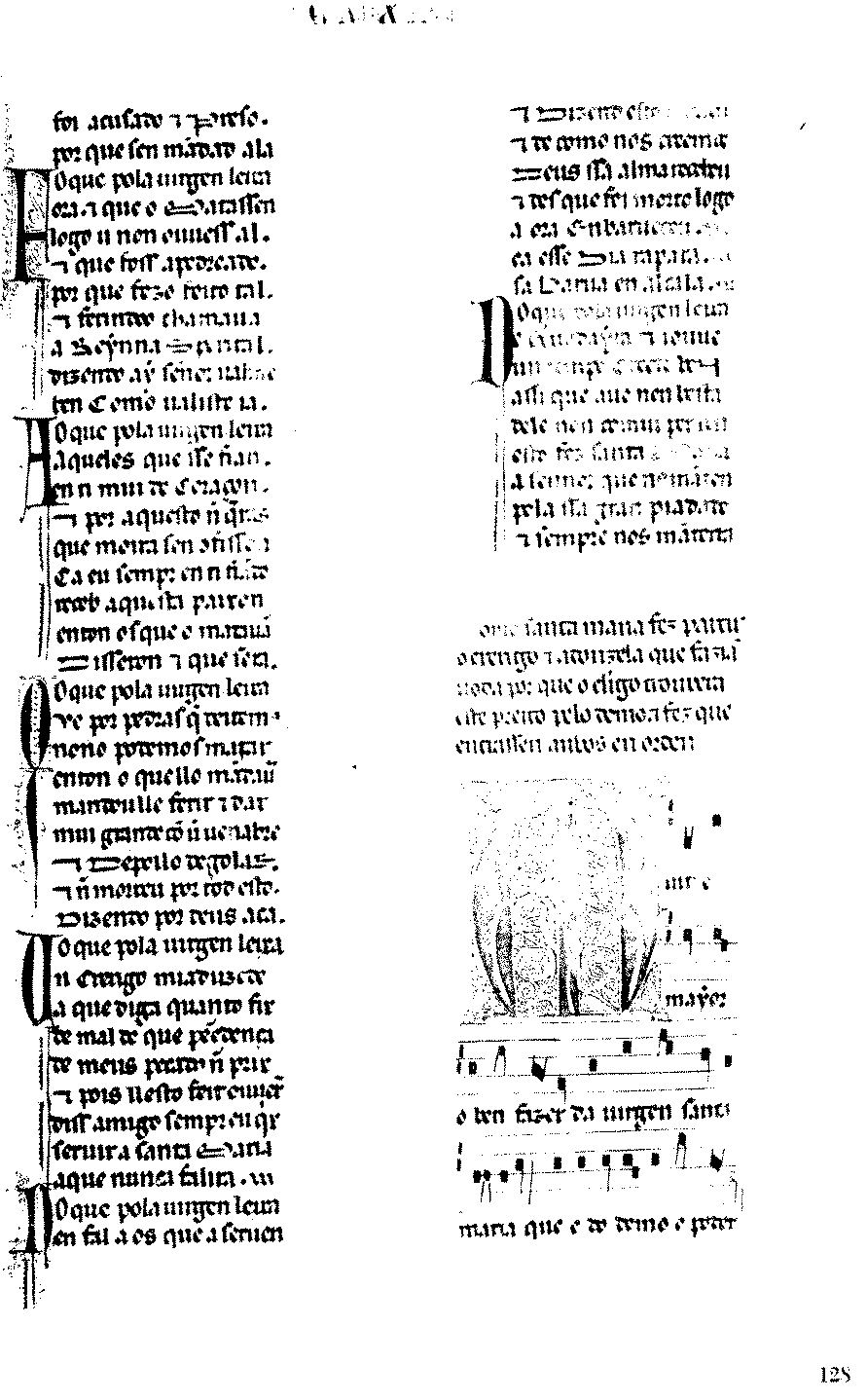
- 13th century, attributed to Alfonso X of Castile, Cantigas de Santa Maria, E codex, cantiga 124 (facsimile):
- aue nen beſta dele non comiu per ren.
- Neither bird nor beast would eat him for anything.
- aue nen beſta dele non comiu per ren.
- 13th century, attributed to Alfonso X of Castile, Cantigas de Santa Maria, E codex, cantiga 124 (facsimile):
Descendants
Etymology 2
Pronunciation
- IPA(key): /ˈa.βe/, /a.ˈβɛ/
Noun
ave f
- hail (introduces a formal greeting)
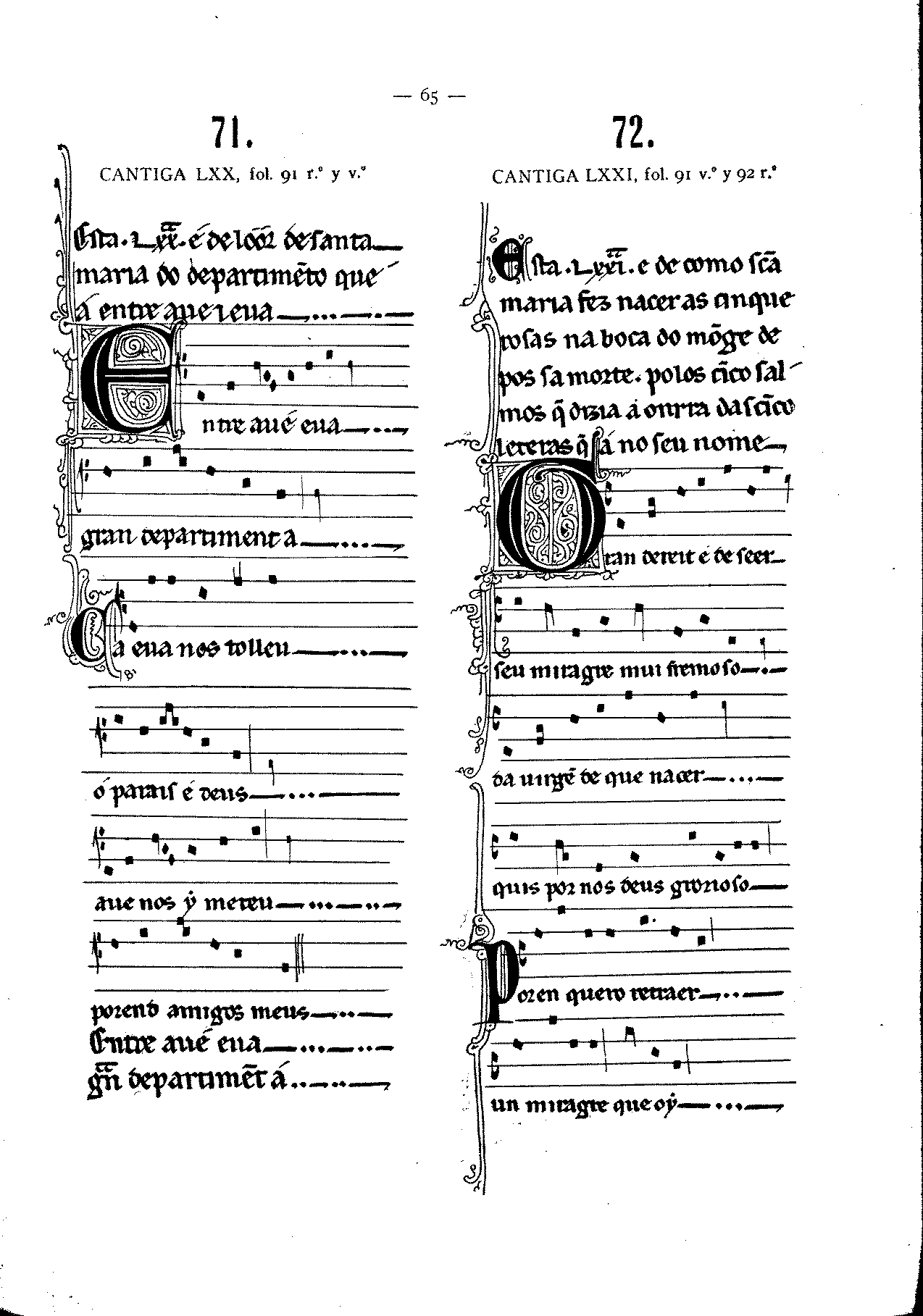
- 13th century, attributed to Alfonso X of Castile, Cantigas de Santa Maria, To codex, cantiga 60 (facsimile):
- Entre aue eua gran departimenta.
- (Entre Av'e Eva gran departiment'a)
- Between ave and Eve there is a great difference.
- 13th century, attributed to Alfonso X of Castile, Cantigas de Santa Maria, To codex, cantiga 60 (facsimile):
Descendants
Portuguese
Etymology 1
From Old Portuguese ave (“bird”), from Latin avis, avem (“bird”), from Proto-Italic *awis (“bird”), from Proto-Indo-European *h₂éwis (“bird”).
Pronunciation
- (Portugal) IPA(key): /ˈa.vɨ/
- (Brazil) IPA(key): /ˈa.vi/
- (South Brazil) IPA(key): /ˈa.ve/
- Hyphenation: a‧ve
- Rhymes: -avi
Noun
ave f (plural aves)
- bird
- Todas as aves têm asas.
- All birds have wings.
-
Synonyms
Etymology 2
From Old Portuguese ave, from Latin avē (“hail”).
Pronunciation
- (Portugal) IPA(key): /ˈa.vɛ/
- Hyphenation: a‧ve
Interjection
ave!
Synonyms
Derived terms
Spanish
Pronunciation
- IPA(key): /ˈabe/, [ˈaβe]
Etymology 1
From Latin avis, avem, from Proto-Italic *awis (“bird”), from Proto-Indo-European *h₂éwis.
Noun
ave f (plural aves)
Usage notes
- The feminine noun ave is like other feminine nouns starting with a stressed a sound in that it takes the definite article el (normally reserved for masculine nouns) in the singular when there is no intervening adjective:
Hyponyms
- (small bird): pájaro
Derived terms
- ave acuática (water bird)
- ave cantora (songbird)
- ave de corral (poultry)
- ave del paraíso (bird of paradise)
- avefría (lapwing)
- ave marina (sea bird)
- ave migratoria, ave de paso, ave pasajera (migratory bird)
- ave rapaz, ave de rapiña (bird of prey)
- avestruz (ostrich)
- ave zancuda (wading bird)
Etymology 2
From Old Spanish ave, from Latin avē (hello, hail)
Interjection
Etymology 3
From the acronym AVE (Alta Velocidad Española), meaning high-speed train (written mostly all caps).
Noun
ave f (plural aves)
Further reading
- “ave” in Diccionario de la lengua española, Vigésima tercera edición, Real Academia Española, 2014.
Tolai
Alternative forms
- avet (when not preceding a verb)
Pronoun
ave
- First-person exclusive plural pronoun: they (many) and I, them (many) and me
Declension
Venetian
Noun
ave
- plural of ava