顔
| ||||||||
Translingual
| Traditional | 顏 |
|---|---|
| Shinjitai | 顔 |
| Simplified | 颜 |
Han character
顔 (radical 181, 頁+9, 18 strokes, cangjie input XXX卜竹 (XXXYH) or 卜竹一月金 (YHMBC), composition ⿰彦頁)
Related characters
- 顏 (Orthodox traditional form used in Taiwan, Hong Kong and Macau)
- 颜 (Simplified Chinese)
References
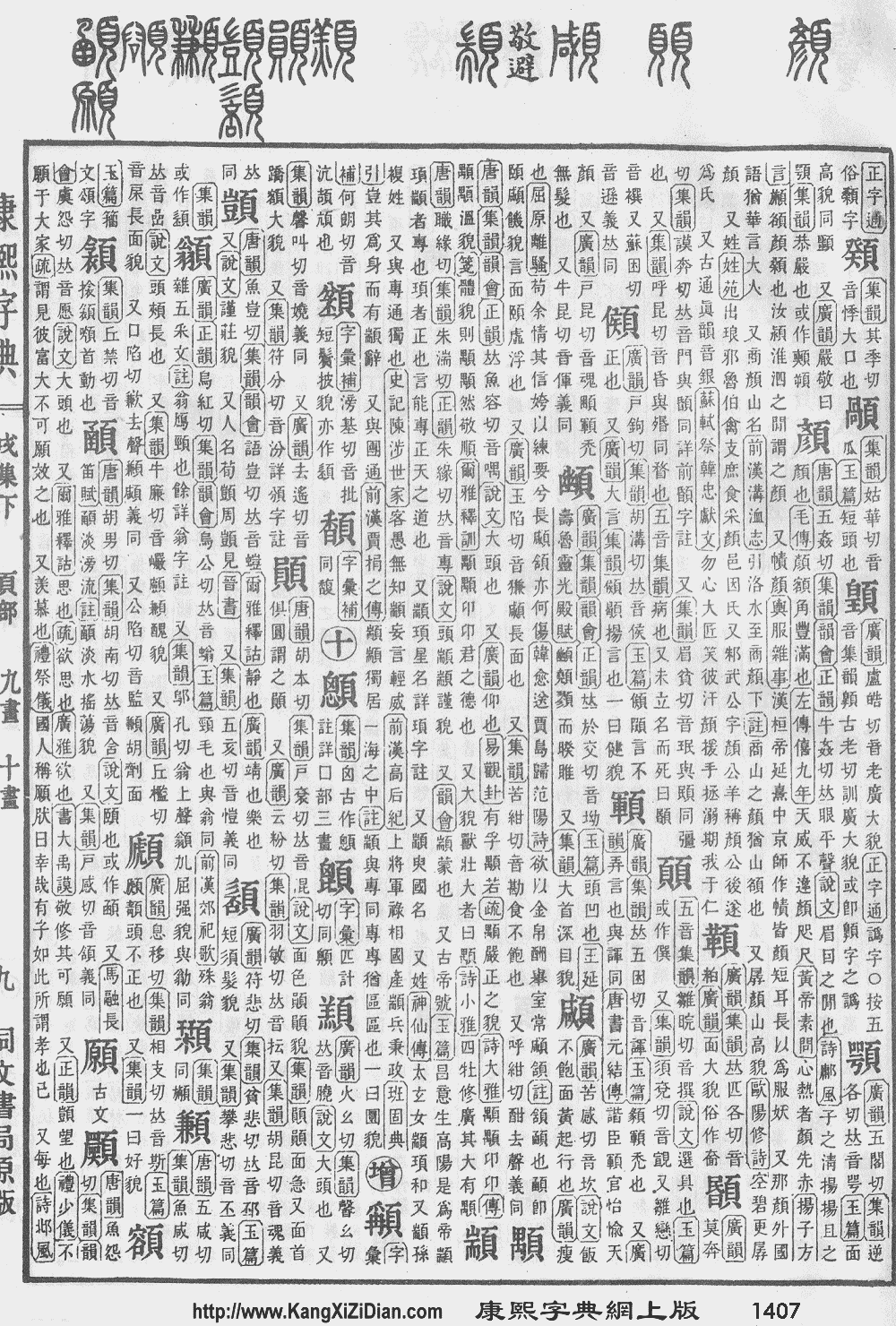
- KangXi: not present, would follow page 1407, character 17
- Dai Kanwa Jiten: character 43591
- Dae Jaweon: page 1925, character 1
- Hanyu Da Zidian: volume 7, page 4383, character 9
- Unihan data for U+9854
Usage notes
This character is the preferred form used in Japan, Korea, Vietnam as well as mainland China (when used as a traditional character).
Chinese
Glyph origin
Variant form of 顏 (彥 → 彦).
Definitions
| For pronunciation and definitions of 顔 – see 顏 (“forehead, especially the glabellar area; face; etc.”). (This character, 顔, is a variant traditional form of 顏.) |
Usage notes
This character is considered the traditional form of 颜 in mainland China based on the standardized form of characters (Xin Zixing) in use since 1965.
Japanese
Kanji
顔
Readings
Compounds
| Kanji in this term |
|---|
| 顔 |
| かお Grade: 2 |
| kun’yomi |
Pronunciation
Noun
顔 (shinjitai kanji, kyūjitai kanji 顏, hiragana かお, rōmaji kao, historical hiragana かほ)
- a person's face
- a person's reputation
References
Korean
Hanja
顔 • (an) (hangeul 안, revised an, McCune–Reischauer an, Yale an)
- This term needs a translation to English. Please help out and add a translation, then remove the text
{{rfdef}}.
Vietnamese
Han character
- This term needs a translation to English. Please help out and add a translation, then remove the text
{{rfdef}}.
This article is issued from
Wiktionary.
The text is licensed under Creative Commons - Attribution - Sharealike.
Additional terms may apply for the media files.