鞴
| ||||||||
Translingual
Han character
鞴 (radical 177 革+10, 19 strokes, cangjie input 廿十廿竹月 (TJTHB), composition ⿰革𤰇)
- saddle up horse
- drive horse
References
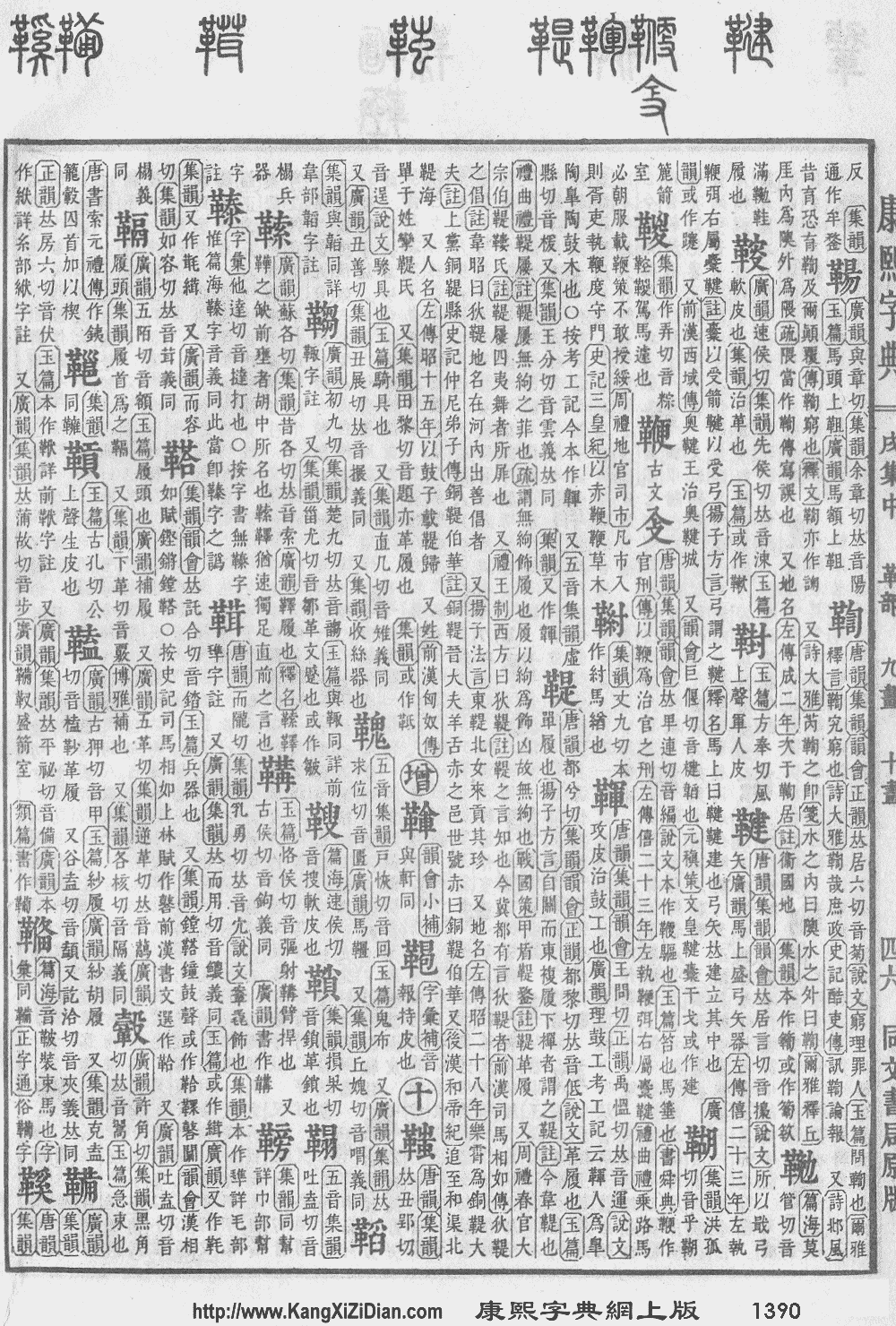
- KangXi: page 1390, character 34
- Dai Kanwa Jiten: character 42972
- Dae Jaweon: page 1905, character 27
- Hanyu Da Zidian: volume 7, page 4346, character 1
- Unihan data for U+97B4
Chinese
| simp. and trad. |
鞴 | |
|---|---|---|
Glyph origin
| Characters in the same phonetic series (備) (Zhengzhang, 2003) | |
|---|---|
| Old Chinese | |
| 憊 | *brɯːɡs |
| 韛 | *brɯːɡs |
| 備 | *brɯɡs |
| 俻 | *brɯɡs |
| 鞴 | *brɯɡs, *baːɡs, *bɯɡ |
| 糒 | *brɯɡs |
| 犕 | *brɯɡs |
Pronunciation
Definitions
鞴
- This term needs a translation to English. Please help out and add a translation, then remove the text
{{rfdef}}.
Compounds
|
Japanese
Kanji
鞴
Readings
Compounds
Etymology 1
| Kanji in this term |
|---|
| 鞴 |
| ふいご Hyōgaiji |
| kun’yomi |
Alteration of fuigō below.[1][2]
Pronunciation
Alternative forms
Noun
Etymology 2
| Kanji in this term |
|---|
| 鞴 |
| ふいごう Hyōgaiji |
| kun’yomi |
Alteration of fukigawa below.[1][4]
Pronunciation
Noun
Etymology 3
| Kanji in this term |
|---|
| 鞴 |
| ふきがわ Hyōgaiji |
| kun’yomi |
Compound of 吹 (fuki, “blowing”) + 革 (kawa, “leather”).[1]
Pronunciation
Alternative forms
Noun
鞴 (hiragana ふきがわ, rōmaji fukigawa, historical hiragana ふきがは)
References
- 1 2 3 4 2006, 大辞林 (Daijirin), Third Edition (in Japanese), Tōkyō: Sanseidō, →ISBN
- ↑ 1995, 大辞泉 (Daijisen) (in Japanese), Tōkyō: Shogakukan, →ISBN
- ↑ 1998, NHK日本語発音アクセント辞典 (NHK Japanese Pronunciation Accent Dictionary) (in Japanese), Tōkyō: NHK, →ISBN
- ↑ 1995, 大辞泉 (Daijisen) (in Japanese), Tōkyō: Shogakukan, →ISBN
Korean
Hanja
鞴 • (bi) (hangeul 비, revised bi, McCune–Reischauer pi, Yale pi)
This article is issued from
Wiktionary.
The text is licensed under Creative Commons - Attribution - Sharealike.
Additional terms may apply for the media files.