閒
| ||||||||
Translingual
Han character
閒 (radical 169 門+4, 12 strokes, cangjie input 日弓月 (ANB), four-corner 77227, composition ⿵門月)
References
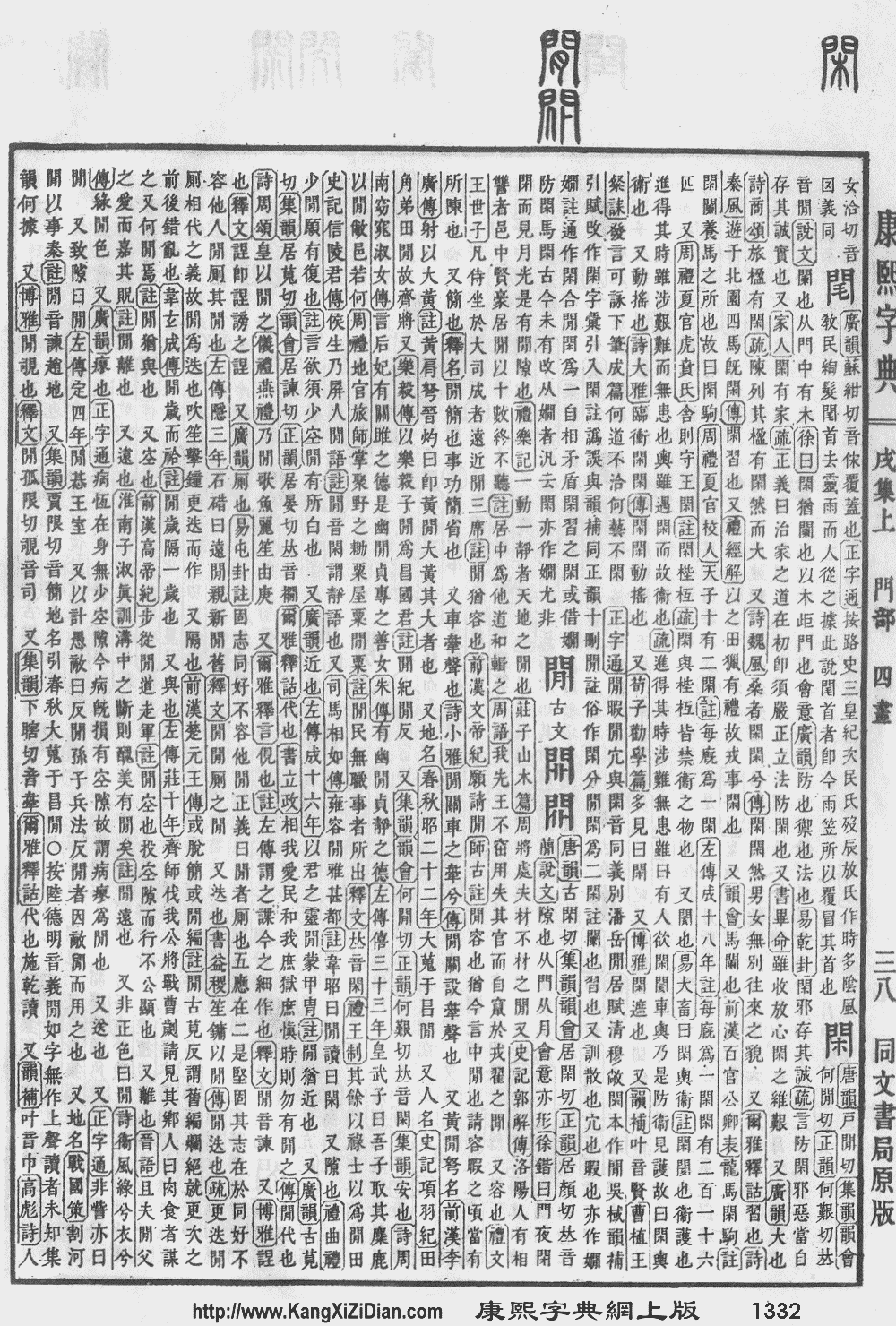
- KangXi: page 1332, character 3
- Dai Kanwa Jiten: character 41248
- Dae Jaweon: page 1838, character 1
- Hanyu Da Zidian: volume 7, page 4289, character 6
- Unihan data for U+9592
Chinese
Glyph origin
Ideogrammic compound (會意) : 門 (“door”) + 月 (“moon”) – moonlight peeking through a door – interstice; space (original character of 間).
Etymology 1
| trad. | 閒/閑* | |
|---|---|---|
| simp. | 闲* | |
Karlgren (1957) and Baxter (1992) connect this word with 間 (OC *kreːn, “interstice time”).
Alternatively, Pulleyblank (1973) suggests that it is cognate with 暇 (OC *ɡraːs, “to be at leisure”).
Schuessler (2007) considers this unrelated to 間 (OC *kreːn, *kreːns), and instead proposes that this is borrowed from Tai languages, akin to Thai คร้าน (kráan, “lazy; indolent”). 懶 (OC *raːnʔ, “lazy”) may be a colloquial reflex of the same word (ibid.).
Pronunciation
Definitions
閒
Compounds
|
|
|
Etymology 2
| For pronunciation and definitions of 閒 – see 間 (“among; between; etc.”). (This character, 閒, is a variant form of 間.) |
Korean
Hanja
閒 • (han, gan) (hangeul 한, 간, revised han, gan, McCune–Reischauer han, kan, Yale han, kan)
Vietnamese
Han character
- This term needs a translation to English. Please help out and add a translation, then remove the text
{{rfdef}}.