鎖
| ||||||||
Translingual
Han character
鎖 (radical 167, 金+10, 18 strokes, cangjie input 金火月金 (CFBC), four-corner 89186, composition ⿰釒𧴪)
References
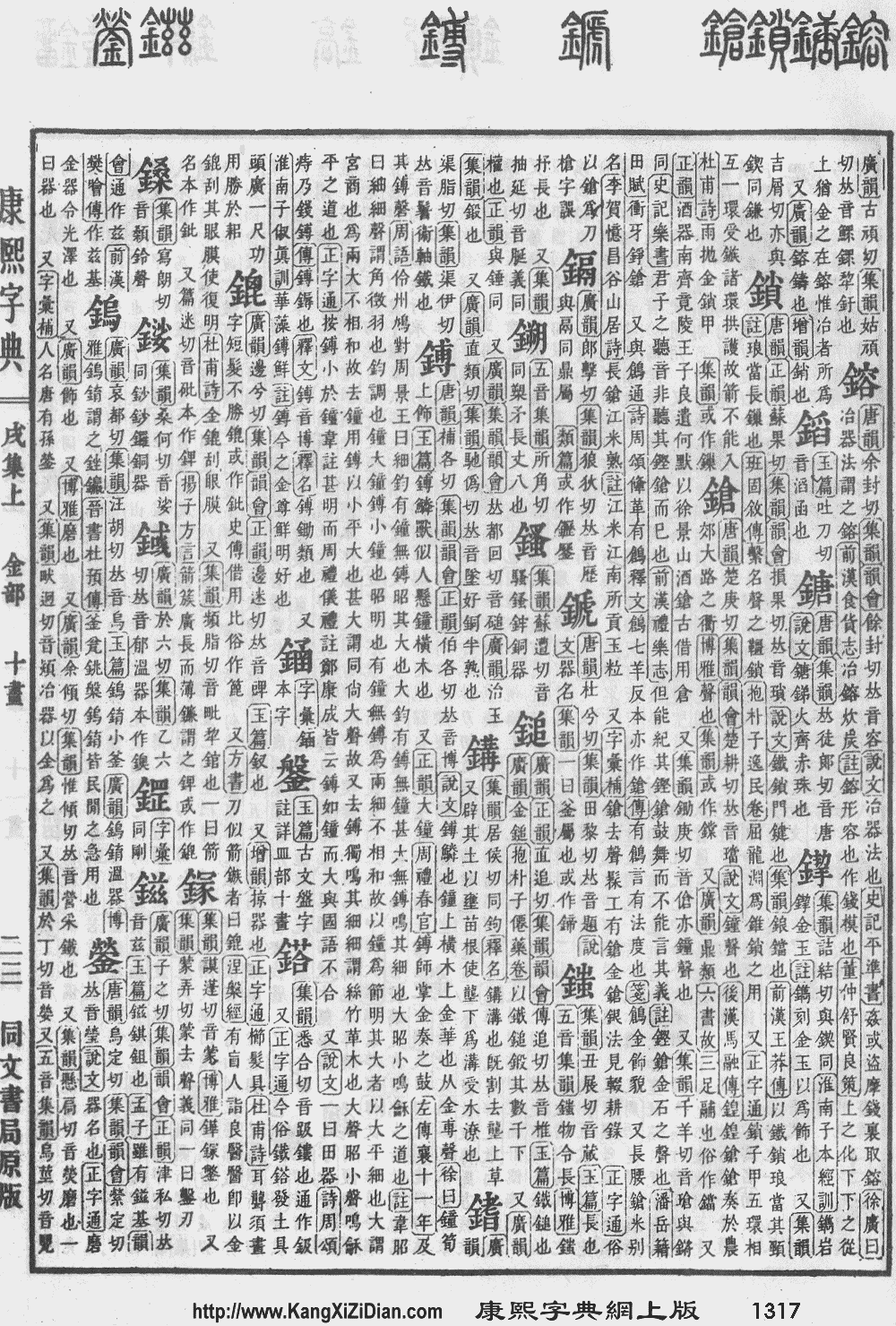
- KangXi: page 1317, character 5
- Dai Kanwa Jiten: character 40708
- Dae Jaweon: page 1817, character 1
- Hanyu Da Zidian: volume 6, page 4240, character 6
- Unihan data for U+9396
Chinese
| trad. | 鎖 | |
|---|---|---|
| simp. | 锁 | |
| alt. forms | 鎻 | |
Pronunciation
Definitions
鎖
Compounds
Japanese
Kanji
(common “Jōyō” kanji, shinjitai kanji, kyūjitai form 鎻)
Readings
Etymology 1
| Kanji in this term |
|---|
| 鎖 |
| くさり Grade: S |
| kun’yomi |
Noun derived from the 連用形 (ren'yōkei, “stem form”) of verb 鏈る (kusaru, “to be linked together, to link together”).[1][2]
Pronunciation
Alternative forms
Noun
鎖 (hiragana くさり, rōmaji kusari)
- a chain
- 1999 March 1, “聖なる鎖 [Holy Chain]”, in Booster 1 (in Japanese), Konami:
- 聖なる力で、動きを封じることができると言われている鎖。
- Seinaru chikara de, ugoki o fūjiru koto ga dekiru to iwareteiru kusari.
- This chain is said to be able to seal all movements with its holy power.
- 聖なる力で、動きを封じることができると言われている鎖。
-
Derived terms
Related terms
- 鏈る (kusaru): to be linked together, to link together
Etymology 2
| Kanji in this term |
|---|
| 鎖 |
| とざし Grade: S |
| kun’yomi |
Noun derived from the 連用形 (ren'yōkei, “stem form”) of verb 鎖す (tozasu, “to shut and lock a door or gate”).[1][2]
Pronunciation
Noun
鎖 (hiragana とざし, rōmaji tozashi)
- the closing and locking of a door or gate
- a door or gate so closed and locked
- a bar or other device used to lock a door or gate
Related terms
- 鎖す, 閉ざす (とざす, tozasu): to close and lock a door or gate
Etymology 3
| Kanji in this term |
|---|
| 鎖 |
| つがり Grade: S |
| kun’yomi |
Noun derived from the 連用形 (ren'yōkei, “stem form”) of verb 連る (tsugaru, “to continue, to lead onto the next, to be connected; to connect or link together”).[1][2]
Pronunciation
Alternative forms
Noun
鎖 (hiragana つがり, rōmaji tsugari)
- a connection, linkage, or continuation
- (rare) a chain
- a string of items tied together
- the part of the opening of a drawstring bag through which the string is passed
Related terms
Etymology 4
| Kanji in this term |
|---|
| 鎖 |
| さ Grade: S |
| on’yomi |
From Middle Chinese 鎻 or 鎖 (*swaX). Compare modern Mandarin 鎖 (suǒ, “lock, padlock; shackles, chains”).
Only used in compounds in modern Japanese.
Pronunciation
Affix
- a chain, linkage, or continuation
- a lock or barrier
Derived terms
Starting with 鎖:
- 鎖国 (sakoku): national isolationism; closed borders
Ending with 鎖:
- 連鎖 (rensa): (metaphorical) a chain, a connection, a linkage
Etymology 5
| Kanji in this term |
|---|
| 鎖 |
| じょう Grade: S |
| on’yomi |
Alteration from sau, itself an alternate reading of sa above, possibly influenced by an early variety of Mandarin reading suǒ or Cantonese reading so².[1] The shift from sau to jau (modern jō) was probably the influence of the reading of synonymous character 錠 (jō).
/sa/ → /sau/ → /d͡ʑau/ → /d͡ʑoː/
Pronunciation
Alternative forms
Noun
鎖 (hiragana じょう, rōmaji jō, historical hiragana ぢやう)
- (pitch 0) a metal bar used to lock shut a gate, door, chest, or other opening
- (pitch 0) a key used to lock or unlock such an opening
- (pitch 1) a pill or tablet
Usage notes
The senses have different pitch accents. A low starting pitch is used for the lock or key meanings, while a high starting pitch is used for the pill or tablet meanings.
The alternate spelling 錠 was originally an ateji, but in reference to openings, the meaning was limited to key, while the lock sense was spelled 鎖. In modern Japanese, these characters are largely interchangeable for both lock and key senses. However, the more common term for key is 鍵 (kagi).
Counter
鎖 (hiragana じょう, rōmaji -jō, historical hiragana ぢやう)
- counter for pills or tablets
- この薬は一回に三鎖とのことです。
- Kono kusuri wa ikkai ni sanjō to no koto desu.
- The instructions are to take three pills of this medicine for each dose.
- この薬は一回に三鎖とのことです。
Usage notes
More commonly spelled 錠.
References
Korean
Hanja
鎖 • (swae) (hangeul 쇄)
- This term needs a translation to English. Please help out and add a translation, then remove the text
{{rfdef}}.
Vietnamese
Han character
- This term needs a translation to English. Please help out and add a translation, then remove the text
{{rfdef}}.