錘
See also: 锤
| ||||||||
Translingual
Han character
錘 (radical 167 金+8, 16 strokes, cangjie input 金竹十一 (CHJM), four-corner 82114, composition ⿰金垂)
References
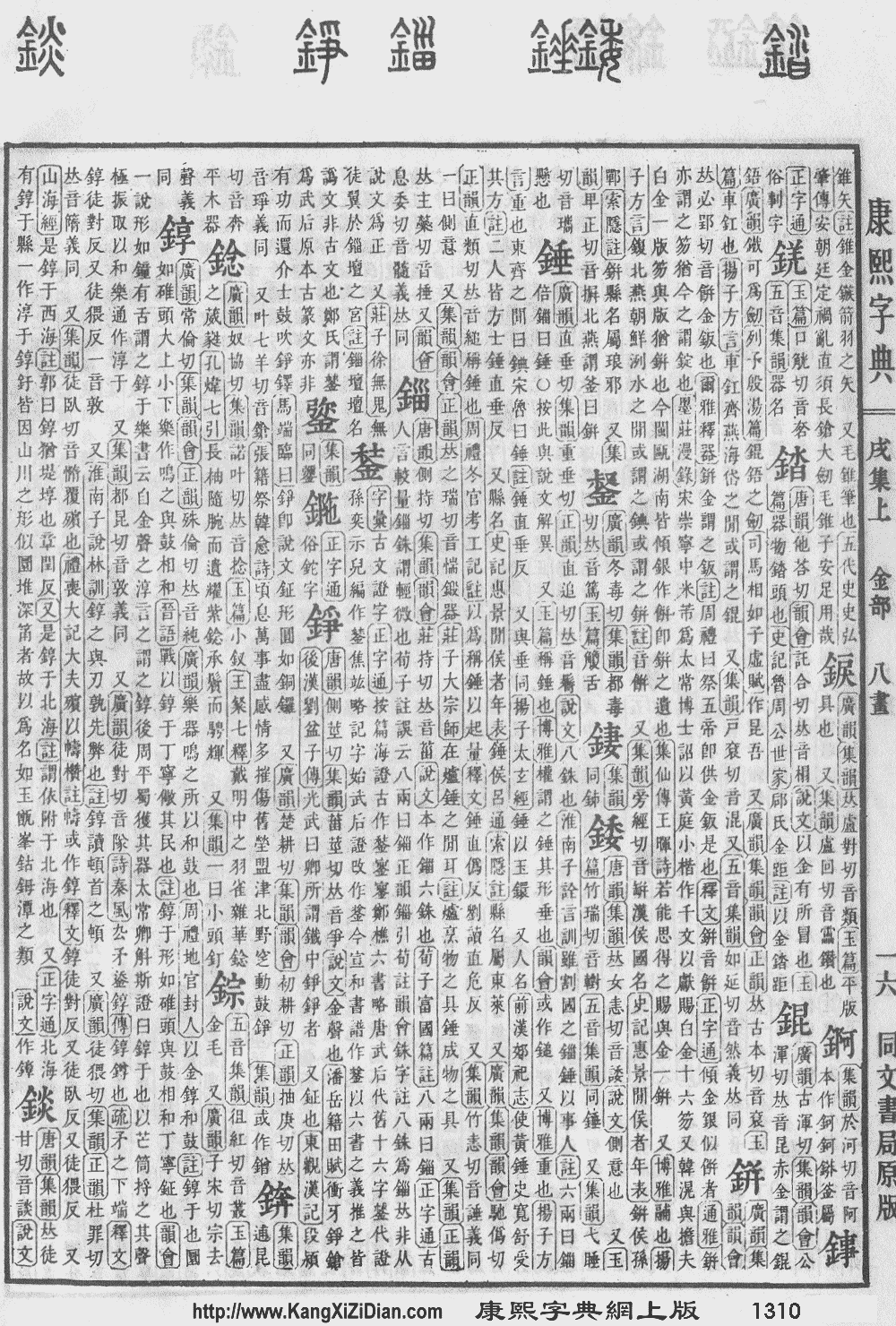
- KangXi: page 1310, character 11
- Dai Kanwa Jiten: character 40547
- Dae Jaweon: page 1812, character 1
- Hanyu Da Zidian: volume 6, page 4220, character 7
- Unihan data for U+9318
Chinese
| trad. | 錘 | |
|---|---|---|
| simp. | 锤 | |
Glyph origin
| Historical forms of the character 錘 |
|---|
| Shuowen Jiezi (compiled in Han) |
| Small seal script |
 |
| Characters in the same phonetic series (垂) (Zhengzhang, 2003) | |
|---|---|
| Old Chinese | |
| 埵 | *toːlʔ |
| 綞 | *toːlʔ |
| 涶 | *tʰoːl, *tʰoːls |
| 唾 | *tʰoːls |
| 厜 | *stol |
| 腄 | *tol, *dols, *ɢʷɯ |
| 箠 | *tol, *tjolʔ |
| 娷 | *tols |
| 諈 | *tols |
| 錘 | *dol, *dols, *du |
| 甀 | *dol, *dols |
| 硾 | *dols |
| 捶 | *tjolʔ |
| 垂 | *djol |
| 陲 | *djol |
| 倕 | *djol |
| 菙 | *djolʔ |
| 睡 | *djols |
Pronunciation
Definitions
錘
Compounds
References
- (Cantonese) Multi-function Chinese Character Database (漢語多功能字庫)
- “Query for 錘”, in 臺灣閩南語常用詞辭典 [Dictionary of Frequently-Used Taiwan Minnan], Ministry of Education, R.O.C., 2011.
Japanese
Kanji
錘
(“Jinmeiyō” kanji used for names)
Readings
- Goon: ずい (zui)←づゐ (duwi, historical)
- Kan’on: つい (tsui)←つゐ (tuwi, historical)
- Kan’yōon: すい (sui, Jōyō)←すゐ (suwi, historical)
- Kun: つむ (tsumu, 錘, Jōyō); おもり (omori, 錘)
Usage notes
- Removed from the daily use Jōyō kanji by the Japanese government in 2010.[1]
- As in historical on-readings ending in -ゐ, such as "ゆゐ" and "るゐ", most dictionaries do not have "すゐ", "つゐ", and "づゐ" as historical readings for 錘. According to historical data, the on-readings of 錘 are the modern "すい" and "つい", as well as "づい". However, the Dai Kanwa Jiten, has the -ゐ historical on-readings.
| Kanji in this term |
|---|
| 錘 |
| おもり Jinmeiyō |
| kun’yomi |
Noun
References
- ↑ October 21, 2009, The Japan Times, Get set for next year's overhaul of joyo kanji. Accessed February 23, 2010.
Korean
Hanja
錘 • (chu) (hangeul 추)
- This term needs a translation to English. Please help out and add a translation, then remove the text
{{rfdef}}.
Vietnamese
Han character
- This term needs a translation to English. Please help out and add a translation, then remove the text
{{rfdef}}.
This article is issued from
Wiktionary.
The text is licensed under Creative Commons - Attribution - Sharealike.
Additional terms may apply for the media files.