達
| ||||||||
Translingual
Han character
達 (radical 162, 辵+9, 12 strokes, cangjie input 卜土廿手 (YGTQ), four-corner 34304, composition ⿺辶𦍒)
References
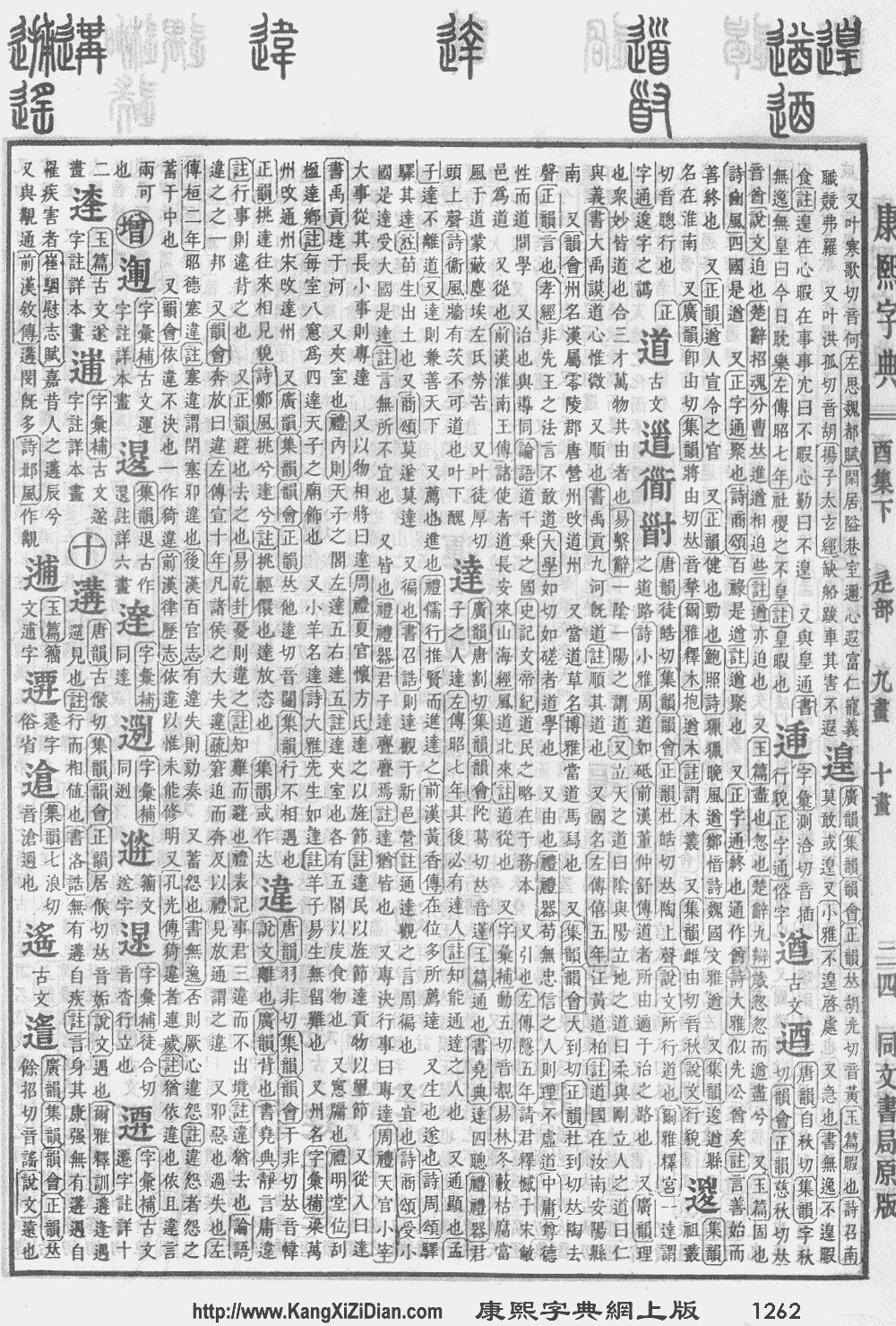
- KangXi: page 1262, character 10
- Dai Kanwa Jiten: character 39011
- Dae Jaweon: page 1755, character 2
- Hanyu Da Zidian: volume 6, page 3855, character 1
- Unihan data for U+9054
Chinese
| trad. | 達 | |
|---|---|---|
| simp. | 达* | |
| alt. forms | 达 | |
Glyph origin
| Characters in the same phonetic series (羍) (Zhengzhang, 2003) | |
|---|---|
| Old Chinese | |
| 羍 | *tʰaːd |
| 達 | *tʰaːd, *daːd |
| 闥 | *tʰaːd |
| 撻 | *tʰaːd, *tʰaːd |
| 躂 | *tʰaːd |
| 澾 | *tʰaːd |
| 薘 | *daːd |
Phono-semantic compound (形聲, OC *tʰaːd, *daːd) : semantic 辶 + phonetic 羍 (OC *tʰaːd).
Note that inner component is not 幸 – these are not related, and there is an extra stroke in 達 (two horizontal strokes at the bottom, not one).
Pronunciation 1
Definitions
達
- to lead to; to go to
- to reach; to arrive at
- to achieve; to attain
- to thoroughly understand; to understand
- to express; to convey
- current; general; common
- optimistic; philosophical
- illustrious; influential; intelligent
- everywhere; all over
- onomatopoeia for the collision of objects
- 15th tetragram of the Taixuanjing; "reach"
- (~縣) Da County (modern-day Dachuan District in Dazhou, Sichuan)
- A surname.
Compounds
|
|
|
Pronunciation 2
Definitions
達
Compounds
|
Pronunciation 3
Definitions
達
Japanese
Kanji
Readings
Etymology
| Kanji in this term |
|---|
| 達 |
| たち Grade: 4 |
| kun’yomi |
| Kanji in this term |
|---|
| 達 |
| たち Grade: 4 |
| on’yomi |
From Old Japanese. Appears in the Man'yōshū, completed some time after 759 CE.[1]
The ultimate derivation is unknown, but this might be a nativized borrowing from Middle Chinese 達 (/dɑt̚/, perhaps from the “general, common; everywhere, all over” senses?), possibly cognate with Korean 들 (deul, plural marker).
The tachi reading is analyzed by some references[2] as kun'yomi or a native-Japanese reading. Alternatively, this might be a shift from the goon reading of dachi.
Suffix
達 (hiragana たち, rōmaji -tachi)
- plural marker
- 子供、子供達、俺、俺達
- kodomo, kodomo-tachi, ore, oretachi
- child, children, I, we
- 1994 March 25, Ragawa, Marimo, “赤ちゃんと僕 第33話 [Baby & Me: Chapter 33]”, in 赤ちゃんと僕 [Baby & Me], volume 7 (fiction, in Japanese), Tokyo: Hakusensha, →ISBN, page 27:
- この鳥達だって邪魔じゃないか
- Kono tori-tachi datte jama ja nai ka
- But aren’t these birds a bit of a hindrance?
- この鳥達だって邪魔じゃないか
- 2013 September 9, Sorachi, Hideaki, “第四百五十一訓 人間五十年下天のうちをくらぶれば 夢 モヒカンの如くなり [Lesson 451: Man’s 50 Years of Life Are Nothing Compared to All Things under the Sky. Nothing But a Dream, a Mohawk.]”, in 銀魂 [Silver Soul], volume 51 (fiction, in Japanese), Tokyo: Shueisha, →ISBN:
- 落ちつけ 斬り込みなんてそう簡単にできるワケねーだろ アンタらには俺達人質がついてんだぜ
- Ochitsuke kirikomi nante sō kantan ni dekiru wake nē daro Anta-ra ni wa ore-tachi hitojichi ga tsuite n da ze
- Chill out, they can’t just barge in here and hurt everyone. You guys still have us as hostages.
- Temē wa dotchi no kata motte n dāā‼
- Just whose side are you on, dumb-ass‼
- 落ちつけ 斬り込みなんてそう簡単にできるワケねーだろ アンタらには俺達人質がついてんだぜ
- 子供、子供達、俺、俺達
- attached to the name of the representative of a group to refer to that whole group
- 杏子ちゃんたち
- Kyōko-chan-tachi
- Kyōko-chan and her friend(s)
- 2004 April 7, Watsuki, Nobuhiro, “第8話 ロックオン [Chapter 8: Lock On]”, in 武装錬金 [Armed Alchemy], volume 2 (in Japanese), Tokyo: Shueisha, →ISBN, page 23:
- 六舛達集めて先に玄関で待っててくれ
- Rokumasu-tachi ayamete saki ni genkan de matte tekure
- Go get Rokumasu and the others and wait for me at the entrance, will you?
- 六舛達集めて先に玄関で待っててくれ
- 杏子ちゃんたち
- (archaic, possibly obsolete) honorific suffix
Usage notes
Note that tachi only clarifies that the number of people in question is more than one. It could be omitted when the plurality is already clear by context or not cared. The plurality marked with tachi is not syntactic. Tachi is normally used only for people.
Synonyms
References
Korean
Hanja
達 • (dal) (hangeul 달)
Vietnamese
Han character
達 (đạt, đác, đặt, đật, đợt, thớt)
- This term needs a translation to English. Please help out and add a translation, then remove the text
{{rfdef}}.