蹴
| ||||||||
Translingual
Han character
蹴 (radical 157 足+12, 19 strokes, cangjie input 口一卜火山 (RMYFU), four-corner 63114, composition ⿰⻊就)
References
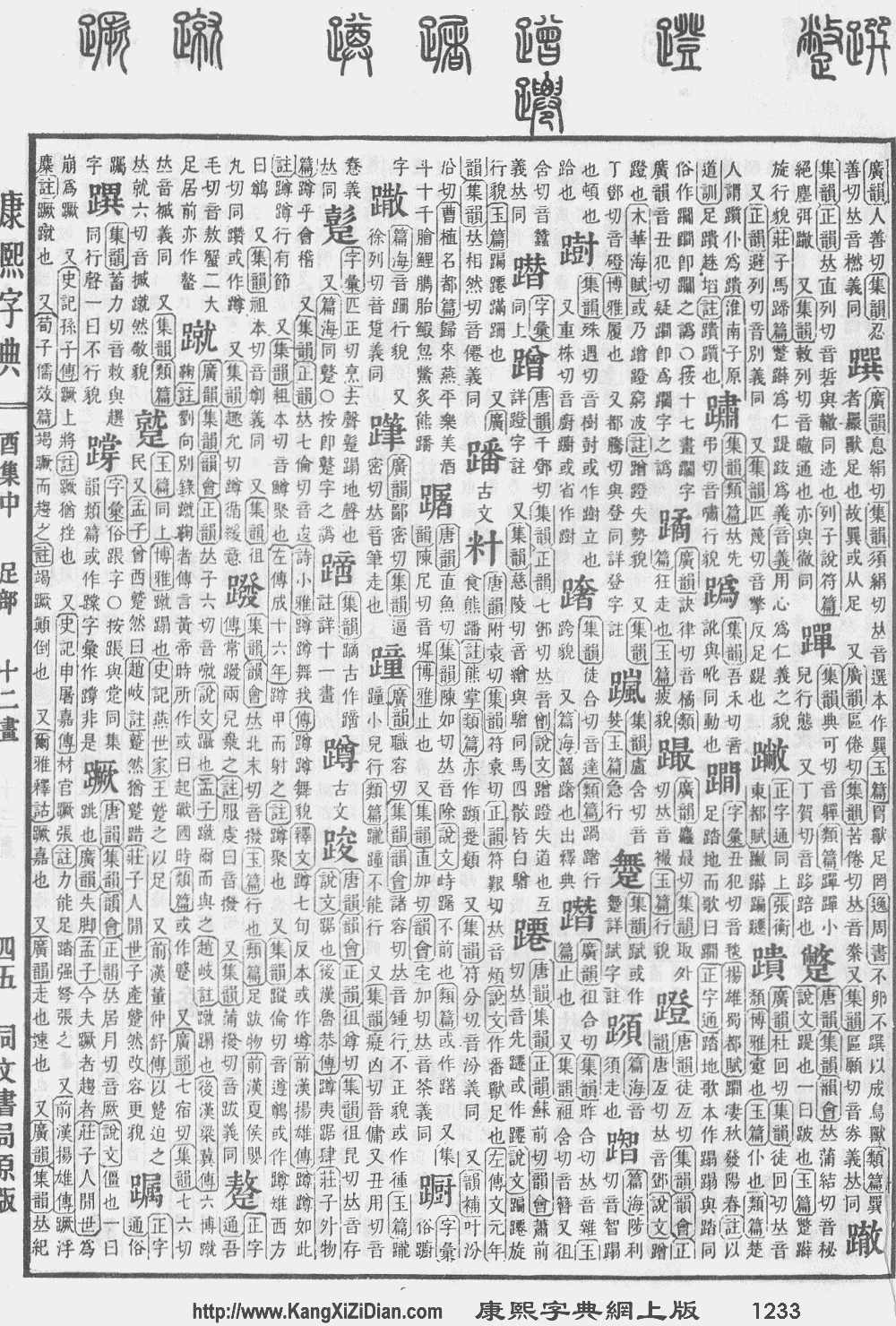
- KangXi: page 1233, character 36
- Dai Kanwa Jiten: character 37876
- Dae Jaweon: page 1706, character 2
- Hanyu Da Zidian: volume 6, page 3740, character 12
- Unihan data for U+8E74
Chinese
| simp. and trad. |
蹴 | |
|---|---|---|
Glyph origin
| Historical forms of the character 蹴 | |
|---|---|
| Shuowen Jiezi (compiled in Han) | Liushutong (compiled in Ming) |
| Small seal script | Transcribed ancient scripts |
 |
 |
| Characters in the same phonetic series (就) (Zhengzhang, 2003) | |
|---|---|
| Old Chinese | |
| 僦 | *ʔsuɡs |
| 就 | *zuɡs |
| 鷲 | *zuɡs |
| 殧 | *zuɡs, *ʔsuɡ, *sʰuɡ |
| 噈 | *ʔsuɡ |
| 蹴 | *ʔsuɡ, *sʰuɡ |
Pronunciation
Definitions
蹴
Compounds
References
Japanese
Kanji
蹴
- This term needs a translation to English. Please help out and add a translation, then remove the text
{{rfdef}}.
Readings
Compounds
- 蹴球 (shūkyū, “soccer”)
- 缶蹴り (kankeri, “kick the can”)
- 蹴出し (kedashi, “underskirt worn under kimono”)
Korean
Hanja
蹴 • (chuk) (hangeul 축, revised chuk, McCune–Reischauer ch'uk, Yale chwuk)
- This term needs a translation to English. Please help out and add a translation, then remove the text
{{rfdef}}.
Vietnamese
Han character
蹴 (xúc)
- This term needs a translation to English. Please help out and add a translation, then remove the text
{{rfdef}}.
This article is issued from
Wiktionary.
The text is licensed under Creative Commons - Attribution - Sharealike.
Additional terms may apply for the media files.