覡
See also: 觋
| ||||||||
Translingual
Han character
覡 (radical 147 見+7, 14 strokes, cangjie input 一人月山山 (MOBUU), four-corner 16110, composition ⿰巫見)
References
- KangXi: page 1135, character 23
- Dai Kanwa Jiten: character 34875
- Dae Jaweon: page 1602, character 2
- Hanyu Da Zidian: volume 6, page 3668, character 17
- Unihan data for U+89A1
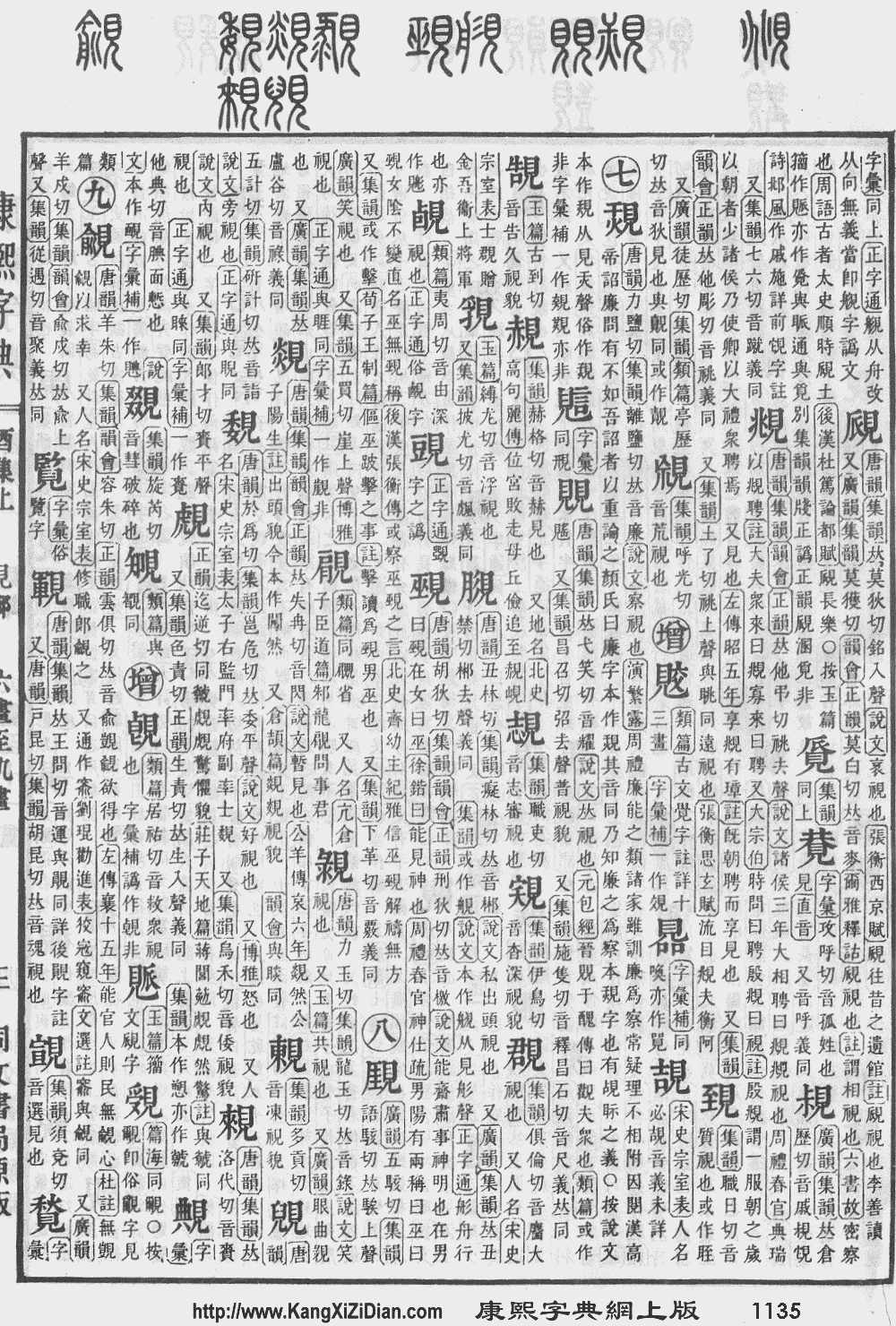
Chinese
| trad. | 覡 | |
|---|---|---|
| simp. | 觋 | |
Pronunciation
Definitions
覡
- This term needs a translation to English. Please help out and add a translation, then remove the text
{{rfdef}}.
Compounds
|
Japanese
Kanji
覡
Readings
Etymology 1
From Old Japanese [Term?]. Originally a compound of 神 (kamu, “god, spirit”) + 和ぎ (nagi, “calming, calming down”), the stem noun form of verb 和ぐ (nagu, “to become calm, to become quiet”).
/kamunaɡi/ → /kaɴnaɡi/
Pronunciation
Alternative forms
Noun
覡 (hiragana かんなぎ, rōmaji kannagi)
- a medium or shaman, usually female, who acts as a medium between humans and the spirits or gods, helping to communicate between the two and to calm any supernatural or spiritual upset
Synonyms
Etymology 2
Shift in pronunciation of the 神 (kamu) element, similar to the pattern seen in terms such as 神戸 (“Kōbe”).
/kamunaɡi/ → /koːnaɡi/
Pronunciation
Alternative forms
Noun
覡 (hiragana こうなぎ, rōmaji kōnagi)
- alternate reading for kannagi
Etymology 3
Less-common ateji for 巫女 (miko, “shrine maiden”).
Pronunciation
Alternative forms
Noun
Korean
Hanja
覡 • (gyeok) (hangeul 격, revised gyeok, McCune–Reischauer kyŏk, Yale kyek)
- This term needs a translation to English. Please help out and add a translation, then remove the text
{{rfdef}}.
This article is issued from
Wiktionary.
The text is licensed under Creative Commons - Attribution - Sharealike.
Additional terms may apply for the media files.