薹
| ||||||||
Translingual
Han character
薹 (radical 140 艸+14, 20 strokes, cangjie input 廿土口土 (TGRG), four-corner 44104, composition ⿱艹臺)
References
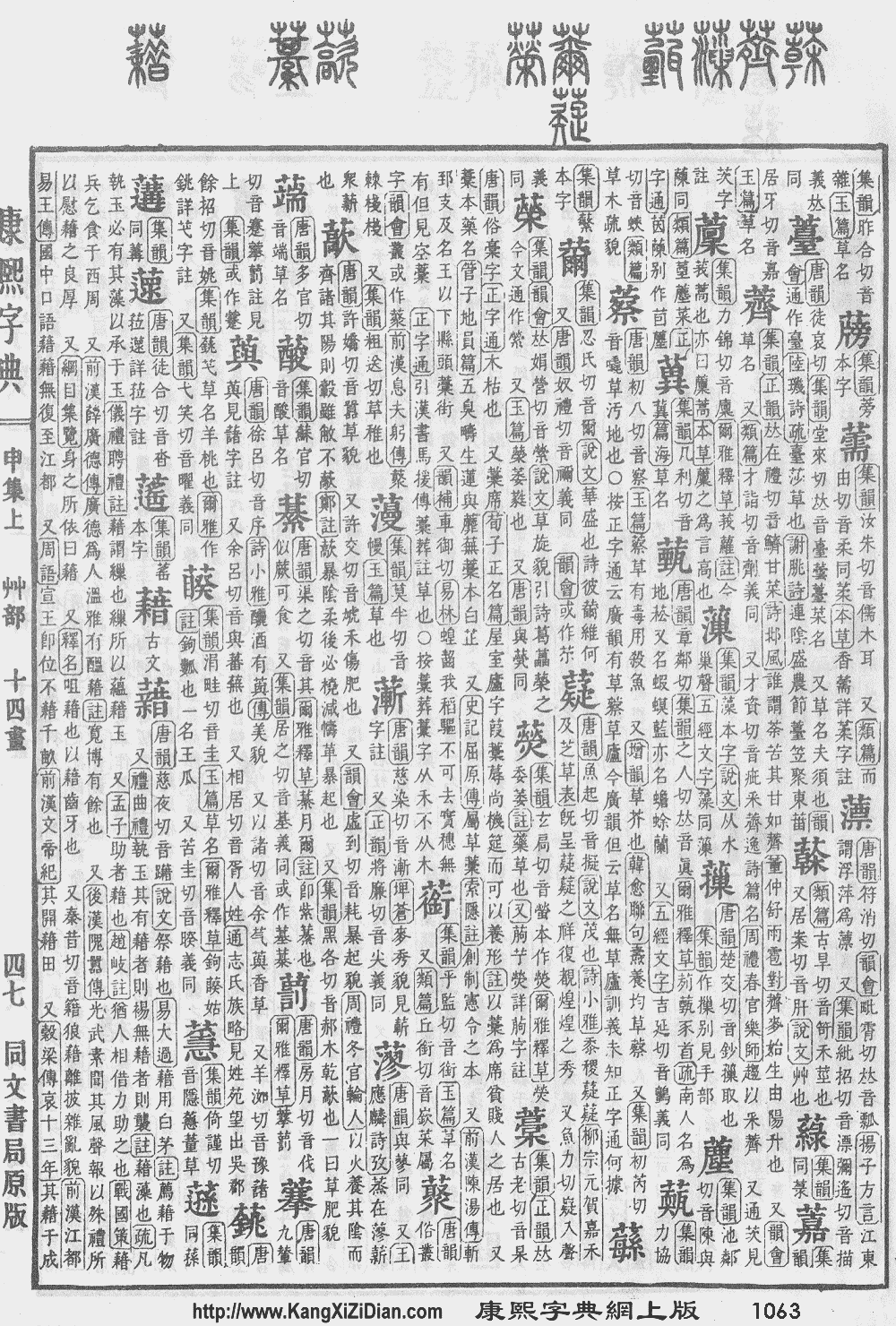
- KangXi: page 1063, character 4
- Dai Kanwa Jiten: character 32204
- Dae Jaweon: page 1527, character 33
- Hanyu Da Zidian: volume 5, page 3310, character 4
- Unihan data for U+85B9
Chinese
| simp. and trad. |
薹 | |
|---|---|---|
| alt. forms | 臺/台 “sedge” | |
Glyph origin
| Characters in the same phonetic series (臺) (Zhengzhang, 2003) | |
|---|---|
| Old Chinese | |
| 懛 | *tɯː |
| 儓 | *tʰɯːs, *dɯː |
| 臺 | *dɯː |
| 擡 | *dɯː |
| 薹 | *dɯː |
| 嬯 | *dɯː |
| 檯 | *dɯː |
| 籉 | *dɯː |
Phono-semantic compound (形聲, OC *dɯː) : semantic 艸 (“grass”) + phonetic 臺 (OC *dɯː).
Pronunciation
Definitions
薹
- sedge (Carex)
- Brassica rapa
- rachis of an inflorescence (of garlics, garlic chives, rapeseeds, etc.)
Compounds
Usage notes
Note that 薹 is not simplified to 苔 in mainland China.
Japanese
Kanji
薹
- This term needs a translation to English. Please help out and add a translation, then remove the text
{{rfdef}}.
Readings
Vietnamese
Han character
薹 (đài)
- This term needs a translation to English. Please help out and add a translation, then remove the text
{{rfdef}}.
This article is issued from
Wiktionary.
The text is licensed under Creative Commons - Attribution - Sharealike.
Additional terms may apply for the media files.