蓄
| ||||||||
Translingual
Han character
蓄 (radical 140 艸+10, 16 strokes, cangjie input 廿卜女田 (TYVW), four-corner 44603, composition ⿱艹畜)
References
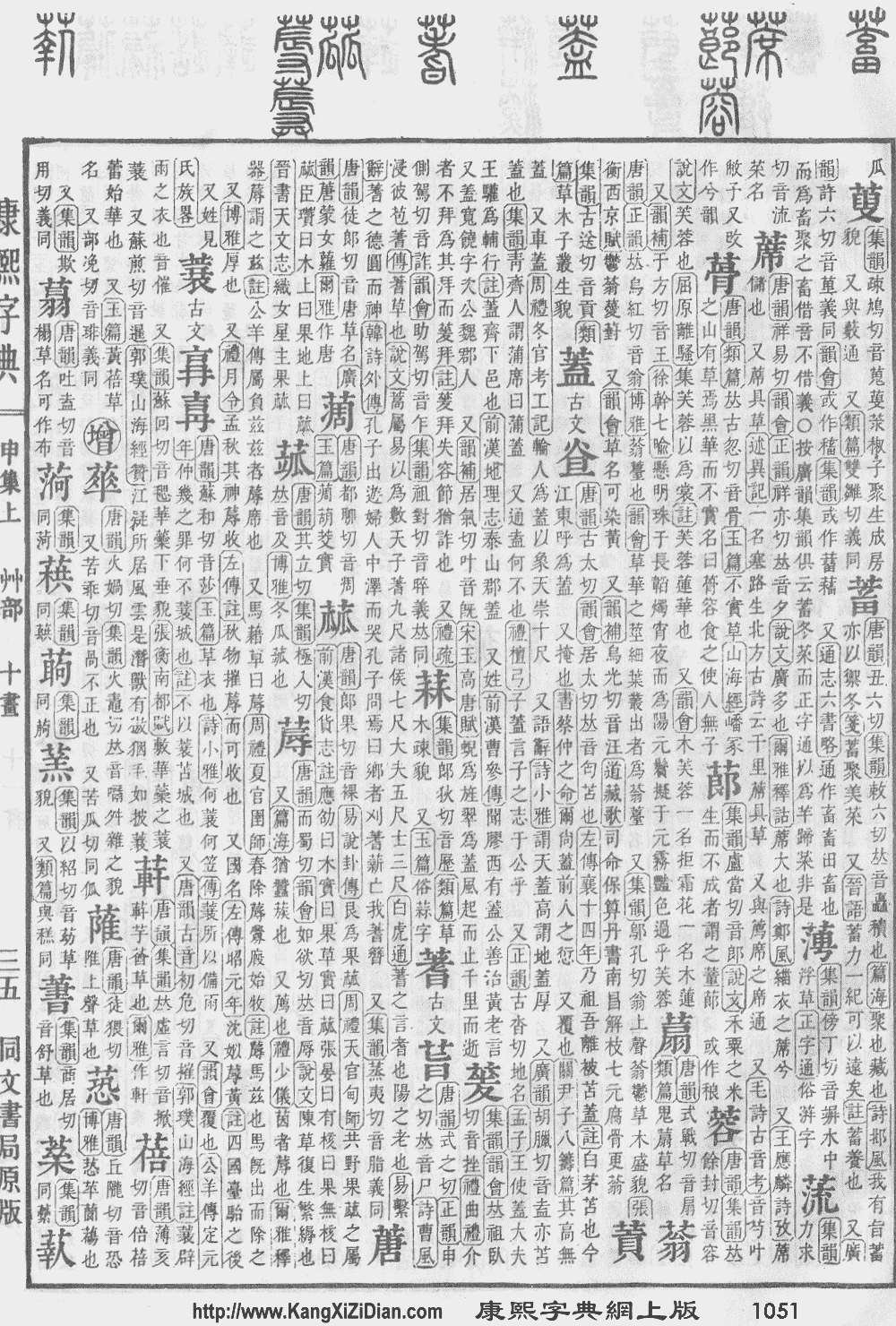
- KangXi: page 1051, character 2
- Dai Kanwa Jiten: character 31642
- Dae Jaweon: page 1512, character 13
- Hanyu Da Zidian: volume 5, page 3269, character 3
- Unihan data for U+84C4
Chinese
| simp. and trad. |
蓄 | |
|---|---|---|
Glyph origin
| Characters in the same phonetic series (畜) (Zhengzhang, 2003) | |
|---|---|
| Old Chinese | |
| 畜 | *l̥ʰuɡs, *l̥ʰuɡ, *hluɡ |
| 蓄 | *l̥ʰuɡ, *hluɡ |
| 稸 | *l̥ʰuɡ, *hluɡ |
| 滀 | *l̥ʰuɡ |
| 傗 | *l̥ʰuɡ |
| 鄐 | *l̥ʰuɡ, *hluɡ |
| 慉 | *hluɡ |
Phono-semantic compound (形聲, OC *l̥ʰuɡ, *hluɡ) : semantic 艹 (“grass, plant”) + phonetic 畜 (OC *l̥ʰuɡs, *l̥ʰuɡ, *hluɡ) – to cultivate plants, to store grain, to save.
Pronunciation
Definitions
蓄
Compounds
Japanese
Kanji
蓄
- This term needs a translation to English. Please help out and add a translation, then remove the text
{{rfdef}}.
Readings
- Goon: ちく (chiku, Jōyō); きく (kiku)
- Kan’on: ちく (chiku, Jōyō); きく (kiku)
- Kun: たくわえる (takuwaeru, 蓄える, Jōyō)
Korean
Hanja
蓄 • (chuk) (hangeul 축, revised chuk, McCune–Reischauer ch'uk, Yale chwuk)
- This term needs a translation to English. Please help out and add a translation, then remove the text
{{rfdef}}.
Vietnamese
Han character
- This term needs a translation to English. Please help out and add a translation, then remove the text
{{rfdef}}.
This article is issued from
Wiktionary.
The text is licensed under Creative Commons - Attribution - Sharealike.
Additional terms may apply for the media files.