葬
See also: 塟
| ||||||||
Translingual
Glyph origin
| Historical forms of the character 葬 | ||||
|---|---|---|---|---|
| Shang | Western Zhou | Warring States | Shuowen Jiezi (compiled in Han) | Liushutong (compiled in Ming) |
| Oracle bone script | Bronze inscriptions | Bronze inscriptions | Small seal script | Transcribed ancient scripts |
 |
 |
|
 |
 |
| Characters in the same phonetic series (葬) (Zhengzhang, 2003) | |
|---|---|
| Old Chinese | |
| 髒 | *ʔsaːŋʔ |
| 葬 | *ʔsaːŋs |
Ideogrammic compound (會意) : 茻 (“grass”) + 死 (“dead person”) – bury the dead 死 in the grass 茻. Top is now grass radical (艹), while bottom is simplified to 廾, hence graphically 艹 + 死 + 廾.
Han character
葬 (radical 140, 艸+9, 12 strokes, cangjie input 廿一心廿 (TMPT), four-corner 44441, composition ⿳艹死廾)
Derived characters
References
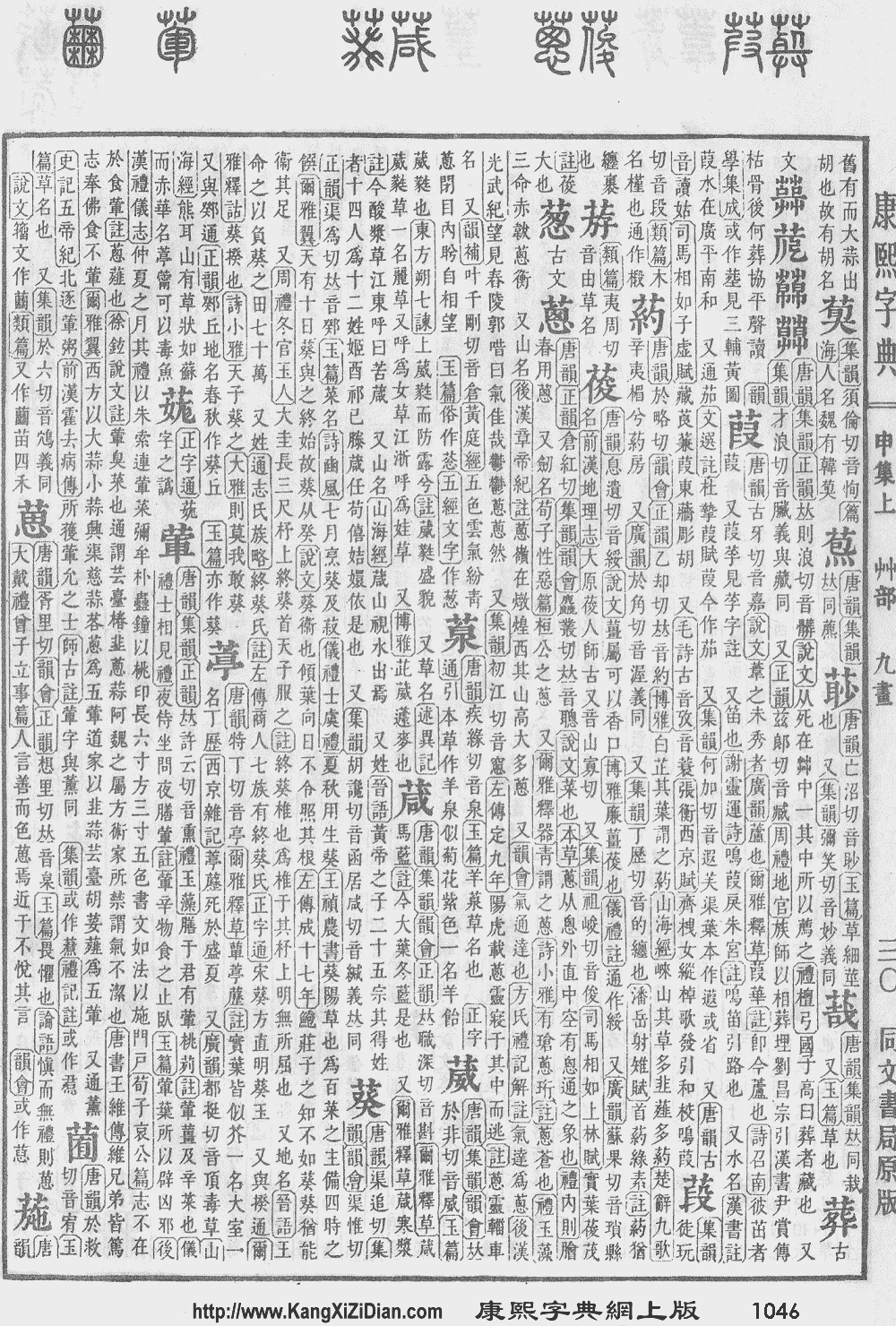
- KangXi: page 1046, character 5
- Dai Kanwa Jiten: character 31448
- Dae Jaweon: page 1507, character 9
- Hanyu Da Zidian: volume 5, page 3246, character 2
- Unihan data for U+846C
Chinese
| simp. and trad. |
葬 | |
|---|---|---|
| alt. forms | 塟 | |
Pronunciation
Definitions
葬
Compounds
Japanese
Kanji
葬
- funeral, bury
Readings
Compounds
Compounds
| Kanji in this term |
|---|
| 葬 |
| そう Grade: S |
| on’yomi |
Etymology
From Middle Chinese 葬 (tsangH, “burial”).
Pronunciation
Noun
References
- Jack Halpern's New Japanese-English Character Dictionary
Korean
Hanja
葬 • (jang) (hangeul 장, revised jang, McCune–Reischauer chang, Yale cang)
- This term needs a translation to English. Please help out and add a translation, then remove the text
{{rfdef}}.
Vietnamese
Han character
- This term needs a translation to English. Please help out and add a translation, then remove the text
{{rfdef}}.
This article is issued from
Wiktionary.
The text is licensed under Creative Commons - Attribution - Sharealike.
Additional terms may apply for the media files.