絆
| ||||||||
Translingual
Han character
絆 (radical 120, 糸+5, 11 strokes, cangjie input 女火火手 (VFFQ), four-corner 29950, composition ⿰糹半)
References
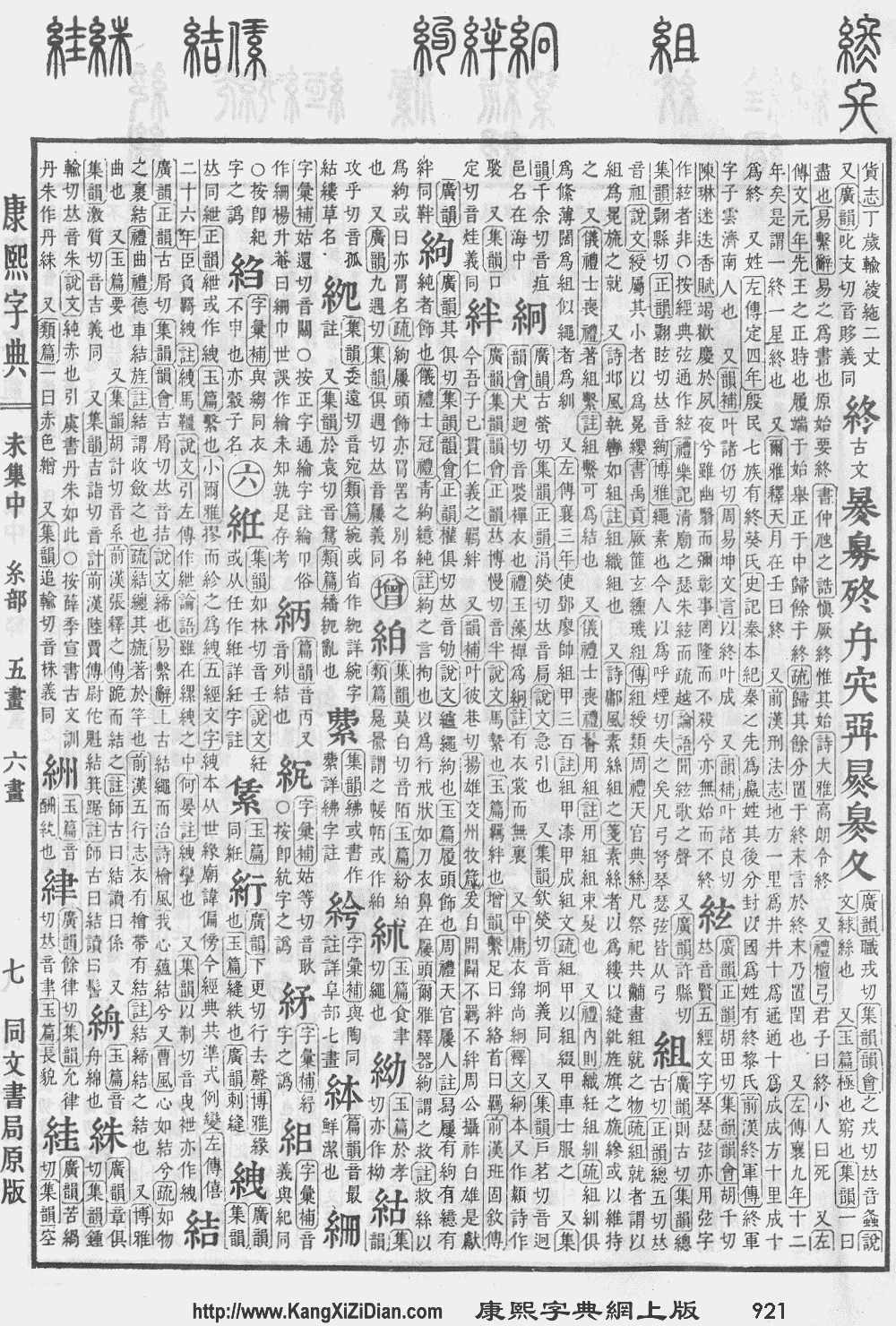
- KangXi: page 921, character 14
- Dai Kanwa Jiten: character 27376
- Dae Jaweon: page 1354, character 2
- Hanyu Da Zidian: volume 5, page 3386, character 1
- Unihan data for U+7D46
Chinese
| trad. | 絆 | |
|---|---|---|
| simp. | 绊 | |
Glyph origin
| Characters in the same phonetic series (半) (Zhengzhang, 2003) | |
|---|---|
| Old Chinese | |
| 半 | *paːns |
| 絆 | *paːns |
| 靽 | *paːns |
| 姅 | *paːns, *pʰaːns |
| 拌 | *pʰaːn, *baːnʔ |
| 拚 | *pʰaːn, *brons, *pʰaːn, *puns |
| 坢 | *pʰaːnʔ |
| 判 | *pʰaːns |
| 泮 | *pʰaːns |
| 頖 | *pʰaːns |
| 胖 | *pʰaːns |
| 冸 | *pʰaːns |
| 牉 | *pʰaːns |
| 柈 | *baːn |
| 伴 | *baːnʔ, *baːns |
| 叛 | *baːns |
| 畔 | *baːns |
| 袢 | *ban |
Pronunciation
Definitions
絆
- This term needs a translation to English. Please help out and add a translation, then remove the text
{{rfdef}}.
Compounds
References
Japanese
Kanji
(“Jinmeiyō” kanji used for names)
Readings
Compounds
Etymology 1
| Kanji in this term |
|---|
| 絆 |
| きずな Jinmeiyō |
| kun’yomi |
/kiduna/ → /kid͡zuna/ → /kizuna/
Likely from Old Japanese, first attested in the Wamyō Ruijushō (938 CE).
The final -zuna is definitely from 綱 (tsuna, “rope”), while the initial ki- remains uncertain.
The more positive connotation of "bond" is attested in The Tale of the Heike (c. 1330).
Alternative forms
Pronunciation
Noun
絆 (hiragana きずな, katakana キズナ, rōmaji kizuna, historical hiragana きづな)
- a bond (emotional link or connection), tie
- 1985 August 20, Watanabe, Taeko, “第四十六話 時の絆 Ⅲ [Chapter 46: The Bond of Time Ⅲ]”, in ファミリー! [Family!], volume 10 (fiction, in Japanese), Tokyo: Shogakukan, →ISBN, page 183:
- 7年後 キムは16になる ハービィが望んだように 父と娘の絆はその時間によって清算されるのだろうか そして その後 新たにはじまる時は ふたりの間にどんな絆を育むのだろう
- Nana-nen go Kimu wa jūroku ni naru Hābyi ga nozonda yō ni chichi to musume no kizuna wa sono jikan ni yotte seisan sareru no darō ka Soshite sono nochi arata ni hajimaru toki wa futari no aida ni donna kizuna o hagukumu no darō
- 7 years later, Kim turned 16. The bond between father and daughter faded away with time, just as Harvey had hoped. But then, as time went on, something else also started to blossom in both of them. A different bond.
- 7年後 キムは16になる ハービィが望んだように 父と娘の絆はその時間によって清算されるのだろうか そして その後 新たにはじまる時は ふたりの間にどんな絆を育むのだろう
-
- a rope used to bind a horse, for example, as not to get away; a fetter
Proverbs
- 浮世の絆 (ukiyo no kizuna)
- 貧は菩提の種富は輪廻の絆 (hin wa bodai no tane tomi wa rinne no kizuna, literally “poverty is the seed of awakening, wealth is the fetter of rebirth”)
Proper noun
絆 (hiragana きずな, rōmaji Kizuna, historical hiragana きづな)
- a female given name
Etymology 2
| Kanji in this term |
|---|
| 絆 |
| ほだし Jinmeiyō |
| kun’yomi |
/podasi/ → /fodaɕi/ → /hodaɕi/
From Old Japanese.
The 連用形 (ren'yōkei, “stem or continuative form”) of verb 絆す (hodasu, “to tie something up, such as a horse, as not to get away”).[1]
Alternative forms
- 絆し
Pronunciation
Noun
絆 (hiragana ほだし, rōmaji hodashi)
Etymology 3
| Kanji in this term |
|---|
| 絆 |
| ふもだし Jinmeiyō |
| kun’yomi |
⟨pumi1 podasi⟩ → /pumodasi/ → /fumodaɕi/
Compound of 踏み (fumi), the 連用形 (ren'yōkei, “stem or continuative form”) of verb 踏む (fumu, “to step, tread”) + 絆 (hodashi, “rope to bind an horse, for example, as not to get away”).
Pronunciation
Noun
絆 (hiragana ふもだし, rōmaji fumodashi)
References
Korean
Hanja
絆 • (ban) (hangeul 반, revised ban, McCune–Reischauer pan, Yale pan)
- This term needs a translation to English. Please help out and add a translation, then remove the text
{{rfdef}}.
Vietnamese
Han character
- This term needs a translation to English. Please help out and add a translation, then remove the text
{{rfdef}}.