犛
| ||||||||
Translingual
Han character
犛 (radical 93 牛+11, 15 strokes, cangjie input 十大一竹手 (JKMHQ), four-corner 58251, composition ⿸𠩺牛)
- a black ox, a yak
References
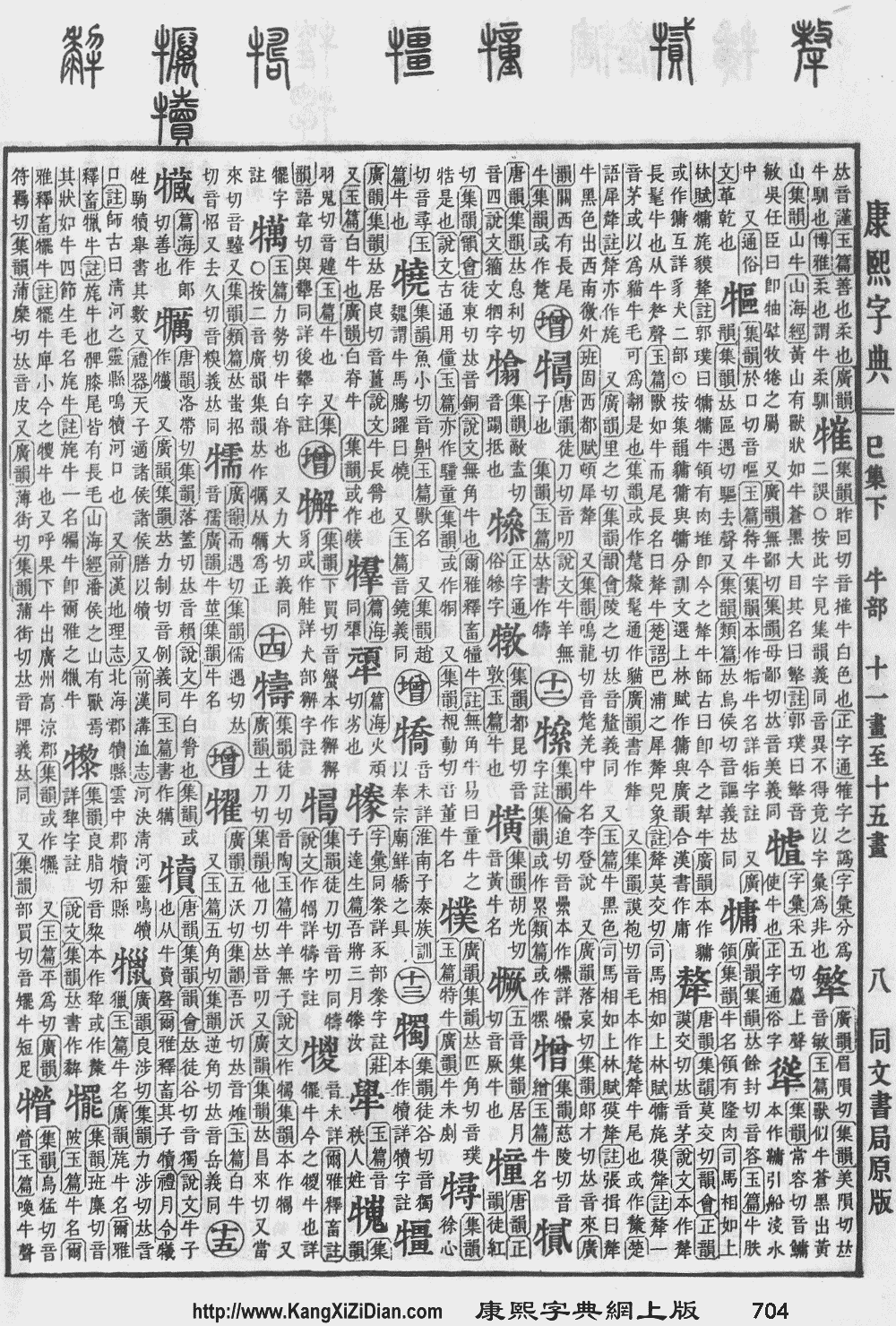
- KangXi: page 704, character 7
- Dai Kanwa Jiten: character 20154
- Dae Jaweon: page 1116, character 38
- Hanyu Da Zidian: volume 3, page 1818, character 5
- Unihan data for U+729B
Chinese
| trad. | 犛/牦 | |
|---|---|---|
| simp. | 牦 | |
| alt. forms | 氂 | |
Glyph origin
| Characters in the same phonetic series (釐) (Zhengzhang, 2003) | |
|---|---|
| Old Chinese | |
| 犛 | *rɯː, *rɯ, *maːw, *mraːw |
| 釐 | *rɯ |
| 嫠 | *rɯ |
| 剺 | *rɯ |
| 孷 | *rɯ |
| 漦 | *sɦrɯ |
| 氂 | *rɯ, *maːw |
Pronunciation
Definitions
犛
Compounds
|
|
|
References
- Dictionary of Chinese Character Variants (教育部異體字字典)
- (Cantonese) Multi-function Chinese Character Database (漢語多功能字庫)
Japanese
Kanji
犛
- This term needs a translation to English. Please help out and add a translation, then remove the text
{{rfdef}}.
Readings
Vietnamese
Han character
- This term needs a translation to English. Please help out and add a translation, then remove the text
{{rfdef}}.
This article is issued from
Wiktionary.
The text is licensed under Creative Commons - Attribution - Sharealike.
Additional terms may apply for the media files.