澪
| ||||||||
Translingual
Han character
澪 (radical 85, 水+13, 16 strokes, cangjie input 水一月戈 (EMBI) or X水一月戈 (XEMBI), four-corner 31137, composition ⿰氵零)
References
- KangXi: page 653, character 11
- Dai Kanwa Jiten: character 18398
- Dae Jaweon: page 1063, character 11
- Hanyu Da Zidian: volume 3, page 1754, character 12
- Unihan data for U+6FAA
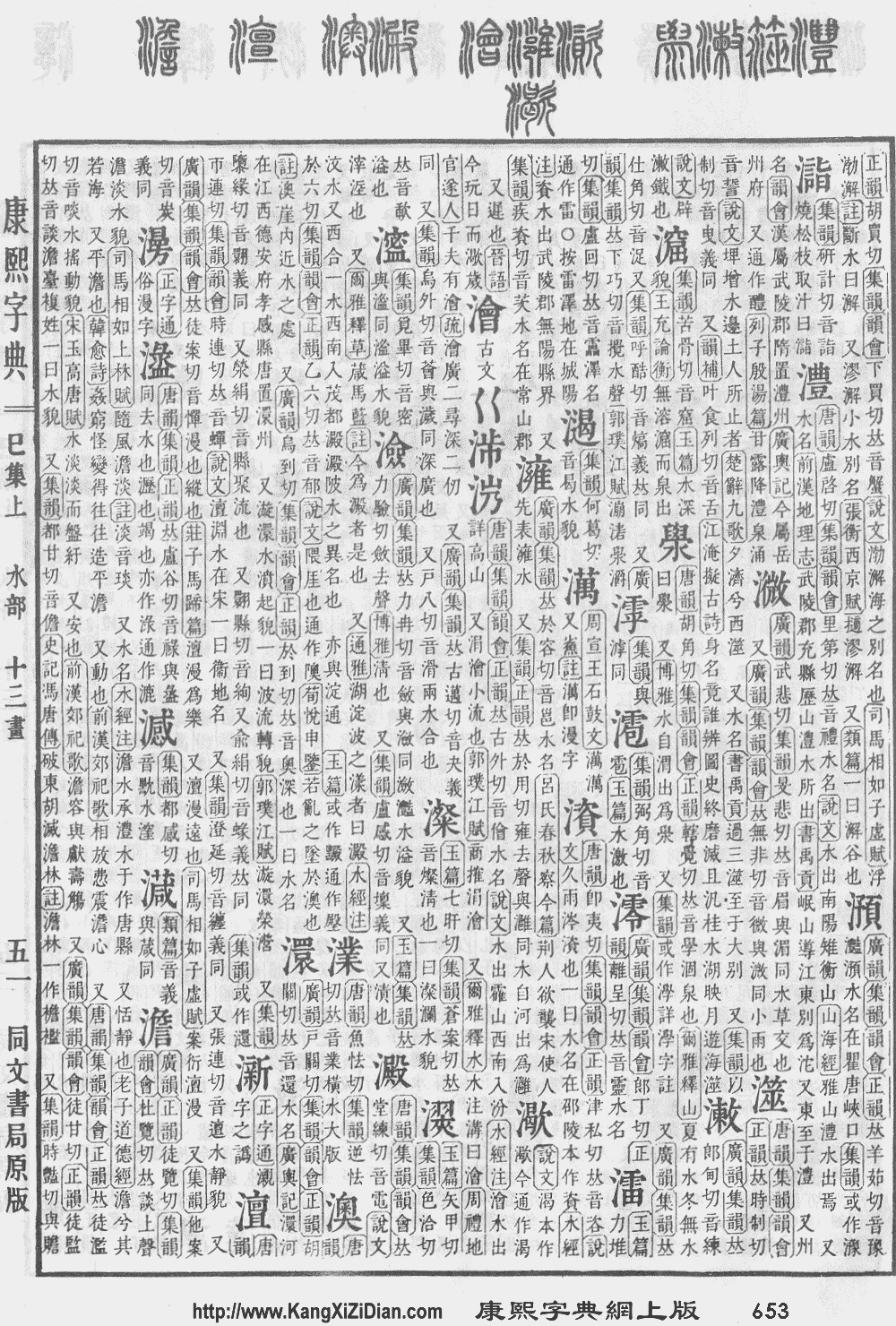
Chinese
| trad. | 澪 | |
|---|---|---|
| simp. # | 澪 | |
Pronunciation
Definitions
澪
- The name of a body of water.
- Alternative form of 泠 (líng).
Compounds
|
References
Japanese
Kanji
澪
(“Jinmeiyō” kanji used for names)
Readings
Compounds
Etymology 1
| Kanji in this term |
|---|
| 澪 |
| みお Jinmeiyō |
| kun’yomi |
⟨mi1 wo⟩ → /miwo/ → /mio/
From Old Japanese. Found in the Man'yōshū, completed some time after 759 CE, spelled either phonetically in man'yōgana or as 水尾.[1]
Derived as a compound of 水 (mi, “water”, ancient combining form) + 緒 (wo, modern reading o, “cord; something long and continuing”, likely cognate with 尾 (o, “tail”) from the sense of “something long and continuing from the end of the main body”).[2]
Pronunciation
Alternative forms
- 水尾, 水脈
Noun
澪 (hiragana みお, rōmaji mio, historical hiragana みを)
- a waterway
- (more specifically) a navigable channel
- a wake (path left behind by a passing ship on the water's surface)
- Synonym: 航跡 (kōseki)
Derived terms
Proper noun
澪 (hiragana みお, rōmaji Mio, historical hiragana みを)
- a female given name.
Etymology 2
| Kanji in this term |
|---|
| 澪 |
| れい Jinmeiyō |
| on’yomi |
From Middle Chinese 澪 (MC leŋ).
Pronunciation
Proper noun
- a female given name.
References
- ↑ c. 759, Man'yōshū (book 7, poem 1108), text here
- ↑ 1988, 国語大辞典(新装版) (Kokugo Dai Jiten, Revised Edition) (in Japanese), Tōkyō: Shogakukan
- 1 2 2006, 大辞林 (Daijirin), Third Edition (in Japanese), Tōkyō: Sanseidō, →ISBN
- 1 2 1998, NHK日本語発音アクセント辞典 (NHK Japanese Pronunciation Accent Dictionary) (in Japanese), Tōkyō: NHK, →ISBN
This article is issued from
Wiktionary.
The text is licensed under Creative Commons - Attribution - Sharealike.
Additional terms may apply for the media files.