歸
| ||||||||
Translingual
| Traditional | 歸 |
|---|---|
| Shinjitai | 帰 |
| Simplified | 归 |
Han character
歸 (radical 77, 止+14, 18 strokes, cangjie input 竹一尸一月 (HMSMB), four-corner 27127, composition ⿰⿱𠂤止帚)
References
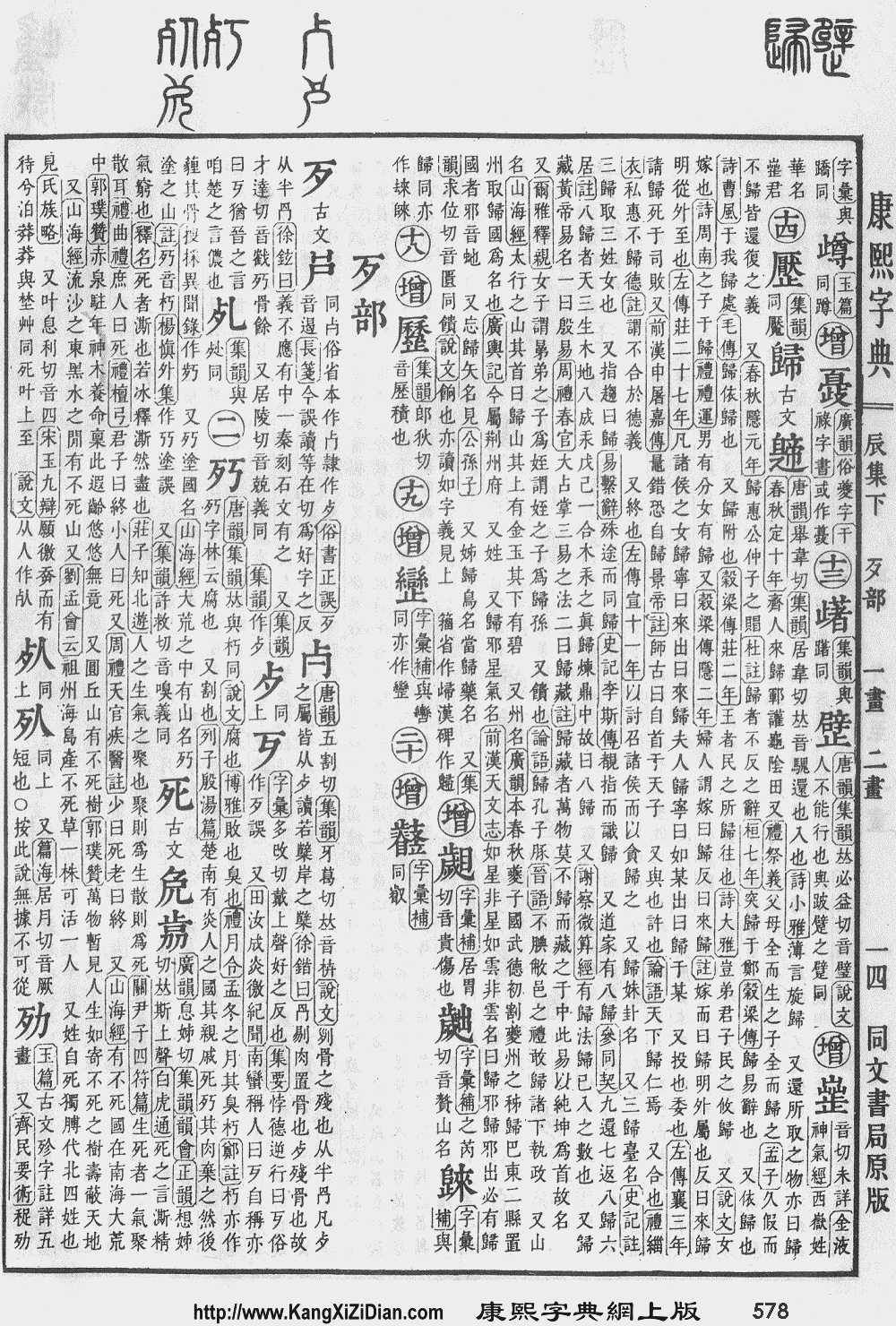
- KangXi: page 578, character 7
- Dai Kanwa Jiten: character 16349
- Dae Jaweon: page 968, character 18
- Hanyu Da Zidian: volume 2, page 1446, character 15
- Unihan data for U+6B78
Chinese
| trad. | 歸 | |
|---|---|---|
| simp. | 归 | |
| alt. forms | 㱕 帰 | |
Glyph origin
| Historical forms of the character 歸 | ||||
|---|---|---|---|---|
| Shang | Western Zhou | Warring States | Shuowen Jiezi (compiled in Han) | Liushutong (compiled in Ming) |
| Oracle bone script | Bronze inscriptions | Chu Slip and silk script | Small seal script | Transcribed ancient scripts |
 |
 |
 |
 |
 |
| Characters in the same phonetic series (追) (Zhengzhang, 2003) | |
|---|---|
| Old Chinese | |
| 蘬 | *kʰlul, *kʰrul, *kʰrulʔ |
| 磓 | *tuːl |
| 塠 | *tuːl |
| 頧 | *tuːl, *tuːlʔ |
| 鴭 | *tuːl |
| 鎚 | *tuːl, *dul, *duls |
| 搥 | *tuːl |
| 縋 | *dols |
| 膇 | *dols |
| 槌 | *dols, *dul |
| 追 | *tul |
| 桘 | *dul |
| 巋 | *kʰrul, *kʰrulʔ |
| 歸 | *klul |
Ideogram (指事) : 𠂤 (“ancient form of 師 (“troops”)”) + 帚 (“broom; sweep”) – to eradicate the enemy and return.
Some analyse the 帚 component in the oracle bone script as a ligature of 止 (“to stop, to cease”) and 方 (“peripheral tribes”), i.e. “(of tribes in the periphery) to cease enmity and submit”.
A 止 (“foot”) or 辵 (“walking”) component was further added in the bronze inscriptions.
Shuowen deems 𠂤 to be the phonetic component of this character.
Etymology 1
Starostin and Schuessler (2007) consider this a possible derivative of 回 (OC *ɡuːl, “to revolve; to return”). Compared with Tibetan འཁོར ('khor, “circle; turn; to turn round; to return”) by Xue (2001) and Wang (2007).
Pronunciation
Definitions
歸
Compounds
|
|
|
Etymology 2
| For pronunciation and definitions of 歸 – see 愧 (“ashamed; guilty; conscience-stricken; mortified; to make feel guilty; to shame; to blame”). (This character, 歸, is a variant form of 愧.) |
Etymology 3
| For pronunciation and definitions of 歸 – see 饋 (“offer food to a superior; send gift”). (This character, 歸, is a variant form of 饋.) |
Japanese
| 帰 | |
| 歸 |
Kanji
(uncommon “Hyōgai” kanji, kyūjitai kanji, shinjitai form 帰)
- This term needs a translation to English. Please help out and add a translation, then remove the text
{{rfdef}}.
Readings
- Goon: き (ki)
- Kan’on: き (ki)
- Kun: かえる (kaeru, 歸る); かえす (kaesu, 歸す); とつぐ (totsugu, 歸ぐ); おくる (okuru, 歸る)
Korean
Hanja
歸 • (gwi, gwe) (hangeul 귀, 궤, revised gwi, gwe, McCune–Reischauer kwi, kwe, Yale kwi, kwey)
- This term needs a translation to English. Please help out and add a translation, then remove the text
{{rfdef}}.
Vietnamese
Han character
- This term needs a translation to English. Please help out and add a translation, then remove the text
{{rfdef}}.