旅
| ||||||||
| ||||||||
Translingual
Han character
旅 (radical 70 方+6, 10 strokes, cangjie input 卜尸人竹女 (YSOHV), four-corner 08232)
References
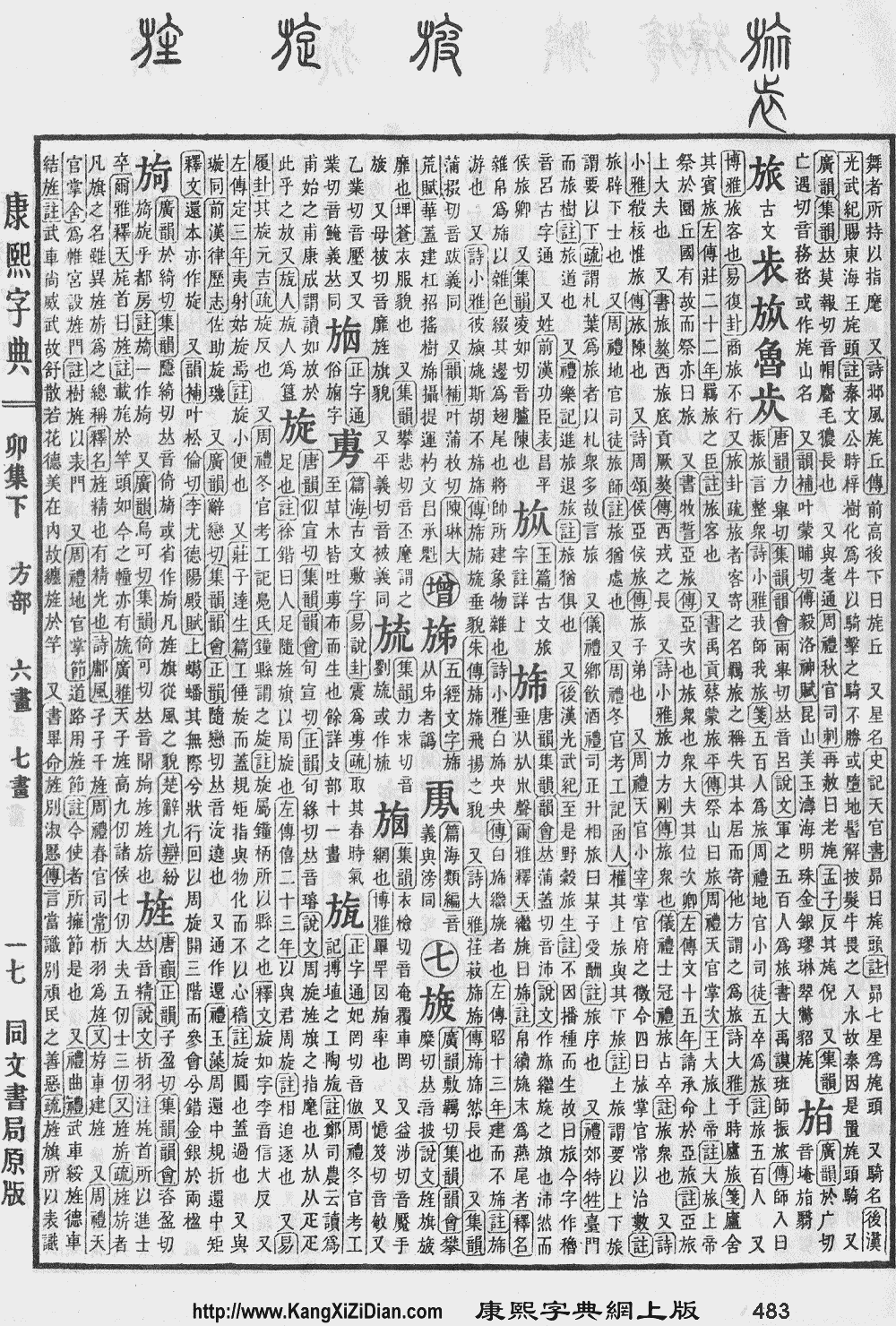
- KangXi: page 483, character 2
- Dai Kanwa Jiten: character 13644
- Dae Jaweon: page 845, character 2
- Hanyu Da Zidian: volume 3, page 2178, character 7
- Unihan data for U+65C5
Chinese
| simp. and trad. |
旅 | |
|---|---|---|
Glyph origin
| Characters in the same phonetic series (旅) (Zhengzhang, 2003) | |
|---|---|
| Old Chinese | |
| 玈 | *raː |
| 旅 | *ɡ·raʔ |
| 膂 | *ɡ·raʔ |
| 祣 | *raʔ |
Pronunciation
Definitions
旅
- (military) brigade
- † army; troops
- † traveller
- journey; trip
- † hotel
- to travel
- 56th hexagram of the I Ching
- A surname.
Usage notes
- (military): Under the National Revolutionary Army, a brigade was composed of two regiments (團). In turn, two brigades formed a division (整編師), a square division.
Compounds
Japanese
Kanji
Readings
Compounds
Etymology 1
| Kanji in this term |
|---|
| 旅 |
| りょ Grade: 3 |
| on’yomi |
From Middle Chinese 旅 (ljoX, “a military unit of 500 men; to go [on a sortie; on a trip or journey]”).
Pronunciation
Noun
- in ancient China, a military unit of 500 soldiers
- one of the I Ching hexagrams: sojourning (I Ching hexagram interpretation on Wikipedia here)
Prefix
旅 (hiragana りょ, rōmaji ryo-)
Usage notes
The prefix usage only ever appears in kanji compounds.
Etymology 2
| Kanji in this term |
|---|
| 旅 |
| たび Grade: 3 |
| kun’yomi |
/tabi1/ invalid IPA characters (1) → /tabi/
From Old Japanese.[1] Appears in the Man'yōshū, completed no earlier than 759 and one of the oldest extant texts in the Japanese language.
May be cognate with 度 (tabi, “the time when something happens”); both terms have the same pitch accent, the same ancient vowel values, and some semantic overlap.
Pronunciation
Noun
- a journey; travel
- 1694, 松尾芭蕉 Matsuo Bashō
- 旅に病んで夢は枯野をかけ廻る。
- Tabi ni yande yume wa kareno o kakemeguru.
- Anxious to go journeying, my dreams run through the desolate fields.
- 不思議な旅が始まるぜ!
- Fushigi na tabi ga hajimaru ze!
- A strange journey is about to begin!
- 旅に病んで夢は枯野をかけ廻る。
- 1694, 松尾芭蕉 Matsuo Bashō
- (archaic) a temporary time spent in a place
- (more specifically) a place where a 神輿 (mikoshi, “portable shrine”) spends a temporary time outside of the 本宮 (hongū, “main shrine building”) during a 祭り (matsuri, “festival”)
Verb
旅する (intransitive, hiragana たびする, rōmaji tabi suru)
Conjugation
| Stem forms | ||||
|---|---|---|---|---|
| Imperfective (未然形) | 旅し | たびし | tabi shi | |
| Continuative (連用形) | 旅し | たびし | tabi shi | |
| Terminal (終止形) | 旅する | たびする | tabi suru | |
| Attributive (連体形) | 旅する | たびする | tabi suru | |
| Hypothetical (仮定形) | 旅すれ | たびすれ | tabi sure | |
| Imperative (命令形) | 旅せよ¹ 旅しろ² |
たびせよ¹ たびしろ² |
tabi seyo¹ tabi shiro² | |
| Key constructions | ||||
| Passive | 旅される | たびされる | tabi sareru | |
| Causative | 旅させる 旅さす |
たびさせる たびさす |
tabi saseru tabi sasu | |
| Potential | 旅できる | たびできる | tabi dekiru | |
| Volitional | 旅しよう | たびしよう | tabi shiyō | |
| Negative | 旅しない | たびしない | tabi shinai | |
| Negative continuative | 旅せず | たびせず | tabi sezu | |
| Formal | 旅します | たびします | tabi shimasu | |
| Perfective | 旅した | たびした | tabi shita | |
| Conjunctive | 旅して | たびして | tabi shite | |
| Hypothetical conditional | 旅すれば | たびすれば | tabi sureba | |
| ¹ Written imperative ² Spoken imperative | ||||
References
Korean
Hanja
旅 • (ryeo>yeo) (hangeul 려>여, revised ryeo>yeo, McCune–Reischauer ryŏ>yŏ, Yale lye>ye)
- This term needs a translation to English. Please help out and add a translation, then remove the text
{{rfdef}}.
Compounds
Vietnamese
Han character
旅 (lữ)
- This term needs a translation to English. Please help out and add a translation, then remove the text
{{rfdef}}.