恋
See also: 戀
| ||||||||
Translingual
| Japanese | 恋 |
|---|---|
| Simplified | 恋 |
| Traditional | 戀 |
Han character
恋 (radical 61, 心+6, 10 strokes, cangjie input 卜金心 (YCP), four-corner 00333, composition ⿱亦心)
Derived characters
- 𪮠, 𦃳, 𨄄, 𢣫
Related characters
- 戀 (Traditional form of 恋)
References
- KangXi: page 383, character 36
- Dai Kanwa Jiten: character 10537
- Dae Jaweon: page 714, character 12
- Hanyu Da Zidian: volume 4, page 2292, character 7
- Unihan data for U+604B
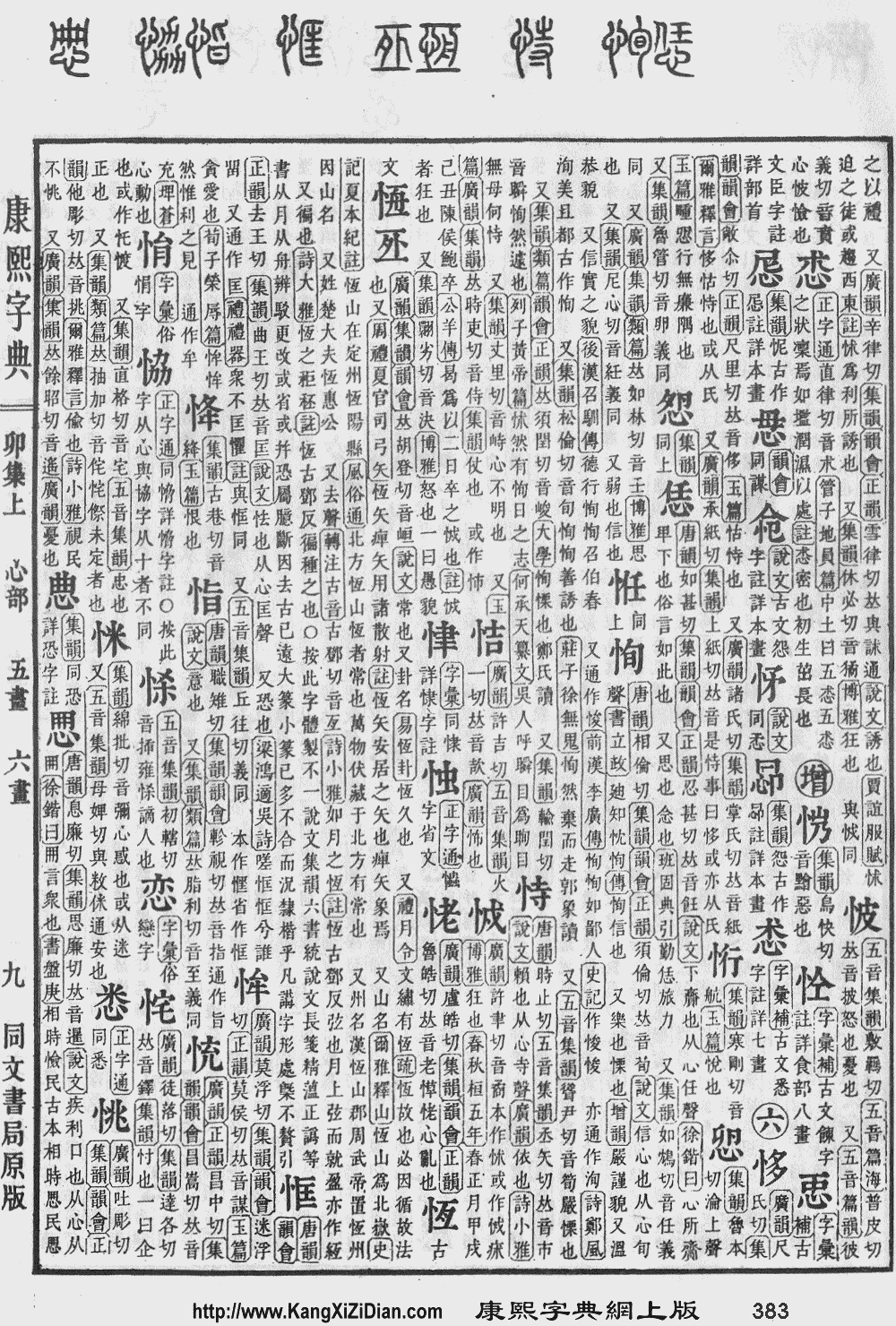
Chinese
Etymology 1
| For pronunciation and definitions of 恋 – see 戀 (“love; to love; etc.”). (This character, 恋, is the simplified and variant form of 戀.) |
Notes:
|
Etymology 2
| For pronunciation and definitions of 恋 – see 甚 (“serious; extreme; extremely; considerably; etc.”). (This character, 恋, is a variant form of 甚.) |
Japanese
| 恋 | |
| 戀 |
Kanji
恋
(common “Jōyō” kanji, shinjitai kanji, kyūjitai form 戀)
Readings
Compounds
Etymology
| Kanji in this term |
|---|
| 恋 |
| こい Grade: S |
| kun’yomi |
/ko1pi2/ invalid IPA characters (12) → /kopi/ → /kofi/ → */kowi/ → /koi/
From Old Japanese.
The 連用形 (ren'yōkei, “stem or continuative form”) of 恋う (kou, “to love”).
Alternate forms
- 恋い
Pronunciation
Noun
恋 (shinjitai kanji, kyūjitai kanji 戀, hiragana こい, rōmaji koi, historical hiragana こひ)
- love, romantic love
- c. 759, Man'yōshū (book 4, poem 596), text here
- 八百日徃濱之沙毛吾戀二豈不益歟奥嶋守 [Man'yōgana]
- 八百日行く浜の真砂も我が恋にあにまさらじか沖つ島守 [Modern spelling]
- yaoka yuku hama no manago no a ga koi ni ani masaraji oki tsu shimamori
- On so vast a shore[―]that one could walk eight hundred days[―]would the grains of sand number greater than my love, o guardian of the outer isles?[3]
- 1086, Goshūi Wakashū (book 14, poem 815; also Hyakunin Isshu, poem 65)
- Synonym: 愛 (ai)
- c. 759, Man'yōshū (book 4, poem 596), text here
- longing, yearning
- c. 759, Man'yōshū (book 3, poem 325), text here
- 明日香河川余藤不去立霧乃念應過孤悲尓不有國 [Man'yōgana]
- 明日香河川淀さらず立つ霧の思ひ過ぐべき恋にあらなくに [Modern spelling]
- Asuka-gawa kawa-yodo sarazu tatsu-kiri no omoi sugu beki koi ni aranaku ni
- (please add an English translation of this example)
- c. 1005, Shūi Wakashū (book 11, poem 622; also Hyakunin Isshu, poem 40)
- c. 759, Man'yōshū (book 3, poem 325), text here
Derived terms
Derived terms
- 恋しがる (koshigaru)
- 恋する (koisuru)
- 恋歌 (koiuta)
- 恋占い (koi-uranai)
- 恋風 (koikaze)
- 恋活 (koikatsu)
- 恋心 (koikokoro), 恋心 (koigokoro)
- 恋焦がれる (koikogareru)
- 恋路 (koiji)
- 恋し鳥 (koishidori)
- 恋塚 (koizuka)
- 恋疲れ (koizukare)
- 恋妻 (koizuma)
- 恋仲 (koinaka)
- 恋猫 (koineko)
- 恋人 (koibito)
- 恋文 (koibumi)
- 恋水 (koimizu)
- 恋物語 (koi-monogatari)
- 恋敵 (koigataki)
- 恋病 (koiyamai)
- 恋煩い, 恋患い (koiwazurai)
- 恋の悩み (koi no nayami)
- 恋の闇 (koi no yami)
- 色恋 (irokoi)
- 初恋 (hatsukoi)
Idioms
- 恋は思案の外 (koi wa shian no hoka)
References
- ↑ 2006, 大辞林 (Daijirin), Third Edition (in Japanese), Tōkyō: Sanseidō, →ISBN
- ↑ 1998, NHK日本語発音アクセント辞典 (NHK Japanese Pronunciation Accent Dictionary) (in Japanese), Tōkyō: NHK, →ISBN
- ↑ Edwin A. Cranston (1998) The Gem-Glistening Cup, illustrated edition, Stanford University Press, →ISBN, page 570
- ↑ Steven D. Carter (1991) Traditional Japanese Poetry: An Anthology, illustrated edition, Stanford University Press, →ISBN, page 227
- ↑ Joshua S. Mostow (1996) Pictures of the Heart: The Hyakunin Isshu in Word and Image, illustrated edition, University of Hawaii Press, →ISBN, page 260
Korean
Hanja
恋 • (ryeon>yeon) (hangeul 련>연, revised ryeon>yeon, McCune–Reischauer ryŏn>yŏn, Yale lyen>yen)
- This term needs a translation to English. Please help out and add a translation, then remove the text
{{rfdef}}.
This article is issued from
Wiktionary.
The text is licensed under Creative Commons - Attribution - Sharealike.
Additional terms may apply for the media files.