忌
| ||||||||
Translingual
Han character
忌 (radical 61, 心+3, 7 strokes, cangjie input 尸山心 (SUP), four-corner 17331, composition ⿱己心)
References
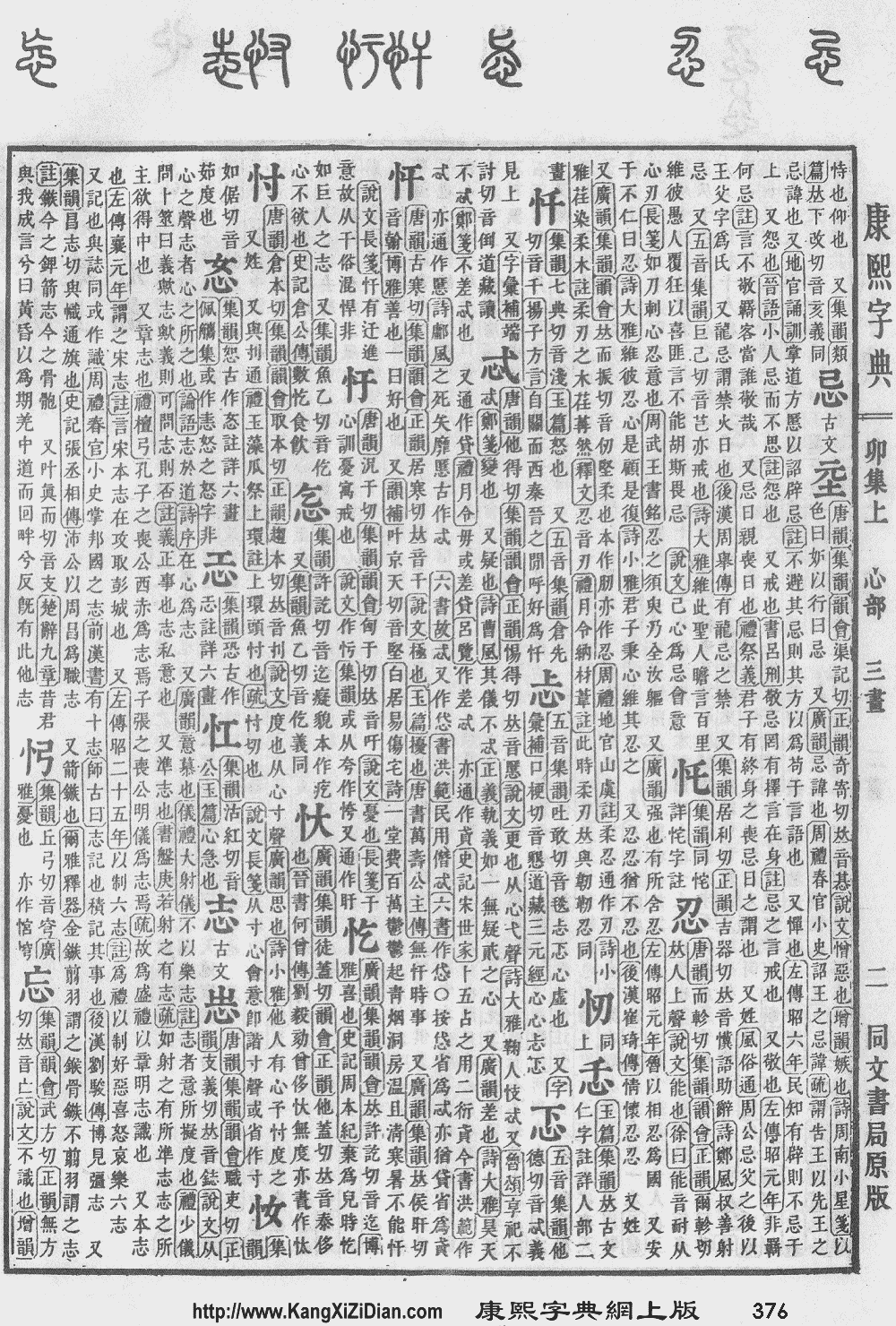
- KangXi: page 376, character 1
- Dai Kanwa Jiten: character 10310
- Dae Jaweon: page 702, character 10
- Hanyu Da Zidian: volume 4, page 2270, character 11
- Unihan data for U+5FCC
Chinese
| simp. and trad. |
忌 | |
|---|---|---|
Glyph origin
| Characters in the same phonetic series (己) (Zhengzhang, 2003) | |
|---|---|
| Old Chinese | |
| 改 | *klɯːʔ |
| 跽 | *ɡrɯʔ |
| 己 | *kɯʔ |
| 紀 | *kɯʔ |
| 妀 | *kɯʔ |
| 記 | *kɯs |
| 杞 | *kʰɯʔ |
| 屺 | *kʰɯʔ |
| 芑 | *kʰɯʔ |
| 邔 | *kʰɯʔ, *ɡɯs |
| 玘 | *kʰɯʔ |
| 忌 | *ɡɯs |
| 鵋 | *ɡɯs |
| 誋 | *ɡɯs |
| 梞 | *ɡɯs |
Etymology 1
Pronunciation
Definitions
忌
Compounds
Etymology 2
| For pronunciation and definitions of 忌 – see 嫉 (“to envy; to be jealous; to hate; to resent”). (This character, 忌, is the second-round simplified form of 嫉.) |
Notes:
|
Japanese
Kanji
忌
Readings
Compounds
Etymology
| Kanji in this term |
|---|
| 忌 |
| き Grade: S |
| on’yomi |
From Middle Chinese 忌 (giH).
Pronunciation
Noun
- mourning
- death anniversary
References
Korean
Hanja
忌 • (gi) (hangeul 기, revised gi, McCune–Reischauer ki, Yale ki)
- This term needs a translation to English. Please help out and add a translation, then remove the text
{{rfdef}}.
Vietnamese
Han character
忌 (kị, cạy, cậy, kỵ, cữ, kiêng)
- This term needs a translation to English. Please help out and add a translation, then remove the text
{{rfdef}}.
This article is issued from
Wiktionary.
The text is licensed under Creative Commons - Attribution - Sharealike.
Additional terms may apply for the media files.