市
| ||||||||
Translingual
| Stroke order | |||
|---|---|---|---|
 | |||
Alternative forms
Note that the Ming typeface used in Japan and Korea as well as the Kangxi dictionary uses a vertical dot for the upper component of 亠 which is slightly different from modern Chinese scripts which uses a slanting 丶 dot for the upper component of 亠 in 市.
Han character
市 (radical 50, 巾+2, 5 strokes, cangjie input 卜中月 (YLB), four-corner 00227, composition ⿱亠巾)
Derived characters
References
- KangXi: page 328, character 3
- Dai Kanwa Jiten: character 8775
- Dae Jaweon: page 632, character 13
- Hanyu Da Zidian: volume 1, page 729, character 5
- Unihan data for U+5E02
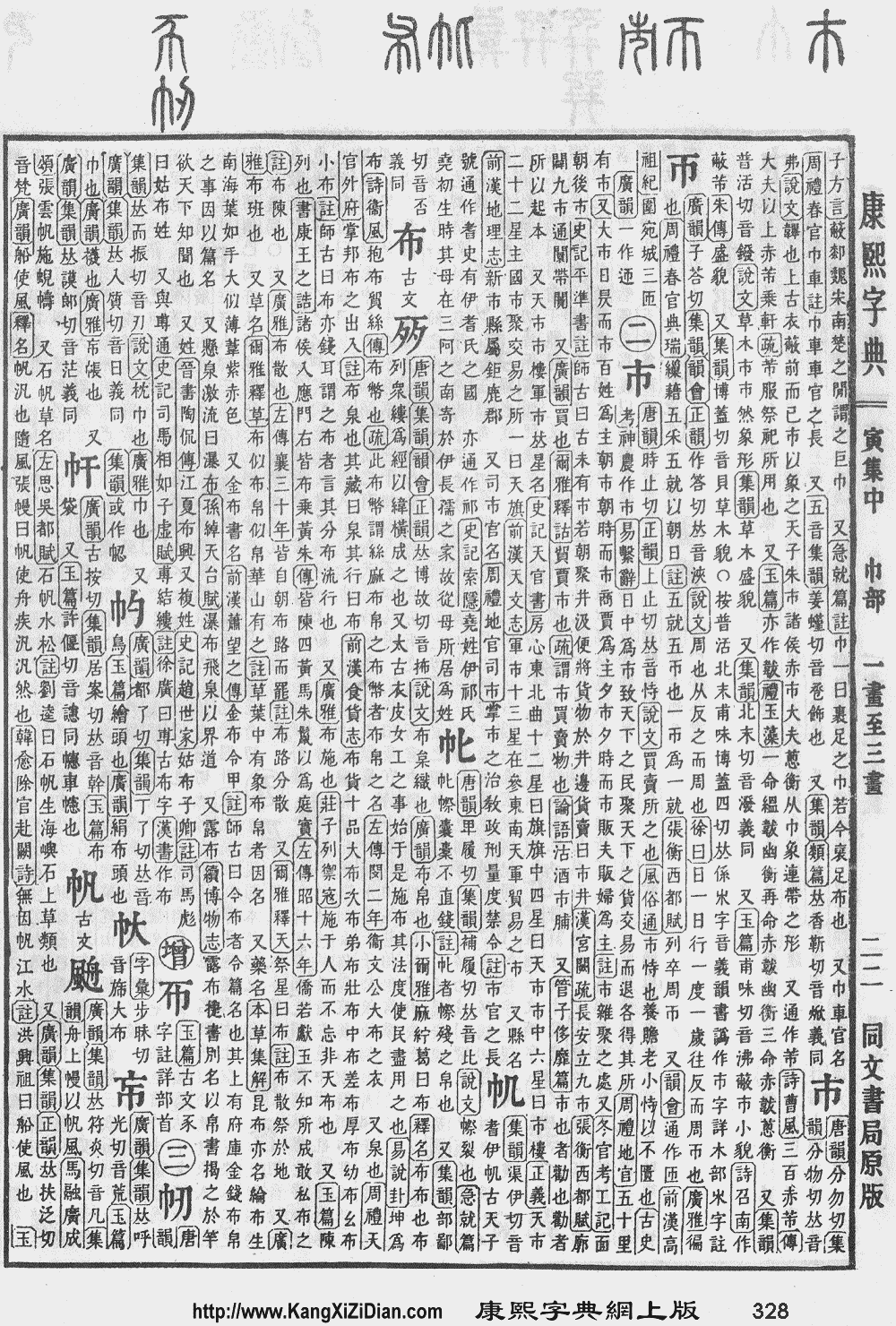
Usage notes
This character is not to be confused with visually similar but unrelated 巿 (U+5DFF) (type of clothing in ancient China) which has only four strokes and is written with 一 across the top of 巾.
Chinese
| simp. and trad. |
市 | |
|---|---|---|
Glyph origin
| Historical forms of the character 市 | ||
|---|---|---|
| Western Zhou | Shuowen Jiezi (compiled in Han) | Liushutong (compiled in Ming) |
| Bronze inscriptions | Small seal script | Transcribed ancient scripts |
 |
 |
 |
Oracle bone script and bronze inscriptions: Phono-semantic compound (形聲, OC *djɯʔ) : semantic 兮 (“bustling”) + phonetic 之 (OC *tjɯ).
Pronunciation
Definitions
市
Compounds
Derived terms from 市
|
|
|
Japanese
Kanji
市
Readings
Noun
| Kanji in this term |
|---|
| 市 |
| いち Grade: 2 |
| kun’yomi |
Suffix
Compounds
Derived terms
Korean
Hanja
Compounds
Derived terms
Vietnamese
Han character
市 (thị)
- This term needs a translation to English. Please help out and add a translation, then remove the text
{{rfdef}}.
Compounds
- 市場 (thị trường)
- 市鎮 (thị trấn)
This article is issued from
Wiktionary.
The text is licensed under Creative Commons - Attribution - Sharealike.
Additional terms may apply for the media files.