鬧
| ||||||||
Translingual
Alternative forms
Note that the Ming typeface used in Japan and Korea as well as the Kangxi dictionary uses a vertical dot for the upper component of 亠 which is slightly different from modern Chinese scripts which uses a slanting 丶 dot for the upper component of 亠 in 市.
Han character
鬧 (radical 191, 鬥+5, 15 strokes, cangjie input 中弓卜中月 (LNYLB), four-corner 77227, composition ⿵鬥市)
Derived characters
- 𤂗
Related characters
References
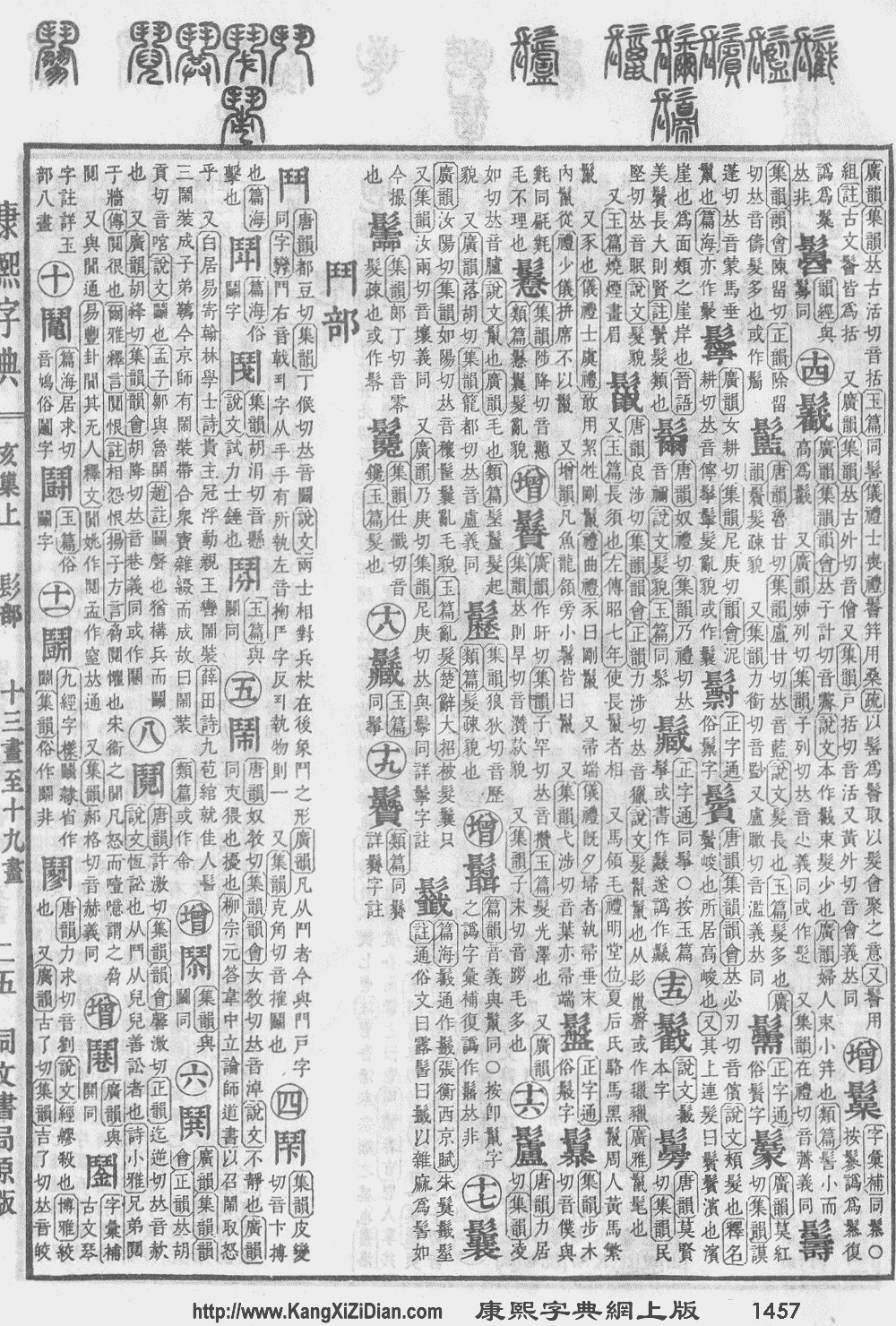
- KangXi: page 1457, character 34
- Dai Kanwa Jiten: character 45639
- Dae Jaweon: page 1989, character 23
- Hanyu Da Zidian: volume 7, page 4515, character 7
- Unihan data for U+9B27
Chinese
| trad. | 鬧/閙 | |
|---|---|---|
| simp. | 闹 | |
Pronunciation
Definitions
鬧
- to be noisy
- to create a disturbance
- (Cantonese) to scold
Compounds
Derived terms from 鬧
|
|
|
See also
Japanese
Kanji
鬧
- This term needs a translation to English. Please help out and add a translation, then remove the text
{{rfdef}}.
Readings
- Goon: にょう (nyō)←ねう (neu, historical)
- Kan’on: どう (dō)←だう (dau, historical)
- Kun: さわがしい (sawagashii, 鬧しい)
Korean
Hanja
鬧 • (ryo>yo, nyo>yo) (hangeul 료>요, 뇨>요, revised ryo>yo, nyo>yo, McCune–Reischauer ryo>yo, nyo>yo, Yale lyo>yo, nyo>yo)
- This term needs a translation to English. Please help out and add a translation, then remove the text
{{rfdef}}.
Vietnamese
Han character
- This term needs a translation to English. Please help out and add a translation, then remove the text
{{rfdef}}.
References
This article is issued from
Wiktionary.
The text is licensed under Creative Commons - Attribution - Sharealike.
Additional terms may apply for the media files.