嫌
| ||||||||
Translingual
Han character
嫌 (radical 38 女+10, 13 strokes, cangjie input 女廿X金 (VTXC), four-corner 48437, composition ⿰女兼)
References
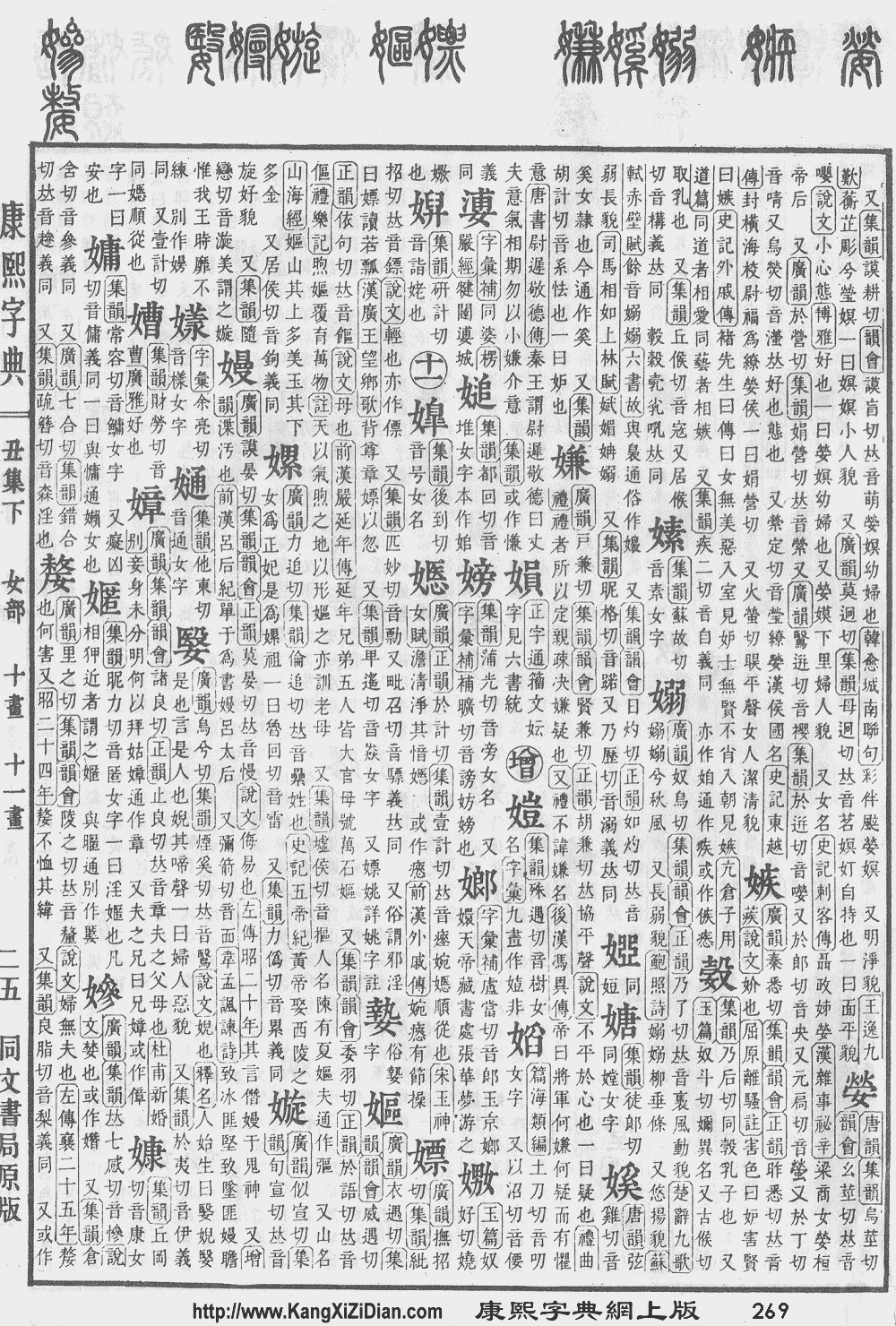
- KangXi: page 269, character 9
- Dai Kanwa Jiten: character 6618
- Dae Jaweon: page 536, character 20
- Hanyu Da Zidian: volume 2, page 1073, character 8
- Unihan data for U+5ACC
Chinese
| simp. and trad. |
嫌 | |
|---|---|---|
Glyph origin
| Historical forms of the character 嫌 |
|---|
| Shuowen Jiezi (compiled in Han) |
| Small seal script |
 |
| Characters in the same phonetic series (兼) (Zhengzhang, 2003) | |
|---|---|
| Old Chinese | |
| 譧 | *r'eːms |
| 賺 | *r'eːms |
| 尲 | *kreːm |
| 鹻 | *kreːmʔ |
| 歉 | *kʰreːms, *kʰreːmʔ, *kʰeːmʔ, *kʰeːms |
| 槏 | *kʰreːmʔ |
| 鰜 | *ɡreːm, *keːm |
| 稴 | *ɡreːm, *ɡ·reːm, *ɡ·reːmʔ, *ɡ·reːms, *ɡeːm |
| 豏 | *ɡreːmʔ, *ɡreːms |
| 甉 | *ɡreːmʔ, *ɡraːm |
| 廉 | *ɡ·rem |
| 鎌 | *ɡ·rem |
| 鬑 | *ɡ·rem, *ɡ·reːm |
| 鐮 | *ɡ·rem |
| 簾 | *ɡ·rem |
| 薕 | *ɡ·rem, *ɡ·reːm |
| 蠊 | *ɡ·rem |
| 嬚 | *ɡ·remʔ |
| 溓 | *ɡ·remʔ, *ɡ·reːm, *ɡ·reːmʔ |
| 嵰 | *kʰremʔ |
| 隒 | *ŋɡremʔ |
| 熑 | *ɡ·reːm |
| 濂 | *ɡ·reːm |
| 燫 | *ɡ·reːm |
| 兼 | *keːm, *keːms |
| 縑 | *keːm |
| 鶼 | *keːm |
| 蒹 | *keːm |
| 搛 | *keːm |
| 謙 | *kʰeːm |
| 膁 | *kʰeːmʔ |
| 嗛 | *kʰeːmʔ |
| 慊 | *kʰeːmʔ, *kʰeːb |
| 傔 | *kʰeːms |
| 馦 | *qʰeːm |
| 嫌 | *ɡeːm |
| 鼸 | *ɡeːmʔ |
| 尷 | *kreːm |
Pronunciation
Definitions
嫌
Compounds
Japanese
Kanji
嫌
Readings
Etymology
| Kanji in this term |
|---|
| 嫌 |
| いや Grade: S |
| kun’yomi |
Possibly onomatopoeia as a general expression of disgust. Compare similar terms in many different languages, such as English yuck, Finnish yök, Arabic يَع (yaʿ), Turkish ıyak, Thai ยี้ (yíi).
Pronunciation
Alternative forms
- 厭 (less common)
Adjective
嫌 (-na inflection, hiragana いや, rōmaji iya)
- disagreeable, unpleasant, disgusting, offensive, abhorrent
- 嫌な顔をする
- iya na kao o suru
- to make weird faces
- 嫌な女
- iya na onna
- unpleasant woman → bitch
- 嫌なことを言う
- iya na koto o iu
- to say awful things
- ぞっとするほど嫌な目に合った。
- Zotto suru hodo iya na me ni atta.
- They met with a shockingly abhorrent experience.
- 嫌な顔をする
Inflection
Inflection of 嫌
| Stem forms | |||
|---|---|---|---|
| Imperfective (未然形) | 嫌だろ | いやだろ | iya daro |
| Continuative (連用形) | 嫌で | いやで | iya de |
| Terminal (終止形) | 嫌だ | いやだ | iya da |
| Attributive (連体形) | 嫌な | いやな | iya na |
| Hypothetical (仮定形) | 嫌なら | いやなら | iya nara |
| Imperative (命令形) | 嫌であれ | いやであれ | iya de are |
| Key constructions | |||
| Informal negative | 嫌ではない 嫌じゃない |
いやではない いやじゃない |
iya de wa nai iya ja nai |
| Informal past | 嫌だった | いやだった | iya datta |
| Informal negative past | 嫌ではなかった 嫌じゃなかった |
いやではなかった いやじゃなかった |
iya de wa nakatta iya ja nakatta |
| Formal | 嫌です | いやです | iya desu |
| Formal negative | 嫌ではありません 嫌じゃありません |
いやではありません いやじゃありません |
iya de wa arimasen iya ja arimasen |
| Formal past | 嫌でした | いやでした | iya deshita |
| Formal negative past | 嫌ではありませんでした 嫌じゃありませんでした |
いやではありませんでした いやじゃありませんでした |
iya de wa arimasen deshita iya ja arimasen deshita |
| Conjunctive | 嫌で | いやで | iya de |
| Conditional | 嫌なら(ば) | いやなら(ば) | iya nara (ba) |
| Provisional | 嫌だったら | いやだったら | iya dattara |
| Volitional | 嫌だろう | いやだろう | iya darō |
| Adverbial | 嫌に | いやに | iya ni |
| Degree | 嫌さ | いやさ | iyasa |
Usage notes
いや (iya) sounds more masculine than やだ (yada), which has the same meaning but is more feminine.
Derived terms
Derived terms
- 嫌がる (iyagaru): to dislike something; to be reluctant to do something
- 嫌がらせ (iyagarase): harassment, nuisance
- 嫌む (iyamu): to dislike something, to hate something
- 嫌み (iyami): sarcasm; something sarcastic or snide; disagreeability
- 嫌らしい (iyarashii): disagreeable, unpleasant, disgusting (less strong than plain 嫌 (iya)); vulgar, indecent, lascivious
References
- 1988, 国語大辞典(新装版) (Kokugo Dai Jiten, Revised Edition) (in Japanese), Tōkyō: Shogakukan
Korean
Hanja
嫌 • (hyeom) (hangeul 혐, revised hyeom, McCune–Reischauer hyŏm)
싫어할 혐, Reading : Hyeom, Meaning : Dislike(싫어하다, Shiruh-Hada) Commonly use with 惡 as 嫌惡(혐오, Hyeo-Mo) as a none, adjective or verb to express great dislike or hatred
Eg) 난 그것을 혐오한다. Nan Gogutsul Hyeomo-handa. I dislike it
- This term needs a translation to English. Please help out and add a translation, then remove the text
{{rfdef}}.
Vietnamese
Han character
- This term needs a translation to English. Please help out and add a translation, then remove the text
{{rfdef}}.
This article is issued from
Wiktionary.
The text is licensed under Creative Commons - Attribution - Sharealike.
Additional terms may apply for the media files.