匈
| ||||||||
Translingual
Han character
匈 (radical 20, 勹+4, 6 strokes, cangjie input 心山大 (PUK), four-corner 27720, composition ⿹勹凶)
References
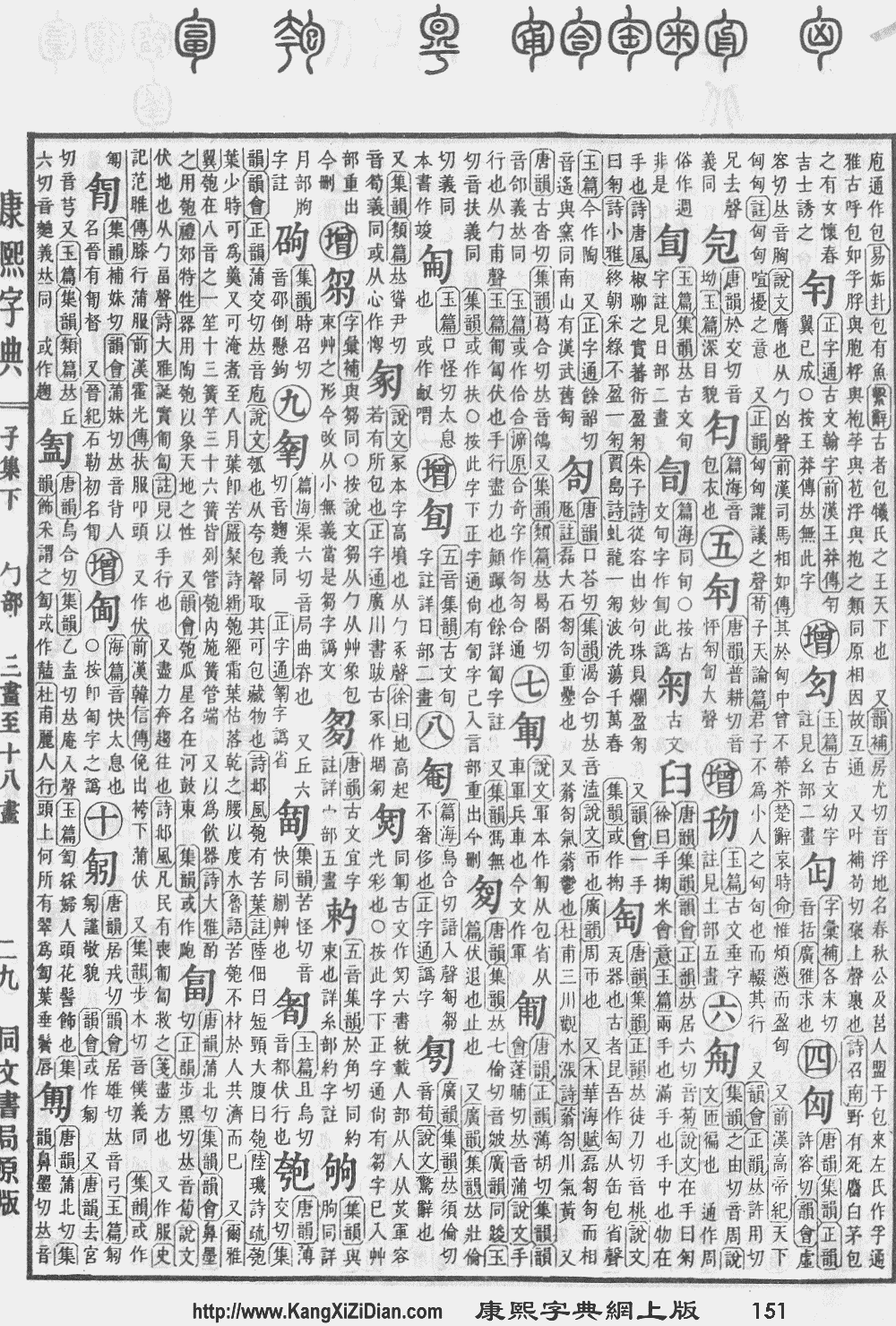
- KangXi: page 151, character 4
- Dai Kanwa Jiten: character 2512
- Dae Jaweon: page 340, character 9
- Hanyu Da Zidian: volume 1, page 258, character 5
- Unihan data for U+5308
Chinese
| simp. and trad. |
匈 | |
|---|---|---|
Glyph origin
| Historical forms of the character 匈 | ||
|---|---|---|
| Warring States | Shuowen Jiezi (compiled in Han) | Liushutong (compiled in Ming) |
| Chu Slip and silk script | Small seal script | Transcribed ancient scripts |
 |
 |
 |
| Characters in the same phonetic series (凶) (Zhengzhang, 2003) | |
|---|---|
| Old Chinese | |
| 酗 | *qʰos |
| 凶 | *qʰoŋ |
| 匈 | *qʰoŋ |
| 兇 | *qʰoŋ, *qʰoŋʔ |
| 訩 | *qʰoŋ |
| 胸 | *qʰoŋ |
| 胷 | *qʰoŋ |
| 洶 | *qʰoŋ, *qʰoŋʔ |
| 恟 | *qʰoŋ |
| 詾 | *qʰoŋ, *qʰoŋʔ |
Phono-semantic compound (形聲, OC *qʰoŋ) : semantic 勹 + phonetic 凶 (OC *qʰoŋ). The derivative 胸 refers to the original word.
Etymology 1
| For pronunciation and definitions of 匈 – see 胸 (“chest; thorax; breast; bosom; etc.”). (This character, 匈, is the second-round simplified and variant form of 胸.) |
Notes:
|
Etymology 2
Pronunciation
Definitions
匈
Compounds
Usage notes
This character is only used in some proper nouns and is not productive in modern Chinese. See 匈奴 (Xiōngnú) and 匈牙利 (Xiōngyálì).
Japanese
Kanji
匈
Readings
Noun
Korean
Hanja
匈 • (hyung)
Vietnamese
Han character
匈 (hung)
- This term needs a translation to English. Please help out and add a translation, then remove the text
{{rfdef}}.
This article is issued from
Wiktionary.
The text is licensed under Creative Commons - Attribution - Sharealike.
Additional terms may apply for the media files.