兒
| ||||||||
Translingual
| Traditional | 兒 |
|---|---|
| Shinjitai | 児 |
| Simplified | 儿 |
Han character
兒 (radical 10, 儿+6, 8 strokes, cangjie input 竹X竹山 (HXHU), four-corner 77217, composition ⿱臼儿)
References
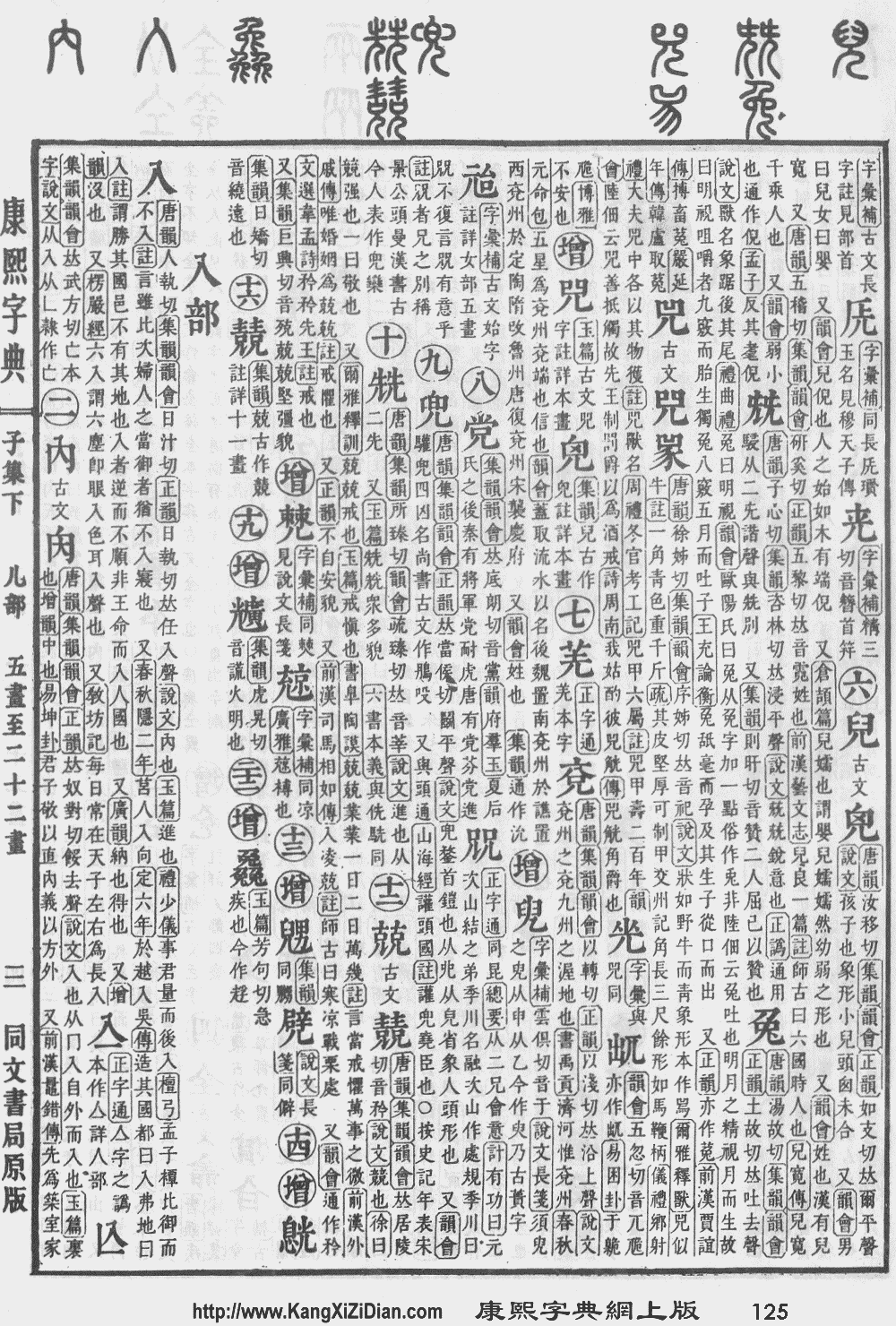
- KangXi: page 125, character 3
- Dai Kanwa Jiten: character 1365
- Dae Jaweon: page 265, character 6
- Hanyu Da Zidian: volume 1, page 272, character 5
- Unihan data for U+5152
Chinese
Glyph origin
| Historical forms of the character 兒 | |||||||||||||||||||||||||||||||||||||||||||||||||||||||||||||||||||||||||||||||
|---|---|---|---|---|---|---|---|---|---|---|---|---|---|---|---|---|---|---|---|---|---|---|---|---|---|---|---|---|---|---|---|---|---|---|---|---|---|---|---|---|---|---|---|---|---|---|---|---|---|---|---|---|---|---|---|---|---|---|---|---|---|---|---|---|---|---|---|---|---|---|---|---|---|---|---|---|---|---|---|
| Shang | Western Zhou | Warring States | Shuowen Jiezi (compiled in Han) | Liushutong (compiled in Ming) | |||||||||||||||||||||||||||||||||||||||||||||||||||||||||||||||||||||||||||
| Oracle bone script | Bronze inscriptions | Chu Slip and silk script | Qin slip script | Small seal script | Transcribed ancient scripts | ||||||||||||||||||||||||||||||||||||||||||||||||||||||||||||||||||||||||||
 |
 |
 |
 |
 |
 | ||||||||||||||||||||||||||||||||||||||||||||||||||||||||||||||||||||||||||
|||||
|
References: Mostly from Richard Sears' Chinese Etymology site (authorisation),
| |||||||||||||||||||||||||||||||||||||||||||||||||||||||||||||||||||||||||||||||


| Characters in the same phonetic series (兒) (Zhengzhang, 2003) | |
|---|---|
| Old Chinese | |
| 掜 | *rŋeː, *ŋeːʔ |
| 誽 | *rŋeː |
| 倪 | *ŋeː |
| 蜺 | *ŋeː, *ŋeː |
| 霓 | *ŋeː, *ŋeːs, *ŋeː |
| 郳 | *ŋeː |
| 齯 | *ŋeː |
| 婗 | *ŋeː |
| 輗 | *ŋeː |
| 棿 | *ŋeː |
| 猊 | *ŋeː |
| 麑 | *ŋeː |
| 貎 | *ŋeː |
| 鯢 | *ŋeː |
| 兒 | *ŋeː, *ŋje |
| 觬 | *ŋeː, *ŋeːʔ |
| 堄 | *ŋeːʔ, *ŋeːs |
| 晲 | *ŋeːʔ |
| 睨 | *ŋeːs |
| 唲 | *ŋje |
| 隉 | *ŋeːd |
| 鶂 | *ŋeːɡ |
| 鬩 | *ɦŋeːɡ |
Pictogram (象形) : an infant with an imperfect cranium (i.e. fontanelles).
Etymology 1
| trad. | 兒 | |
|---|---|---|
| simp. | 儿* | |
| alt. forms | 児 | |
Pronunciation
Definitions
兒
Compounds
|
|
|
Etymology 2
| simp. and trad. |
兒 | |
|---|---|---|
| alt. forms | 児 | |
Pronunciation
Definitions
兒
- A surname.
- Alternative form of 齯 (ní, “teeth grown in old age”).
- Alternative form of 倪 (ní, “small and weak”).
- Alternative form of 郳 (Ní).
Japanese
| 児 | |
| 兒 |
Kanji
(“Jinmeiyō” kanji used for names, kyūjitai kanji, shinjitai form 児)
Readings
References
|
- Source: EDICT and KANJIDIC files licensed by the Electronic Dictionaries Research Group.
Korean
Hanja
Compounds
Vietnamese
Han character
- This term needs a translation to English. Please help out and add a translation, then remove the text
{{rfdef}}.