仙
| ||||||||
Translingual
| Stroke order | |||
|---|---|---|---|
 | |||
Han character
仙 (radical 9, 人+3, 5 strokes, cangjie input 人山 (OU), four-corner 22270, composition ⿰亻山)
Derived characters
- 𣳈, 苮, 𥬍, 𬏣
Related characters
References
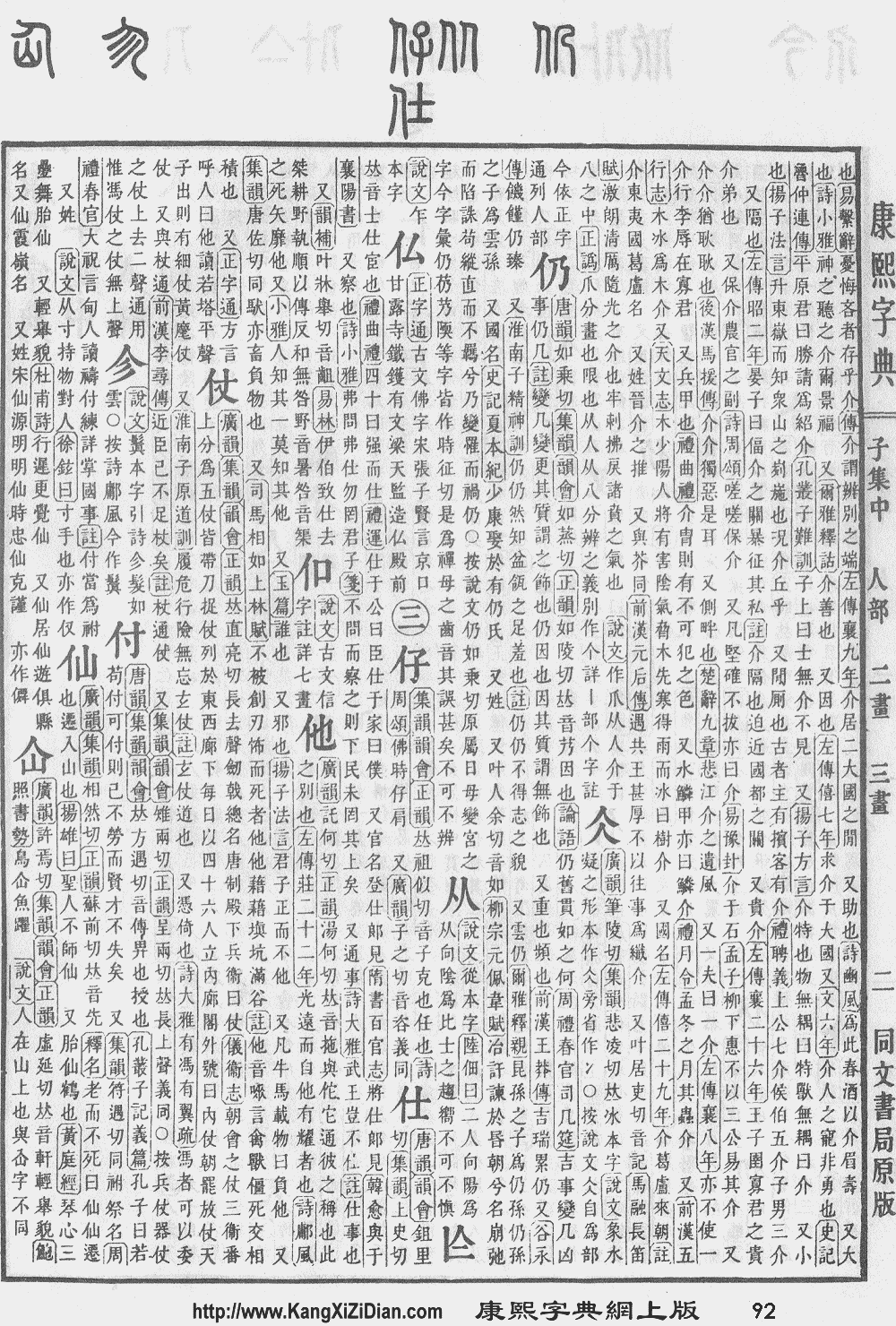
- KangXi: page 92, character 13
- Dai Kanwa Jiten: character 374
- Dae Jaweon: page 196, character 3
- Hanyu Da Zidian: volume 1, page 114, character 3
- Unihan data for U+4ED9
Chinese
| simp. and trad. |
仙 | |
|---|---|---|
| alt. forms | 僊 仚 屳 銑/铣 Min Nan “cent” | |
Glyph origin
| Historical forms of the character 仙 | |||||||||
|---|---|---|---|---|---|---|---|---|---|
| |||||||||
|
References: Mostly from Richard Sears' Chinese Etymology site (authorisation),
|


| Characters in the same phonetic series (山) (Zhengzhang, 2003) | |
|---|---|
| Old Chinese | |
| 山 | *sreːn |
| 疝 | *sreːn, *sraːns |
| 邖 | *sreːn |
| 汕 | *sreːnʔ, *sraːns |
| 訕 | *sraːn, *sraːns |
| 仙 | *sen |
| 秈 | *sen |
| 苮 | *sen |
| 屾 | *srin |
Ideogrammic compound (會意) : 亻 (“person”) + 山 (“mountain”) — a person moving into a mountain to practise becoming immortal.
Originally 僊. The current form is first attested in the clerical script of the Han dynasty.
Etymology
- “immortal”
Pronunciation
Definitions
仙
- (Taoism) xian (an immortal; celestial being)
- fairy; celestial being
- extraordinary person
- (loanword, Cantonese, Min Nan) cent
- A surname.
See also
- 真人 (zhēnrén)
Compounds
|
|
|
Japanese
Kanji
Readings
Compounds
- 仙界 (senkai): dwelling place of hermits
- 仙客 (senkaku): immortal mountain wizard, crane
- 仙宮 (senkyū): hermit's residence, retired emperor's palace
- 仙境 (senkyō), 仙郷 (senkyō): fairyland, enchanted land
- 仙窟 (senkutsu): enchanted cave
- 仙骨 (senkotsu): sacrum, sacral bone; hermitry
- 仙術 (sanjutsu): wizardry, secret of immortality
- 仙女 (senjo), 仙女 (sennyo): fairy, nymph, elf
- 仙台 (Sendai): Sendai city
- 仙丹 (sentan): elixir, elixir of life
- 仙椎 (sentsui): sacral vertebra
- 仙人 (sennin): immortal mountain wizard, mountain man
- 仙翁 (sennō): Lychnis species
- 仙薬 (sen'yaku): panacea, elixir of life
- 仙蓼 (senryō): Sarcandra glabra (formerly Chloranthus glaber)
- 仙人掌 (saboten): cactus
- 仙花紙 (senkashi): reclaimed paper
- 仙台侯 (sendaikō): Lord of Sendai
- 仙洞御所 (sentō gosho): palace of a retired emperor
- 仙台虫喰 (Sendai mushikui): eastern crowned warbler
- 求仙 (kyūsen), 九仙 (kyūsen), 気宇仙 (kyūsen): multicolorfin rainbowfish
- 詩仙 (shisen): great poet
- 神仙 (shinsen): immortal mountain wizard, Taoist immortal, supernatural being
- 酒仙 (shusen): heavy drinker
- 水仙 (suisen): daffodil, narcissus
- 登仙 (tōsen): becoming a saint, death of a high-ranking person
- 銘仙 (meisen): meisen silk
- 腰仙 (yōsen): lumbosacral
- 天仙果 (inubiwa): Ficus erecta, species of ficus
- 鳳仙花 (hōsenka): balsam
- 雲仙岳 (Unzendake): mountain in Nagasaki Prefecture
- 三仙叉 (sansensa): trident dagger
- 画仙紙 (gasenshi): drawing paper
- 中仙道 (Nakasendō): Nakasendo, Edo-period Edo-Kyoto highway
- 阿仙薬 (asen'yaku): gambir, gambier, catechu, cutch
- 神仙思想 (shinsen shisō):: Shenxian thought
- 黄水仙 (kizuisen), 黄水仙 (kisuisen): jonquil
- 夏水仙 (natsuzuisen): belladonna lily
- 羽化登仙 (uka tōsen): sense of release
- 鍾馗水仙 (shōkizuisen): Lycoris aurea (formerly Lycoris traubii), species of spider lily
- 喇叭水仙 (rappazuisen): trumpet daffodil
Etymology 1
| Kanji in this term |
|---|
| 仙 |
| せん Grade: S |
| on’yomi |
From Middle Chinese 仙 (sjen, literally “immortal”). Compare modern Mandarin reading xiān and Cantonese reading sin1.
Pronunciation
Noun
- a sage or hermit, an enlightened person, usually immortal and ageless
- (mythology) short for 仙人 (sennin): a wizard or mage; an immortal living as a hermit in the mountains
- by extension, the region or area where a sennin lives
- the supernatural techniques for becoming immortal and ageless
- a person of exceptional talent
Etymology 2
| Kanji in this term |
|---|
| 仙 |
| せんと Grade: S |
| Irregular |
Borrowed from English cent.[1][2] The kanji spelling is an example of jukujikun.
Pronunciation
Noun
仙 (katakana セント, hiragana せんと, rōmaji sento)
Usage notes
This word is almost always spelled in katakana as セント.
References
Korean
Hanja
仙 • (seon) (hangeul 선, revised seon, McCune–Reischauer sŏn)
- This term needs a translation to English. Please help out and add a translation, then remove the text
{{rfdef}}.
Vietnamese
Han character
仙 (tiên)
Noun
仙