punt
English
Etymology 1
From Old English [Term?], from Latin pontō (“Gaulish flat-bottomed boat, pontoon”), from pons (“bridge”); readopted from Middle Low German punte (“ferry boat”) or Middle Dutch ponte (“ferry boat”) of the same origin.
_P192_PUTTING_DOWN_GRIG-WEELS.jpg)
Pronunciation
- IPA(key): /pʌnt/
- Rhymes: -ʌnt
Noun
punt (plural punts)
Translations
Verb
punt (third-person singular simple present punts, present participle punting, simple past and past participle punted)
Translations
Etymology 2
Possibly a dialectal variant of bunt; Rugby is the origin of the sports usage of the term.
Pronunciation
- IPA(key): /pʌnt/
- Rhymes: -ʌnt
Verb
punt (third-person singular simple present punts, present participle punting, simple past and past participle punted)
- (rugby, American football, Australian Rules football, Gaelic football, soccer) to kick a ball dropped from the hands before it hits the ground. This puts the ball farther from the goal across which the opposing team is attempting to score, so improves the chances of the team punting.
- As a colloquialism, 'So I punted' means the speaker chose the best alternative among a menu of non-ideal choices.
- (soccer) To kick a bouncing ball far and high.
- To retreat from one's objective.
- ca. 2002, Ben Collins-Sussman, Brian W. Fitzpatrick and C. Michael Pilato, “Basic Work Cycle”, in Version Control with Subversion:
- Punting: Using svn revert¶ If you decide that you want to throw out your changes and start your edits again (whether this occurs after a conflict or anytime), just revert your changes
-
Derived terms
Translations
|
|
Noun
punt (plural punts)
- (rugby, American football, soccer) A kick made by a player who drops the ball and kicks it before it hits the ground. Contrast drop kick.
Translations
|
|
Etymology 3
Borrowed from French pointe or Spanish punto (“point”).
Pronunciation
- IPA(key): /pʌnt/
- Rhymes: -ʌnt
Noun
punt (plural punts)
- A point in the game of faro.
- The act of playing at basset, baccara, faro, etc.
- A bet or wager.
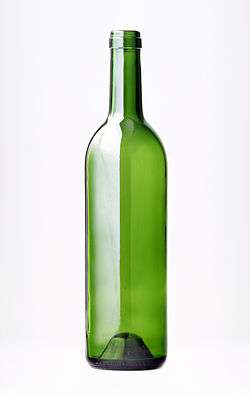
- An indentation in the base of a wine bottle.
- (glassblowing) A thin glass rod which is temporarily attached to a larger piece in order to better manipulate the larger piece.
Translations
|
Verb
punt (third-person singular simple present punts, present participle punting, simple past and past participle punted)
- (Australia, Ireland, New Zealand, Britain) To stake against the bank, to back a horse, to gamble or take a chance more generally
- Thackeray
- She heard […] of his punting at gaming tables.
- 2004, John Buglear, “Is it worth the risk? – introducing probability”, in Quantitative methods for business: the A-Z of QM, →ISBN, page 339:
- Whether you want to gamble on a horse race, bet on which player will score first in a game of football, have a punt on a particular tennis player winning a grand slam event, you are buying a chance, a chance which is measured in terms of probability, ‘the odds’.
- Thackeray
- (figuratively) To make a highly speculative investment or other commitment, or take a wild guess.
Translations
Related terms
Etymology 4
Borrowed from Irish punt, from Middle English pund.
Pronunciation
- IPA(key): /pʊnt/
- Rhymes: -ʊnt
Noun
punt (plural punts)
Catalan
Etymology
Noun
punt m (plural punts)
- point (specific location)
- dot ((grammar) A punctuation mark)
- dot ((mathematics) Used for separating the fractional part from the whole part)
- dot (Used in Morse code)
Derived terms
Related terms
Further reading
- “punt” in Diccionari de la llengua catalana, segona edició, Institut d’Estudis Catalans.
Dutch
Pronunciation
- IPA(key): /pʏnt/
audio (file)
Etymology 1
Noun
punt n (plural punten, diminutive puntje n)
- point
- A position, place, or spot
- A moment in time
- A central idea, argument, or opinion of a discussion or presentation
- A tally of worth or score (such as in a game)
- A mark, note, or grade (as in for a class)
- (geometry) geometric point
- Door twee punten gaat precies één rechte. ― Through two points one can draw exactly one straight line.
Derived terms
|
|
|
Etymology 2
From French point, from Latin punctus.
Noun
punt m (plural punten, diminutive puntje n)
- The terminal point of something
- de punt van een naald of mes ― the point of a needle or knife
- de zuidpunt van het eiland ― the southern point of the island
- dot
- Een ypsilon, zonder puntjes. ― A wye, without dots on it.
- full stop, period
- Aan het einde van een zin hoort een punt of een ander leesteken. ― At the end of a sentence there belongs a full stop or another punctuation sign.
- Punt, gedaan. ― Full stop, finished. / That’s it, period.
Irish
Etymology 1
From Middle Irish punt, from Middle English pund (“pound”), from Old English pund (“a pound, weight”), from Proto-Germanic *pundą (“pound, weight”), from pondus (“weight”), from Proto-Indo-European *pend-, *spend- (“to pull, stretch”).
Alternative forms
- punnt (obsolete)
- púnt (Munster)
Pronunciation
Noun
punt m (genitive singular puint, nominative plural puint or punta)
- pound (unit of weight, unit of currency)
Declension
First declension
|
Bare forms:
|
Forms with the definite article:
|
- Alternative plural: punta (Cois Fharraige)
Derived terms
|
|
Etymology 2
Noun
punt m (genitive singular puint, nominative plural puint)
- (of enclosure) pound
Declension
First declension
|
Bare forms:
|
Forms with the definite article:
|
Etymology 3
Noun
punt m (genitive singular puint, nominative plural puint)
Declension
First declension
|
Bare forms:
|
Forms with the definite article:
|
Derived terms
|
|
Etymology 4
Noun
punt
- Alternative form of puinn
Mutation
| Irish mutation | ||
|---|---|---|
| Radical | Lenition | Eclipsis |
| punt | phunt | bpunt |
| Note: Some of these forms may be hypothetical. Not every possible mutated form of every word actually occurs. | ||
Further reading
- "punt" in Foclóir Gaeilge-Béarla, An Gúm, 1977, by Niall Ó Dónaill.
- “punt” in Dictionary of the Irish Language, Royal Irish Academy, 1913–76.
- Entries containing “punt” in English-Irish Dictionary, An Gúm, 1959, by Tomás de Bhaldraithe.
- Entries containing “punt” in New English-Irish Dictionary by Foras na Gaeilge.
Manx
Etymology
From Middle Irish punt, from Middle English pund (“pound”).
Noun
punt m (genitive singular punt, plural puint)
- (numismatics, unit of measure) pound
Derived terms
|
|
|
Mutation
| Manx mutation | ||
|---|---|---|
| Radical | Lenition | Eclipsis |
| punt | phunt | bunt |
| Note: Some of these forms may be hypothetical. Not every possible mutated form of every word actually occurs. | ||
References
- “punt” in Dictionary of the Irish Language, Royal Irish Academy, 1913–76.
Old French
Noun
punt m (oblique plural punz or puntz, nominative singular punz or puntz, nominative plural punt)
- Alternative form of pont
Romansch
Alternative forms
- (Sutsilvan) pùnt
Etymology
From Latin pōns, pōntem (compare Catalan pont, French pont, Italian ponte, Occitan pònt, Portuguese ponte, Spanish puente), from Proto-Indo-European *pont- (“path, road”).
Pronunciation
- IPA(key): [punt]
Noun
punt m (plural punts)
Slovene
Pronunciation
- IPA(key): /ˈpúnt/
- Tonal orthography: pȕnt
Noun
pùnt m inan (genitive púnta, nominative plural púnti)
Declension
Welsh
Etymology
Borrowed from Old English pund.
Pronunciation
- (North Wales) IPA(key): /pɨ̞nt/
- (South Wales) IPA(key): /pɪnt/
Noun
punt f (plural punnoedd or punnau)
Mutation
| Welsh mutation | |||
|---|---|---|---|
| radical | soft | nasal | aspirate |
| punt | bunt | mhunt | phunt |
| Note: Some of these forms may be hypothetical. Not every possible mutated form of every word actually occurs. | |||
References
- “punt”, in Geiriadur Prifysgol Cymru Online (in Welsh), University of Wales Centre for Advanced Welsh & Celtic Studies, 2014