lançar
Occitan
Etymology
From Old Occitan, from Late Latin lanceāre, present active infinitive of lanceō, from Latin lancea. Compare Catalan llançar, French lancer, Italian lanciare, Portuguese lançar, Spanish lanzar.
Verb
lançar
- to throw
Conjugation
This verb needs an inflection-table template.
Synonyms
Old Portuguese
Etymology
From Late Latin lanceāre, present active infinitive of lanceō (“throw a spear”), from Latin lancea (“spear”), from Celtiberian.
Pronunciation
- IPA(key): /lãˈt͡saɾ/
Verb
lançar
- to throw
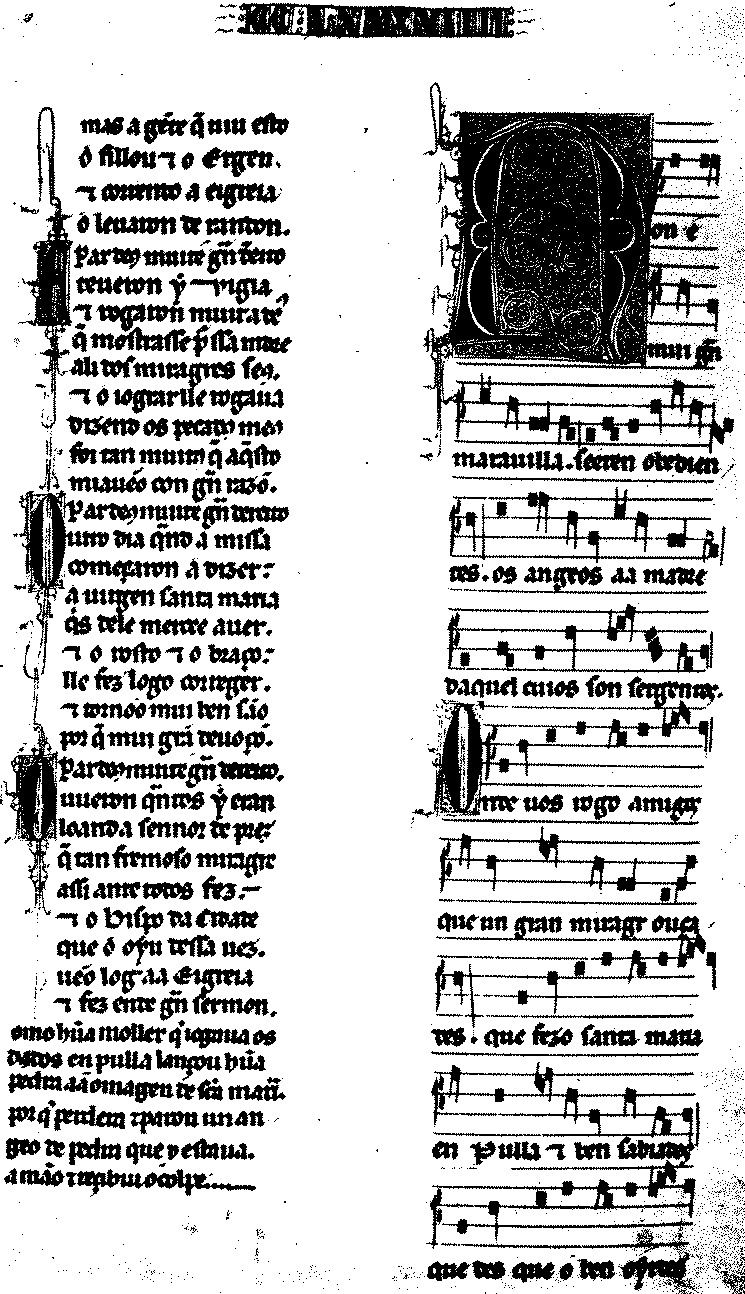
- 13th century, attributed to Alfonso X of Castile, Cantigas de Santa Maria, E codex, cantiga 294 (facsimile):
- Como hũa moller q̇ iogaua os dados en pulla lançou hũa pedra aa omagen de ſ[ant]a mari[a] por q̇ perdera ⁊ parou un angeo de pedra que y eſtava a mão ⁊ reçibiu o colpe.
- How a woman who was playing dice in Apulia threw a stone at the statue of Holy Mary because she had lost, and an angel of stone which was there reached out its hand and received the blow.
- Como hũa moller q̇ iogaua os dados en pulla lançou hũa pedra aa omagen de ſ[ant]a mari[a] por q̇ perdera ⁊ parou un angeo de pedra que y eſtava a mão ⁊ reçibiu o colpe.
- 13th century, attributed to Alfonso X of Castile, Cantigas de Santa Maria, E codex, cantiga 294 (facsimile):
Descendants
Portuguese
Alternative forms
- lãçar (obsolete, abbreviation)
Etymology
From Old Portuguese lançar, from Late Latin lanceāre, present active infinitive of lanceō (“throw a spear”), from Latin lancea (“spear”), from Celtiberian. Cognate with Galician lanzar, Spanish lanzar, Catalan llançar, Occitan lançar, French lancer and Italian lanciare. Doublet of lancear, a later borrowing.
Pronunciation
- (Portugal) IPA(key): /lɐ̃.ˈsaɾ/
- Hyphenation: lan‧çar
Verb
lançar (first-person singular present indicative lanço, past participle lançado)
Conjugation
Descendants
Quotations
For quotations of use of this term, see Citations:lançar.