anta
English
Etymology
From Latin antae (“pilasters”)
Pronunciation
- IPA(key): /ˈæn.tə/
Noun
- (architecture) A kind of pier produced by thickening a wall at its termination, treated architecturally as a pilaster, with capital and base.
Related terms
Part or all of this entry has been imported from the 1913 edition of Webster’s Dictionary, which is now free of copyright and hence in the public domain. The imported definitions may be significantly out of date, and any more recent senses may be completely missing.
(See the entry for anta in Webster’s Revised Unabridged Dictionary, G. & C. Merriam, 1913.)
Anagrams
Hausa
Noun
antā̀ f (possessed form antàr̃)
- Alternative spelling of hanta
Italian
Pronunciation
- IPA(key): /ˈan.ta/
Etymology 1
Noun
anta f (plural ante)
Etymology 2
From the suffix -anta common to quaranta (“forty”), cinquanta (“fifty”), sessanta (“sixty”), settanta (“seventy”), ottanta (“eighty”), and novanta (“ninety”).
Noun
anta m pl (plural only)
Anagrams
Ludian
Etymology
From Proto-Finnic *antadak.
Verb
anta
Norwegian Bokmål
Etymology
Verb
anta (imperative anta, present tense antar, passive antas, simple past antok, past participle antatt, present participle antakende)
Derived terms
References
- “anta” in The Bokmål Dictionary.
Pali
Alternative forms
Noun
anta m
Noun
anta n
Portuguese
Pronunciation
Etymology 1
From Old Portuguese anta, from Latin antas.
Noun
anta f (plural antas)
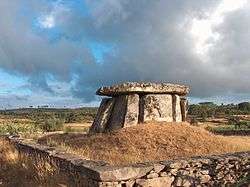
- (architecture) anta
- dolmen (prehistoric megalithic tomb)
Synonyms
- (dolmen): dólmen
Etymology 2
From Arabic لَمْتَة (lamta).
Noun
anta f (plural antas)
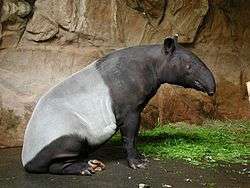
- tapir (large odd-toed ungulate with a long prehensile upper lip of the family Tapiridae)
- (figuratively) a stupid person
- Você é uma anta!
- You are an idiot!
Synonyms
- (tapir): tapir
Spanish
Etymology
From ante
Pronunciation
- IPA(key): /ˈan.ta/
Noun
anta f (plural antas, masculine ante, masculine plural ante)
- (femenine) moose, elk
- (Bolivia) tapir (large odd-toed ungulate with a long prehensile upper lip of the family Tapiridae.)
Synonyms
Swedish
Etymology
Apocopic form of antaga, from an (“on”) + taga (“take”). All compounds with the verb ta have gone through apocope and those forms are now the standard ones, see also avta/avtaga, inta/intaga and överta/övertaga. Cognate with Norwegian Bokmål anta, Norwegian Nynorsk anta, antake, antaka and English ontake.
Pronunciation
audio (file)
Verb
anta
- to suppose; to presume
- Jag antar att det är dags att köpa en ny kaffebryggare.
- I presume it's time to buy a new coffee machine.
- to accept an offer
- Schackspelaren antog erbjudandet om remi efter att ha funderat på det.
- The chessplayer accepted the offer of a draw after having thought about it.
- Schackspelaren antog erbjudandet om remi efter att ha funderat på det.
Conjugation
Tagalog
Pronunciation
- IPA(key): /ʔan.ˈta/
Noun
anta