𠤎
| ||||||||
Translingual
Han character
𠤎 (radical 21, 匕+0, 2 strokes, composition ⿻乚丿)
References
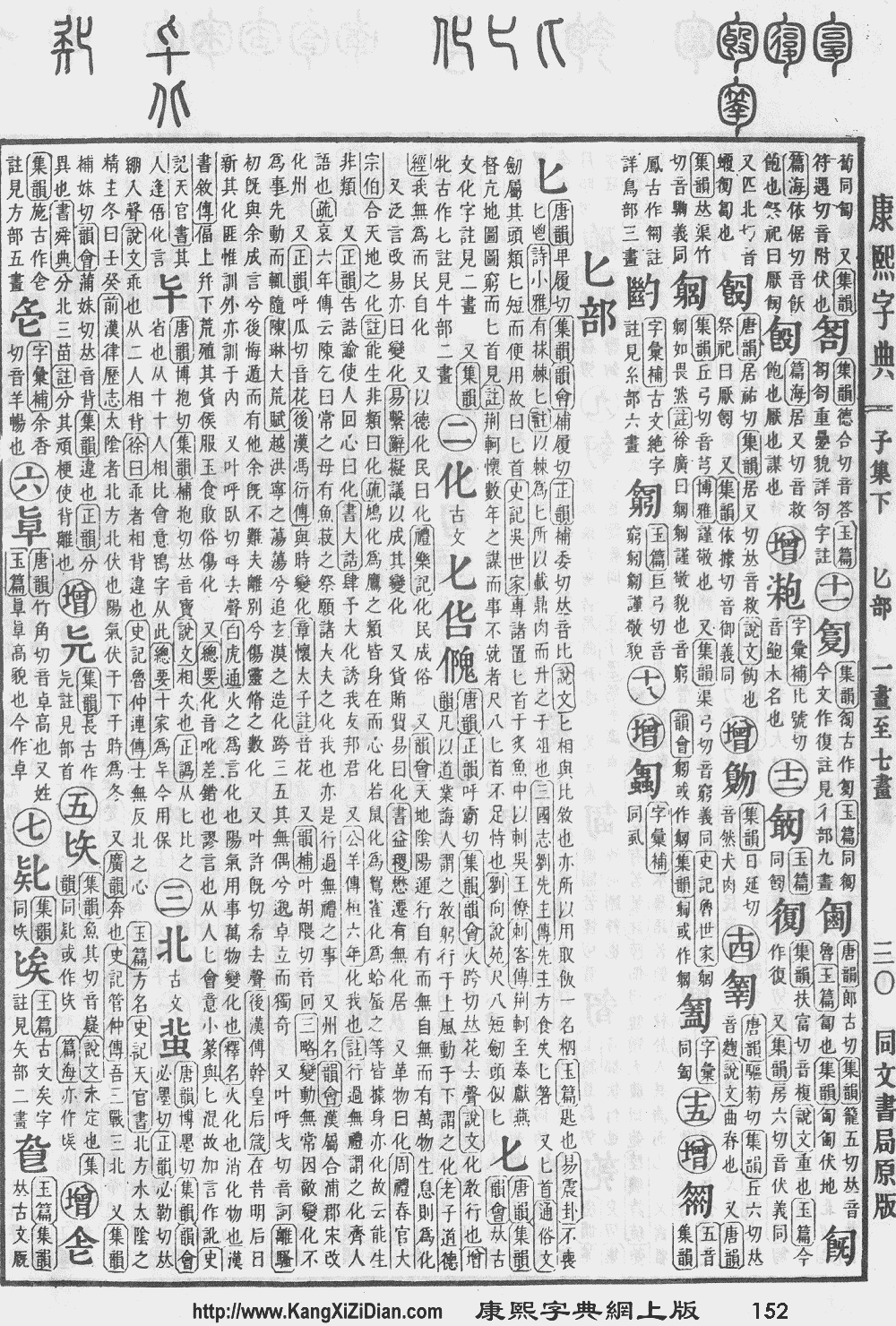
- KangXi: page 152, character 19
- Hanyu Da Zidian: volume 1, page 262, character 1
- Unihan data for U+2090E
Chinese
Glyph origin
| Historical forms of the character 𠤎 | |||
|---|---|---|---|
| Western Zhou | Warring States | Shuowen Jiezi (compiled in Han) | Liushutong (compiled in Ming) |
| Bronze inscriptions | Chu Slip and silk script | Small seal script | Transcribed ancient scripts |
 |
 |
 |
 |
| Characters in the same phonetic series (化) (Zhengzhang, 2003) | |
|---|---|
| Old Chinese | |
| 訛 | *ŋʷaːl |
| 吪 | *ŋʷaːl |
| 鈋 | *ŋʷaːl |
| 囮 | *lu, *ŋʷaːl |
| 魤 | *ŋʷaːl |
| 靴 | *hʷa |
| 貨 | *hŋʷaːls |
| 花 | *hʷraː |
| 化 | *hŋʷraːls |
| 杹 | *hŋʷraːls |
| 匕 | *pilʔ |
Etymology 1
| For pronunciation and definitions of 𠤎 – see 化 (“to change; to transform; to become; to turn into; etc.”). (This character, 𠤎, is an ancient form of 化.) |
Etymology 2
| For pronunciation and definitions of 𠤎 – see 匕 (“a kind of implement for eating in ancient China; arrow; etc.”). (This character, 𠤎, is a variant form of 匕.) |
This article is issued from
Wiktionary.
The text is licensed under Creative Commons - Attribution - Sharealike.
Additional terms may apply for the media files.